My Doctor Said I Had Only Three Days to Live—Then My Husband and Mother-in-Law Celebrated My Death, Unaware of the Secret I Was About to Reveal
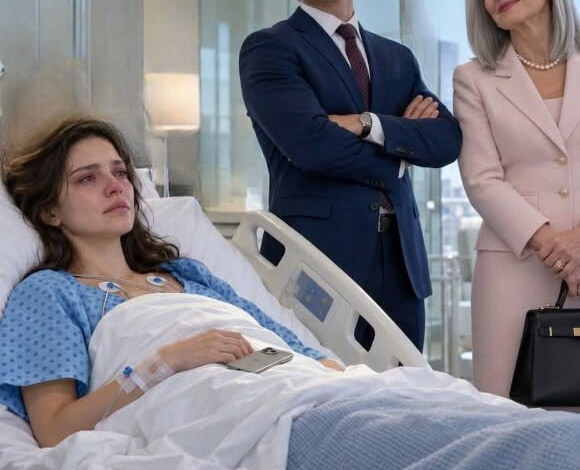
The doctor told me I might have only three days left to live. My mother-in-law smiled and whispered, “Wonderful. Soon, this house will finally belong to me.”
My husband, Daniel, laughed.
“And then I can finally marry Jennifer.”
I stared at them from my hospital bed, my hands trembling beneath the blanket. They thought I was too weak to fight back. They believed my death would solve all their problems.
But the moment they left the room, I grabbed my phone and called my father.
“Dad, it’s time.”
His reply sent a chill down my spine.
“I’ve been waiting for you to make that call.”
Dr. Harris had just explained that my critical heart condition could lead to a catastrophic failure. I was terrified, but my husband’s reaction was even more devastating.
Daniel had held my hand during the consultation. The moment the doctor left, he released it and began discussing my property with his mother, Margaret.
“You should sign the transfer papers tomorrow,” she instructed. “There’s no reason to complicate things.”
I could barely believe what I was hearing.
“You planned this already?”
Daniel shrugged.
“You don’t have children, your house is worth a fortune, and someone has to inherit it.”
“Someone?”
“Mother,” he replied casually.
Margaret smiled. “Jennifer deserves a proper home once they’re married.”
Jennifer was Daniel’s secretary, his mistress, and apparently the woman he intended to marry after my death.
I looked at my husband one last time.
“You won’t even pretend you ever loved me?”
He laughed.
“Love doesn’t pay the mortgage.”
Then they walked away, leaving me alone with the sound of my own heartbeat.
I waited until their footsteps disappeared before reaching for my phone.
“Dad?”
After a brief silence, his familiar voice answered.
“I’m listening.”
“It’s time,” I whispered.
“I’ve been waiting for this call.”
For three years, Daniel had believed I was an ordinary housewife who had inherited a family home from her mother. He thought I had no business connections, no influence, and no wealth beyond that property.
Most importantly, he believed my father was dead.
He wasn’t.
And Daniel was about to discover how little he truly knew about his wife.
The next morning, Daniel arrived at the hospital carrying property transfer documents.
“Sign these,” he ordered.
The papers were designed to transfer the house into Margaret’s name.
“You’re in a hurry,” I murmured.
“You have three days left. Why waste time?”
Margaret stood behind him, admiring her manicure.
“I’ve already chosen the curtains. Jennifer prefers blue.”
I picked up the pen and signed one page, pretending to surrender.
Daniel grinned.
“That’s my girl.”
They hurried away with the documents, convinced they had won.
Moments later, my lawyer, Evelyn Shaw, entered through the other door.
“You haven’t signed anything legally binding,” she assured me.
She placed a thick black folder beside my bed.
Inside were property records, corporate documents, bank statements, and a sealed trust agreement.
My mother hadn’t simply left me the house. She had placed it inside a family trust, with me as the beneficiary and my father as trustee.
Daniel had never owned any part of it.
But that wasn’t the only secret I had kept.
Three years earlier, Daniel’s company had nearly collapsed. Without my knowledge or permission, he had forged my signature to guarantee a business loan.
I discovered the fraud and quietly gathered evidence rather than confronting him immediately.
I had copies of bank transfers, emails, messages between Daniel and Jennifer, and documents bearing the forged signature.
There were even recordings of Daniel discussing how he would portray me as mentally incompetent if I challenged him during a divorce.
Evelyn studied me carefully.
“You could destroy his entire life.”
I closed the folder.
“No. I want the truth to speak for itself.”
Meanwhile, Daniel became increasingly reckless. He posted pictures with Jennifer, announced their engagement, and invited relatives to what he called his new home.
Margaret even arranged for movers to arrive.
On the second afternoon, Daniel visited my hospital room carrying flowers.
“Tomorrow, Jennifer and I are having dinner at your house,” he announced.
I looked at him calmly.
“You mean our house?”
He smiled smugly.
“No. Mine.”
My phone vibrated.
A message from my father appeared.
Everything is ready.
I replied with three words.
Wait until tomorrow.
Daniel noticed my phone.
“Who are you messaging?”
“My father.”
His expression changed.
“Your father? I thought he was dead.”
I smiled faintly.
“You should have asked a few more questions before marrying me.”
The following morning, Margaret arrived at my house with six movers. Jennifer stood beside her while Daniel watched from the driveway, convinced that his new life was about to begin.
Then three black cars pulled up behind them.
My father stepped out of the first vehicle.
At seventy, he was silver-haired, composed, and accompanied by two attorneys.
Margaret froze.
Daniel went pale.
“Who is that?”
I stepped onto the porch.
“My father.”
“But you told me he was dead!”
“I told you what my mother had told everyone,” I replied. “You never bothered to find out the truth.”
My lawyer handed Daniel an envelope containing documents confirming the family trust and records of his attempted property transfer.
He tore it open.
His expression changed from confusion to fear.
“What is this?”
“Evidence,” Evelyn answered.
Margaret snatched the papers from his hands.
“This house belongs to my son!”
My father calmly corrected her.
“No. It belongs to my daughter.”
Then Jennifer turned toward Daniel.
“You told me everything was settled!”
She stepped away from him.
“You told me she was dying!”
The driveway fell silent.
I looked at Daniel.
“That was your mistake.”
Evelyn produced another folder containing evidence related to the forged loan guarantee.
“The bank has been informed,” she explained. “We have the original signature records, the electronic audit trail, and messages discussing the unauthorized use of your wife’s identity.”
Daniel shook his head.
“You’re lying.”
“No,” Evelyn replied. “And the evidence will speak for itself.”
Soon, two police officers arrived to investigate the suspected financial fraud and forgery.
Daniel turned toward me, his arrogance finally replaced by desperation.
“Please,” he whispered.
For the first time, the man who had celebrated my supposed death was begging me for mercy.
“I loved you,” he insisted.
I looked him in the eyes.
“You loved what you thought I owned.”
He had no answer.
Daniel eventually faced legal proceedings over the alleged fraud and forgery. Jennifer ended their relationship, and Margaret’s involvement in the attempted property transfer came under scrutiny.
But my own story took an unexpected turn.
The doctors managed to stabilize my heart condition. Their initial prognosis had been frightening, but three days had never been an absolute guarantee of death.
Three months later, I stood on my balcony watching the sunrise while my father sat nearby, drinking coffee.
“You could always sell this place,” he suggested.
I smiled.
“No.”
For years, I had believed that surviving meant holding on to the people who claimed to love me.
Now I understood something different.
Sometimes, survival means letting the wrong people walk away.
Daniel had planned to replace me within three days.
Instead, those three days gave me the chance to reclaim my life.
And for the first time in years, my home was finally peaceful.
Not empty. Not lonely.
Free.