A Deputy Left My 71-Year-Old Mother in 91-Degree Heat for 40 Minutes — Until One Radio Call Revealed Who She Really Was
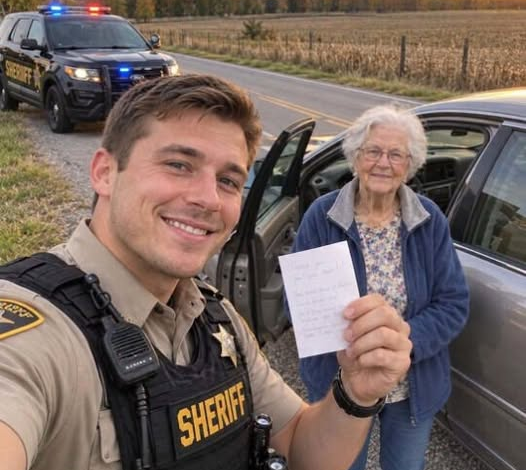
The afternoon sun was scorching when a young deputy stopped my 71-year-old mother, Shirley Hagen, on County Road 6. Wearing her favorite floral dress, she stood beside her Buick in 91-degree heat while the officer questioned her temporary driver’s license.
She explained that she had recently renewed it at the courthouse, but he refused to listen. Instead, he ordered her out of the car and left her waiting beside the road for nearly 40 minutes while he stayed inside his air-conditioned patrol vehicle.
When I tried to defend her, he told me to be quiet.
Eventually, he returned, mocked her age, and threatened her with tickets and towing charges.
But Mom didn’t argue or raise her voice. She simply looked at him and asked one unexpected question.
“Deputy, would you mind announcing my name over your radio?”
He chuckled, clearly thinking her request was ridiculous, and repeated her name to dispatch.
Then everything changed.
The dispatcher suddenly went silent. Moments later, the voice returned, asking him to confirm the name. Within seconds, other deputies, firefighters, paramedics, and even a state trooper began responding over the radio.
Their voices carried a level of respect that left the young deputy visibly confused.
Then Sheriff Tom Hanley came on the radio.
“How long has she been standing out there in this heat?”
The deputy hesitated before admitting it had been nearly 40 minutes.
“I’m on my way,” the sheriff replied.
But the biggest shock was still coming.
My mother had spent 34 years working overnight shifts as an emergency dispatcher for the Kessler County Sheriff’s Office. She had helped countless people through terrifying emergencies, guided rescuers to people trapped in life-threatening situations, and stayed on the line with frightened callers when they had nowhere else to turn.
One of those people was the deputy’s own father.
When Walt Brandt heard Shirley’s name, he immediately recognized the woman who had kept him conscious for 51 terrifying minutes after a tractor pinned him beneath it. During that ordeal, she had repeatedly asked about his young son, Kyle.
Kyle was the very deputy who had just humiliated her.
When Sheriff Hanley arrived, he removed Kyle’s badge and assigned him to work overnight dispatch shifts for a month, learning directly from the people who answered emergency calls.
Mom could have demanded a lawsuit, compensation, or a public apology. Instead, she asked for something different.
She wanted Kyle to understand what it meant to treat another human being with dignity, especially someone who might be frightened, vulnerable, or in need of help.
That evening, I brought Mom’s old headset to the dispatch center and watched Kyle begin his new assignment.
For the first time, I understood how much my mother had sacrificed during her years of service. She had missed family dinners and some of my Friday night football games, yet she had followed those games over the radio whenever she could.
Weeks later, Kyle visited her and admitted that the experience had changed the way he treated people during traffic stops. He had learned that wearing a badge meant more than having authority. It meant having a responsibility to show compassion.
Eventually, Mom’s permanent driver’s license arrived, and she quietly returned to her normal routine. She never sought attention for what had happened.
But the experience changed me, too.
I began calling her every Sunday evening, making sure she knew someone was thinking about her.
She always answered right away.
After spending 34 years answering desperate calls from strangers who needed someone to care, Shirley Hagen finally had someone calling her for a much simpler reason.
Not because there was an emergency.
Not because someone needed saving.
But because she mattered.