My Father-in-Law Sold His Family Farm for $286,000 Because He Didn’t Want a “Town Girl” in the Family—Four Years Later, I Bought It Back
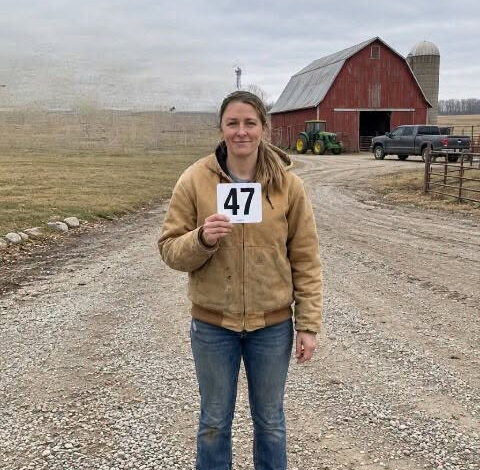
“Your father-in-law has been talking about you at the co-op,” an elderly patient told me during a routine dental appointment.
What he revealed next broke my heart.
I was 36, working as a dental hygienist in Kearney, Nebraska, and married to Luke, whose family had owned an 80-acre farm for generations. After his mother died, we offered to buy the property and preserve it for our children.
But his father, Walt, sold it to a Denver buyer for $286,000 instead.
Worse, he blamed me, claiming his son had made a mistake marrying a “town girl” who would turn the family farm into housing developments.
I refused to let his words destroy what the farm meant to our family.
For the next four years, Luke and I worked overtime, took extra shifts, and saved every dollar we could. We gave up vacations, drove an old minivan, and quietly cared for the property, even though it no longer belonged to us.
Then, in February of the fourth year, we spotted an announcement in the local newspaper.
The farm was going up for auction.
We had saved $71,400 and secured financing from the bank. Our absolute bidding limit was $305,000.
On auction day, the bids climbed rapidly as a land investment company competed against us. Luke struggled to raise his hand, afraid we might lose everything we had worked for.
So I stepped forward.
When the bidding reached $300,000, I raised my card and made one final offer: $301,500.
The competing bidder backed out.
We had won the farm.
But the biggest surprise came afterward, when the auctioneer revealed something we never expected: Walt had been secretly visiting the property every month, watching us care for the land from a distance.
When we confronted him behind the barn, he finally confessed the truth.
He hadn’t sold the farm because he hated me. He had carried crushing mortgage debt for 31 years and couldn’t bear the thought of his son experiencing the same financial burden.
He had blamed my background because he was too ashamed to admit his real fear.
His confession didn’t erase the hurt, but it finally helped us understand why he had made his decision.
When we returned with the keys, I showed Walt photographs of the pencil marks on the kitchen doorframe where his late wife, June, had recorded Luke’s height as he grew up.
Together, we restored those marks and added new ones for our children.
For the first time in years, Walt openly admitted that his comments about me had been wrong. He apologized, and slowly, our family began to heal.
That May, we moved back into the farmhouse. The lilacs bloomed beside the porch, our children settled into their rooms, and Walt came over for Sunday dinner.
He paused at the back door, no longer assuming he could simply walk inside.
I welcomed him in and placed his familiar brown coffee cup on the table.
He turned it in his hands, just as he always had, before taking a sip.
We hadn’t just bought back 80 acres of land. We had reclaimed a piece of our family’s history—and finally made room for the truth.