An Entitled Customer Told a Baker “The Customer Is Always Right” After Touching Her Bread—The Next Day, She Had a Special Surprise Waiting for Him
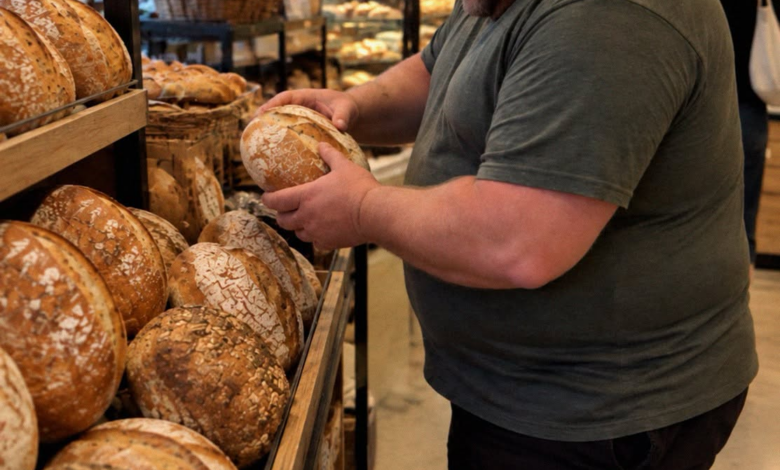
For days, my most annoying customer had been touching my freshly baked bread with his bare hands, squeezing loaf after loaf before putting them back. When I asked him to stop, he smirked and declared, “The customer is always right!”
I was sixty years old and had spent nineteen years running my bakery with my late husband’s memory in my heart. Every ruined loaf meant money lost, and Brian seemed completely indifferent to the damage he caused.
Monday, he ruined four loaves. Tuesday, he touched more bread after wiping his nose. By Friday, I’d lost more than a hundred dollars because of his behavior.
“I can’t sell bread you’ve handled like that,” I told him.
“Sounds like your problem,” he replied.
That was the moment I decided something had to change.
The next morning, Brian arrived expecting his usual loaf. Instead, I greeted him with a white box tied with a gold ribbon.
“Good morning, Brian. I have something special for you.”
He smiled smugly, assuming I’d finally learned to appreciate his business.
Then he opened the box.
Inside was a receipt for $186.40—the cost of the bread he’d damaged throughout the week.
“You charged me for bread I never bought!” he shouted.
“I charged you for the losses you caused,” I replied.
Furious, Brian threatened to call the police. But I had already prepared something else: security footage showing him repeatedly touching the bread after I’d asked him to stop.
When the officer arrived, he reviewed the recordings and explained that the disputed payment needed to be handled appropriately, while the damaged merchandise was a separate issue.
I offered Brian another way to make things right: three mornings helping me in the bakery.
He laughed at first. He thought baking was nothing more than mixing flour and water.
By Monday morning, he was standing in my kitchen before sunrise, wearing expensive sneakers and an apron.
Within minutes, he’d spilled flour across himself, struggled with trays, and discovered that making fresh bread was far harder than criticizing it.
By Tuesday, his dough was sticking to his fingers. By Wednesday, he had finally managed to bake a decent loaf.
Then something happened that changed everything.
A customer reached into the display, squeezed Brian’s freshly baked bread, and put it back.
Brian watched in horror.
“HEY! YOU CAN’T DO THAT!”
I looked at him.
“Why not? He’s just checking if it’s fresh.”
Brian stared at the ruined loaf he’d spent hours making.
Then he finally understood.
“I worked all morning on that,” he muttered. “And now nobody can buy it.”
“Now you understand what I’ve been trying to tell you,” I replied.
For the first time, he apologized without making excuses.
“I didn’t realize how much work went into it.”
I accepted his apology, and over time, Brian became one of my most reliable customers. He still complained about my prices, but he always used the tongs.
And whenever someone reached into the bread basket with their bare hands, Brian was the first to speak up.
“HEY! USE THE TONGS! DO YOU HAVE ANY IDEA HOW HARD THAT STUFF IS TO MAKE?”
Sometimes, the best way to teach someone a lesson isn’t to argue with them.
It’s to let them experience the very thing they’ve been making harder for everyone else.