Oregon School Gunman Was Stopped Within Minutes — What Happened Inside Silver Rail Elementary Before Police Reached Him
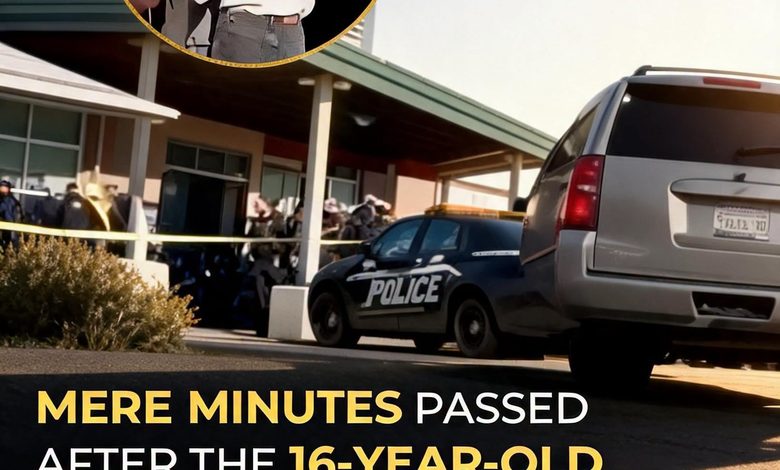
The first emergency call came at 12:59 p.m., reporting gunfire outside Silver Rail Elementary School in Bend, Oregon. Within minutes, classrooms were locked down, children were hiding, and police officers were racing toward the campus. Fifth-grade teacher Kathy Sheil Smith had spotted an armed figure approaching through her classroom window and immediately warned the school office. She gathered her students into a corner, where some prayed while others tried to comfort frightened classmates. Outside, residents who had been going about an ordinary Thursday afternoon heard gunshots and then the growing sound of emergency vehicles. By the time the first officers arrived at 1:02 p.m., a community member who had followed the gunman into the school had already confronted and fatally shot him. But the intervention came after an attack that killed three children and a teacher, leaving a city grieving and investigators trying to reconstruct what happened in those few devastating minutes.
The shooting occurred on October 15, 2026, at Silver Rail Elementary, a school serving kindergarten through fifth grade in a residential area of Bend. The children killed were ages five, eight, and eleven, according to authorities, and a teacher also died. Two additional victims, a seven-year-old child and a 54-year-old adult, were hospitalized. The suspected attacker was identified as a sixteen-year-old Bend resident who entered the school after firing through locked doors. Police initially described his weapon as a long gun; subsequent reporting identified it as a pump-action shotgun purchased by his mother. Investigators continued examining how he obtained the weapon, whether he had previously attended the school, and whether he knew anyone inside. The motive had not been established in the initial reports. For people nearby, the attack began with sounds that were difficult to interpret. Leah Schwartz, who was walking her dog with her husband, described hearing several sharp reports separated by a pause. At a business less than half a mile away, Sierra Jordan noticed the sudden transformation of the neighborhood as police vehicles and sirens replaced the familiar sounds of an ordinary school day. Inside the classrooms, teachers had little information about what was happening beyond their doors. Smith’s warning to the main office came after she saw the armed person approaching the building. She moved her students away from the windows and attempted to keep them calm while they waited. By 1:01 p.m., the school had entered lockdown. At that point, the attacker had already gained entry, but the precise route he took through the building remained unclear. What officials could establish was the terrible speed of the incident: the first call at 12:59, the dispatch alert at 1:00, the lockdown at 1:01, and the first responding officers reaching the school at 1:02. Each minute represented an almost unbearable stretch of uncertainty for the children and adults sheltering inside.
One of the most consequential decisions during that brief period came from a person outside the school. Authorities said a community member saw the armed teenager enter Silver Rail and followed him into the building. The individual confronted the attacker and fatally shot him before responding officers reached the gunman. Early reports did not identify the bystander or establish precisely where inside the school the confrontation occurred. Subsequent reporting identified him as Kaylub Giamanco, a parent of two students at Silver Rail. Federal law enforcement sources reported that he held a concealed-carry permit, although police initially said they were still establishing details about his firearm and the circumstances of the shooting. The critical fact in the early police timeline was that the attack had already ended by the time officers located the suspected gunman. Smith later spoke gratefully about the person who intervened, recognizing the danger involved in confronting an armed attacker. Oregon Governor Tina Kotek also acknowledged the community member’s actions while emphasizing the emotional burden such an experience could carry. More information subsequently emerged about the courage shown by school staff, including a teacher who reportedly attempted to interrupt the attack by throwing a cellphone and physically confronting the gunman. Those actions formed part of an ongoing investigation into what happened between the initial reports of gunfire and the arrival of law enforcement. Even with the attacker’s death confirmed, important questions remained: how long had he actually been inside the building, where had the victims been when they were shot, and what sequence of decisions had brought the shooting to an end? The official timestamps established a window of only a few minutes, but they could not yet provide a complete second-by-second account of the tragedy.
When Bend officers entered Silver Rail Elementary, they confirmed that the suspected shooter was dead and began checking the building room by room for additional threats. Their work was not finished simply because the attacker had been stopped. Police, sheriff’s deputies, state officers, and federal personnel helped secure the school, provide emergency assistance, and move students and staff to safety. The response involved the Bend Police Department, the Deschutes County Sheriff’s Office, Redmond police, Oregon State Police, and the FBI’s Portland field office. Students were transported by Bend-La Pine school buses to Journey Church, where parents and guardians waited anxiously to be reunited with them. For those families, the passing hours brought both relief and dreadful uncertainty. Authorities initially confirmed that several people had been injured and that at least two victims had been taken to a hospital. As investigators gathered information, the scale of the loss became clearer. By late afternoon, law enforcement sources had confirmed that three children had died, and subsequent official statements established that a teacher was also among the victims. The suspected shooter was the fifth person found dead at the scene. Police continued examining physical evidence and witness accounts to determine his movements inside the school, the origin of the weapon, and the circumstances of the confrontation that ended the attack. Those findings mattered not only to the criminal investigation but also to the wider examination of school safety, emergency communications, and how locked entrances and lockdown procedures function during an active threat. Bend Police Chief Mike Krantz explained that local officers had completed active-threat training at a high school in August, reflecting the preparation departments undertake for emergencies they hope never to face. Yet training and a rapid response could not undo the losses suffered that afternoon. Bend-La Pine Schools canceled classes, activities, and athletic events for the following day, and crisis counseling resources were made available to students, employees, families, and other members of the community. Superintendent Steven Cook described the district as heartbroken and thanked teachers and staff who had protected children during the attack. State and national leaders expressed condolences, praised the responders and the individual who intervened, and renewed discussions about the measures needed to reduce the risk of future school shootings. Although the investigation continued, its immediate findings established one devastating reality: within an extraordinarily short period, four innocent people had been killed, two others had been seriously hurt, and hundreds of children and adults had been forced to confront a danger no school community should ever experience.
That evening, people gathered at Drake Park in Bend, carrying candles, embracing neighbors, and standing together as the community began to absorb what had happened. Flowers and other tributes appeared near Silver Rail Elementary, transforming the edges of the police perimeter into places of remembrance. For families whose children had survived, relief was inseparable from concern for those who had not come home. For the parents of the children killed and the loved ones of the teacher, the future had changed in ways no public statement could adequately describe. The facts of the shooting were still being assembled, and some details would require careful investigation before they could be stated with confidence. The compressed timeline, however, was already clear enough to leave a lasting impression. A call about shots fired outside the school was received at 12:59 p.m. Police were alerted at 1:00. The school locked down at 1:01. Officers reached the scene at 1:02 and soon learned that a community member had already stopped the attacker. Those times reveal how rapidly an ordinary afternoon became an emergency and how difficult it is for anyone inside a school to understand the full danger while events are unfolding. They also reveal the limitations of measuring such a tragedy only in minutes. For a teacher trying to protect a room full of children, even a short interval can feel endless. For parents waiting to learn whether their children are safe, the hours afterward can seem to stand still. The intervention that ended the attack deserves careful recognition, as do the actions of teachers, emergency dispatchers, responding officers, medical personnel, and everyone involved in getting students to safety. But the courage shown during the crisis must not eclipse the lives that were lost or the needs of the families left behind. The children who died were more than their ages, and the teacher was more than a casualty in an official timeline. They belonged to families, classrooms, friendships, and routines that will continue to bear their absence. As Bend mourned, investigators faced the difficult responsibility of establishing exactly what happened, while the school community faced the longer work of supporting survivors and remembering those who could not be saved. The final minutes of the attack would remain the subject of scrutiny, but the candles gathering outside Silver Rail Elementary spoke to something beyond the investigation: a community determined that the people lost inside those walls would be remembered for their lives, not only for the few terrible minutes in which they died.