Pope Leo XIV Undergoes 90-Minute Lung Surgery in Rome — Doctors Confirm Cancer as Vatican Shares New Health Update
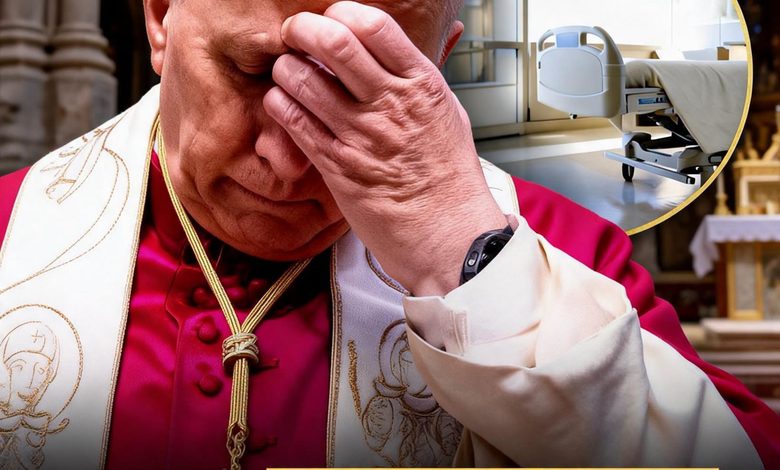
The operating room at Rome’s Agostino Gemelli University Hospital became the center of international attention on Tuesday, October 13, 2026, as surgeons performed a delicate procedure on Pope Leo XIV. What had initially been described as the removal of a small lung nodule turned into an operation involving an entire lobe of his right lung. For approximately 90 minutes, a specialist surgical team worked to remove the abnormal tissue while the Catholic world awaited news of the pontiff’s condition. By evening, the Vatican announced that the surgery had been completed successfully, without complications, and that the 71-year-old pope had regained consciousness normally. He had returned to his hospital room on the 10th floor, where doctors would continue monitoring his recovery. Yet the most significant development was not simply that the operation had gone according to plan, but what examination of the removed tissue revealed. The growth was cancerous, and the first American-born pope was facing a diagnosis that raised important questions about his health, his treatment, and the demanding responsibilities awaiting him beyond the hospital walls.
Only two days earlier, Pope Leo XIV had addressed crowds gathered in St. Peter’s Square with an announcement that surprised many of the faithful. During routine medical examinations, doctors had discovered a small, localized nodule in his lung and recommended surgery. Leo explained that the abnormality had been detected at a very early stage, offering reassurance even as he acknowledged the need for medical intervention. Born Robert Francis Prevost in Chicago, he became the first American pope following his election in May 2025, succeeding Pope Francis, who died on April 21 of that year. Until this hospitalization, Leo had maintained an active public schedule and was widely regarded as physically fit, with interests that included swimming, exercise, tennis, and horseback riding. There had been no public reports of the persistent coughing, unexplained weight loss, or breathing difficulties sometimes associated with lung cancer. Despite the impending operation, he continued conducting Vatican business, including scheduled meetings on Monday, October 12. Tokyo Cardinal Kikuchi Tsutomu, who met him around that time, said the pontiff appeared to feel well. Vatican Secretary of State Cardinal Pietro Parolin admitted that he had not anticipated the seriousness of the situation, although he drew comfort from the fact that doctors had discovered the abnormality promptly. The timing also carried practical consequences for the Church. Leo had been preparing for a November 6–17 visit to Uruguay, Argentina, and Peru, and reports suggested he wanted the operation performed without unnecessary delay to preserve those plans if his recovery allowed. On Tuesday, he entered Gemelli Hospital, a medical institution closely associated with papal care. Pope John Paul II had received treatment there repeatedly, while Pope Francis had endured an extended hospitalization for pneumonia in early 2025. The traditional papal apartment was undergoing renovation, so Leo was accommodated in another room on the same floor. What appeared publicly to be a carefully planned operation nevertheless concealed a more serious medical concern that doctors had already begun investigating.
The crucial details emerged after the operation, when the Vatican released a medical statement from Dr. Luigi Carbone and Professor Stefano Margaritora, the thoracic surgeon who led the procedure. Rather than removing only the nodule, surgeons had performed a right lower lobectomy, removing the entire lower lobe of the pontiff’s right lung through a video-assisted surgical technique. Although Leo spent approximately three hours in the operating room, the procedure itself lasted about an hour and a half. Tissue examined during surgery confirmed the diagnosis doctors had suspected beforehand: pulmonary adenocarcinoma, a form of lung cancer belonging to the broader category of non-small cell lung cancer. Adenocarcinoma is among the most frequently diagnosed types of lung cancer and commonly develops in the outer portions of the lung, where tumors can sometimes remain unnoticed until discovered through imaging. It can also occur in people who have never smoked, an important distinction given that Leo is not known to have been a smoker. The Vatican reported that the operation was successful and that the pope awakened normally following anesthesia. In a further update on Wednesday, October 14, officials said he had passed a calm first night at the hospital. According to the Vatican, he had also requested dinner after surgery and spent part of the evening with his secretaries and other staff members. Those details offered reassurance about his immediate postoperative condition, but they did not establish the full extent of his illness. Officials had not disclosed the cancer’s formal stage, whether any lymph nodes were involved, or whether additional treatment would be required. Further pathological examination of the removed tissue remained essential. The distinction mattered enormously: doctors had identified and removed a cancerous growth, but the findings that would determine the pontiff’s longer-term outlook had not yet been made public.
From a medical perspective, the decision to remove an entire lung lobe can reflect a surgical strategy intended to achieve complete removal of a suspicious or confirmed malignancy, rather than simply excising the visible growth. Video-assisted thoracic surgery allows surgeons to operate using specialized instruments and a camera introduced through relatively small incisions, potentially reducing some of the physical burden associated with traditional open-chest surgery. Nevertheless, a lobectomy remains a major operation. In the days after surgery, clinicians typically monitor oxygen levels, respiratory function, pain, and possible complications while encouraging appropriate breathing exercises and gradual mobilization. Because part of the lung has been removed, patients must adjust to reduced lung volume, although many retain good functional capacity after recovery. Medical specialists discussing Leo’s case emphasized that early detection can be especially important for patients with localized non-small cell lung cancer. Dr. Juanita Mora of the American Lung Association described the reported early discovery and surgical removal as encouraging factors, while thoracic surgeon Dr. David Jones of Memorial Sloan Kettering Cancer Center stressed that lymph-node findings and molecular pathology would help guide decisions about any further treatment. Certain lung adenocarcinomas contain genetic alterations, including EGFR mutations or ALK rearrangements, that can influence the selection of targeted therapies, but no such molecular results have been released for Leo. Likewise, there has been no definitive announcement that he will need chemotherapy, radiation therapy, or additional medication. General survival statistics for patients diagnosed at the earliest stages cannot reliably predict his individual prognosis without a confirmed stage and complete pathology. His overall fitness may assist his rehabilitation, but recovery will also depend on his respiratory status and the medical findings still being evaluated. The Vatican has canceled public appearances through at least October 20, allowing time for rest and observation. His proposed Latin American journey remains an important consideration, though whether he will be medically fit to undertake international travel in November has not been settled publicly. During his hospitalization, routine Church administration continues through established Vatican offices, while decisions requiring the pope’s direct attention may be delayed as necessary. Temporary illness does not automatically transfer papal authority to another official, and previous pontiffs have continued exercising their responsibilities while receiving hospital treatment. For now, however, medical recovery rather than public appearances is the immediate priority.
The diagnosis arrives at a particularly sensitive moment for Pope Leo XIV and his family. His older brother, Louis Prevost, who lives in Florida, has also been receiving treatment for cancer. Louis was diagnosed with multiple myeloma in 2017 and has undergone several courses of treatment, including stem cell therapy and participation in clinical trials. According to his wife, Deborah, the illness had previously been reduced to a very low level before he recently experienced a relapse and entered another clinical trial. Leo’s mother, Mildred, also underwent cancer treatment before her death in 1990, making serious illness a deeply familiar experience within the family. For the pontiff, the challenge now involves navigating a personal medical crisis while serving as the spiritual leader of more than a billion Catholics around the world. The Vatican’s latest reports provide meaningful reassurance about the immediate outcome: the operation was completed without complications, he regained consciousness normally, and his first night afterward was peaceful. Those are encouraging developments, but they are not the same as a final prognosis. Doctors still need to complete their assessment of the removed tissue and determine whether any additional treatment or prolonged recovery will be necessary. The coming days may also offer greater clarity about when Leo can resume audiences, meetings, and international travel. His predecessor, Pope Francis, lived for decades after losing part of a lung during his youth, a reminder that major pulmonary surgery does not necessarily prevent a full and active life, though the circumstances of the two cases are different. For those following Leo’s recovery, the essential facts remain straightforward: doctors discovered an abnormality early, removed the affected lower lobe of his right lung, confirmed adenocarcinoma, and reported a successful procedure. What remains uncertain is how the diagnosis will shape his health and responsibilities in the months ahead. As the pontiff recovers in a hospital room overlooking Rome, the prayers and concern surrounding him reflect something more personal than the office he holds. Beyond the public ceremonies, international journeys, and weight of papal leadership is a 71-year-old man recovering from major surgery, awaiting further medical answers, and hoping to return to the work that has defined his life.