A Homeless Man Used His Last $12 to Make My Widowed Mom Smile, but He Never Expected What Happened After Her Death
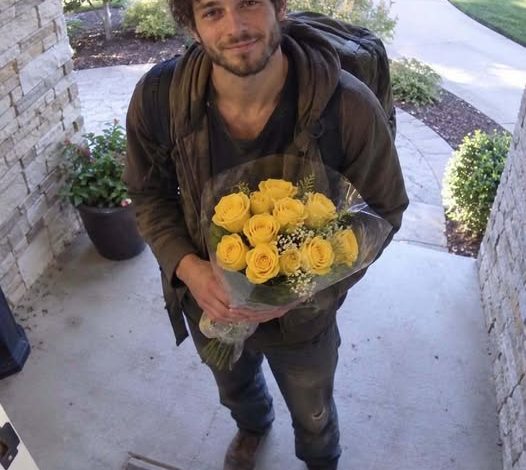
Twelve Yellow Roses
The lock clicked.
It was such a small sound. A tiny metal click in a quiet lawyer’s office on a gray Tuesday afternoon in March.
But my brother flinched like he’d been shot.
“Don’t,” Glenn said. His voice cracked. “Please. Don’t open that.”
Ethan didn’t look at him.
He sat in the leather chair across from the lawyer’s desk. In a borrowed navy jacket two sizes too big for him. With his worn green backpack on the floor between his feet. Holding a small wooden box in his lap.
He slowly lifted the lid.
And reached inside.
But I need to start at the beginning.
With my mother. And a bag of groceries. And a pharmacy parking lot.
My name is Susan Albright. I’m fifty-two years old.
I’m a middle school librarian in Lancaster, Pennsylvania. I’ve been married to my husband, Tom, for twenty-six years. We have one daughter, Claire, who’s twenty-three and teaches third grade in Philadelphia.
My mother was Iris Kemper.
She was born in 1945 in a farmhouse outside Strasburg. She married my father, Edwin, when she was nineteen. She raised two children in a little brick rowhouse on Chestnut Street in Lancaster. She taught home economics at McCaskey High School for thirty-one years.
She could sew a wedding dress from a pattern in two weeks. She could make a pie crust with her eyes closed. She could look at a fifteen-year-old who’d skipped three classes and make him apologize to her before he even knew why.
My father died fourteen years ago. A heart attack. In his garden. Among his tomato plants.
After that, my mother lived alone in the house on Chestnut Street.
She was eighty when she brought a homeless young man home for dinner.
His name was Ethan.
He was twenty-four. He slept behind a closed bookstore on Queen Street. A little used bookshop called Chapter Two that had shut down during the pandemic and never reopened. There was a covered alcove by the back door, out of the wind. He’d been sleeping there for almost a year.
He owned everything he had in one backpack. Green. Canvas. Frayed at the bottom. Patched with duct tape on one strap.
They met in October. Two years ago.
At the CVS on Duke Street.
Mom had walked there. Six blocks. She refused to stop driving but she also refused to drive anywhere within a mile, because she said walking kept her young.
She came out of the CVS with two canvas bags. Milk. Eggs. A loaf of bread. Her blood pressure medicine. A box of Earl Grey tea. A can of Folgers for when I came over.
At the edge of the parking lot, the strap on one bag broke.
Everything spilled. The eggs cracked. The milk rolled under a car. The tea box split open and tea bags scattered across the asphalt. Her pill bottle bounced into a puddle.
Mom stood there. Eighty years old. Looking at her groceries on the ground.
She told me later that four people walked past her.
A man in a suit on his phone. A young mother with a stroller. Two teenagers.
They looked at her. They looked at the groceries.
They kept walking.
Then a young man came across the parking lot.
Tall. Thin. Dark hair that needed cutting. A gray hoodie with a hole in the elbow. Jeans with mud on the knees. A green backpack.
He knelt down on the wet asphalt without saying a word.
He picked up the tea bags. One by one. He fished the milk out from under the car. He found her pill bottle in the puddle and wiped it on his hoodie.
He looked at the cracked eggs.
“I’m sorry,” he said. “These are done for.”
“Oh, that’s all right,” Mom said.
He stood up. He looked at the broken bag.
“Where do you live, ma’am?”
“Chestnut Street. Just up the way.”
He took off his backpack. He unzipped it. He put her milk and her bread and her tea and her coffee and her pills inside. On top of his own things.
He zipped it closed. He put it back on.
“I’ll walk you home,” he said.
She told me about it that night on the phone.
“Susan, he was the nicest young man.”
“Mom. You let a stranger walk you home?”
“He carried my groceries. Six blocks. In the rain.”
“Did you let him in the house?”
“Of course I let him in the house. He was soaking wet. I made him tea.”
“Mom.”
“His name is Ethan,” Mom said. “He’s twenty-four. He’s very polite. He said ma’am. Nobody says ma’am anymore.”
“Mom, he could’ve robbed you.”
“He could have,” Mom said. “He didn’t. He drank his tea and washed his own cup and thanked me and left.” She paused. “He’s homeless, Susan.”
I didn’t say anything.
“He sleeps behind that old bookstore on Queen Street,” she said. “The one that closed. He told me. He wasn’t ashamed of it. He just said it like it was the weather.”
After that, he started visiting every Thursday.
I don’t know how it started. Mom said she invited him back. Ethan said she wouldn’t take no for an answer.
Every Thursday at two o’clock, he knocked on her front door.
He carried her groceries.
They’d walk to the CVS together. Or the Giant on Harrisburg Pike. He’d push the cart. She’d tell him what to get. He’d carry everything home in his backpack and two canvas bags.
He fixed her broken porch steps.
The bottom two had been rotting for three years. I’d been meaning to call somebody. Tom had been meaning to look at them. Glenn, my brother, who lives twenty minutes away in Lititz and owns a construction company, had said he’d get to it for two summers.
Ethan fixed them.
He found some old lumber in my father’s garage. He borrowed my father’s tools. The ones Mom had kept in the garage for fourteen years, hanging on the pegboard exactly where Dad left them.
He measured. He cut. He replaced both steps. He sanded them and painted them white to match.
It took him three Thursdays.
When he was done, Mom sat on the bottom step and cried.
“Edwin used to say he’d fix these,” she said. “He said it every spring for ten years.”
And he listened to stories about my late father.
That’s what Mom liked most. I could tell.
She’d make tea. They’d sit at the kitchen table. And she’d talk.
About Dad. About how they met at a church picnic in 1963. About how he proposed in a canoe on the Conestoga River and almost tipped them both into the water. About his tomatoes. About the time he drove all the way to Pittsburgh in a snowstorm because I’d called crying from college.
Ethan listened.
Mom said he listened better than anybody she’d ever known. He asked questions. He remembered things from the week before. He’d say, Wait, is this the canoe story? Tell me again about the canoe.
“He’s a good listener, Susan,” she said. “Do you know how rare that is? At my age? Everybody’s in a hurry. Everybody’s looking at their phones. He just sits there and listens. Like it matters.”
I met him for the first time in December.
I came over on a Thursday. Unannounced. On purpose.
I wanted to see this man who was spending every Thursday with my eighty-year-old mother. I’d read the articles. About scammers. About people who target lonely widows. About bank accounts emptied and houses signed away.
I walked in through the kitchen door without knocking.
He was standing at the sink. Washing dishes. In a gray hoodie with the hole in the elbow. His sleeves pushed up.
Mom was sitting at the table with her tea.
He turned around.
He was younger than I expected. He looked younger than twenty-four. Thin. Too thin. Pale. Dark circles under his eyes. A small scar through his left eyebrow.
And his eyes.
Brown. Deep-set. Something in them I couldn’t place. Something familiar.
I didn’t think about it then.
I would later.
“You must be Susan,” he said.
He dried his hands on a dish towel. He held one out.
“Ethan,” he said. “Your mom talks about you all the time.”
I shook his hand. It was rough. Callused.
“Does she,” I said.
“She says you’re the smart one,” Ethan said. “She says you read every book in the Lancaster County Library before you were fifteen.”
Mom laughed.
“Every one in the children’s section,” she corrected. “She started on the adult books at fourteen.”
I didn’t smile.
“What do you want from my mother?” I asked.
The kitchen went quiet.
Mom set her teacup down.
“Susan,” she said.
Ethan didn’t look offended. He looked at me for a long moment. Like he was deciding something.
“Nothing,” he said. “I don’t want anything from her.”
“Then why are you here every Thursday?”
He glanced at Mom. Then back at me.
“Because she asked me to come back,” he said. “And nobody’s asked me to come back to anything in a long time.”
I didn’t trust him.
I want to be honest about that. I watched him for months.
I checked Mom’s bank statements. I called her bank. I asked her if he’d ever asked for money.
“Never,” she said. “Not once. I’ve offered. He won’t take it.”
“What do you mean, you’ve offered?”
“I tried to give him twenty dollars,” Mom said. “In November. For fixing the steps. He wouldn’t take it. He said he just wanted something to do with his hands.”
She looked at me.
“I tried to give him a coat,” she said. “Your father’s old wool peacoat. It’s been in the closet for fourteen years. It’s freezing out there, Susan. He sleeps outside.”
“Did he take it?”
“He took it,” Mom said. “But he made me promise it was a loan. He said he’d give it back in the spring.”
She looked out the window.
“He gave it back in April,” she said. “Dry-cleaned.”
Then, on her eightieth birthday, he appeared with twelve dollars’ worth of yellow roses.
It was March nineteenth. A Saturday.
We were having a party. At the house on Chestnut Street. Just family. Me and Tom. Claire, home from Philadelphia. My brother, Glenn, and his wife, Patricia, and their two sons from Lititz.
Mom wanted Ethan to come.
Glenn didn’t.
“A homeless guy, Mom? At your birthday party?”
“He’s my friend, Glenn.”
“He’s a stranger. You met him in a parking lot.”
“I met your father at a church picnic,” Mom said. “That’s not much better.”
Glenn rolled his eyes.
Ethan didn’t come to the party. He said it was for family.
But at four o’clock, in the middle of cake, the doorbell rang.
I answered it.
Ethan was standing on the porch. On the steps he’d fixed. In his gray hoodie. Freshly washed. His hair was combed. He’d shaved.
He was holding a bouquet of yellow roses.
Twelve of them. Wrapped in cellophane. With a little white ribbon. From the grocery store. Still had the price tag on the plastic.
$11.99.
“I’m sorry to interrupt,” he said. “I just wanted to give her these. I won’t stay.”
Mom came to the door behind me.
She saw him. She saw the roses.
She put her hand over her mouth.
“Yellow,” she whispered. “Edwin always got me yellow.”
“I know,” Ethan said. “You told me. In November. You said he got you yellow roses every birthday for forty-six years. You said nobody’s gotten you flowers since he died.”
He held them out.
“Happy birthday, Mrs. Kemper,” he said.
Mom cried.
Right there in the doorway. Holding the roses against her chest. With cake on her fingers.
She hugged him. Ethan stood very still. Like he didn’t know what to do with his arms. Then, slowly, he hugged her back.
“Come in,” Mom said. “Please. Have some cake.”
“I don’t want to intrude.”
“Ethan,” Mom said. Her teacher voice. The voice that made fifteen-year-olds apologize. “Come in and have some cake.”
He came in.
He sat at the end of the table. He ate one slice of cake. He said almost nothing.
Glenn stared at him the whole time.
I later learned he’d spent his last money on them.
I found out by accident. Two weeks later. I drove past the old bookstore on Queen Street. I saw Ethan in the alcove by the back door. Sitting on a piece of cardboard. Counting change in his palm.
I pulled over. I don’t know why.
I walked up.
He looked up. He saw me. He closed his hand.
“Susan,” he said. “Is your mom okay?”
“She’s fine,” I said. “I was just driving by.”
I looked at his closed hand.
“Ethan,” I said. “Those roses. On her birthday. How much money did you have?”
He didn’t answer.
“How much?”
He looked at the ground.
“Twelve dollars,” he said. “And forty cents.”
“That’s all you had?”
He shrugged.
“I had a job for a while,” he said. “At a car wash on Lincoln Highway. They let me go in February. That was the last of my pay.”
“Why would you do that?” I asked.
I meant it. I genuinely didn’t understand.
Twelve dollars. His last twelve dollars. On flowers for a woman he’d known for five months. Who had a house and a pension and two children and grandchildren.
Ethan shrugged.
“She deserved flowers on her birthday,” he said.
That was all.
I drove home and sat in my driveway for a long time.
I’d been watching him for six months. Checking Mom’s bank statements. Waiting for him to ask for something.
He’d spent his last twelve dollars on yellow roses because my father used to buy her yellow roses.
I went inside. I told Tom.
Tom was quiet for a while.
“Maybe,” he said finally, “he’s exactly who he looks like.”
Over the following months, Mom grew terribly fond of him.
That’s the only way to say it.
She lit up on Thursdays. She’d call me on Wednesday nights and say, Ethan’s coming tomorrow. I’m making pot roast. Or I’m teaching Ethan to make pie crust. Or Ethan’s fixing the kitchen faucet.
She knitted him a scarf. Navy blue. He wore it every day.
She taught him to make her pie crust. He was terrible at it. She laughed so hard she had to sit down.
She found out he’d dropped out of high school at seventeen. She sat with him at the kitchen table every Thursday and helped him study for his GED. Like she was teaching home ec again.
He passed it in August.
She framed the certificate. She hung it in the hallway. Next to my college diploma. And Glenn’s. And Claire’s.
“Mom,” I said. “That’s his. Not ours.”
“I know,” she said. “He doesn’t have a wall.”
Then, one Sunday in September, she said something that left me speechless.
We were sitting at her kitchen table. After church. Drinking coffee. Folgers. The kind she kept for me.
She set her cup down.
“Susan,” she said. “I need to tell you something.”
“Okay.”
“I asked Ethan to marry me.”
I nearly dropped my coffee.
I actually did spill some. On the tablecloth. The one with the strawberries she’d had since 1978.
“Mom!” I said. “He’s fifty-six years younger!”
She smiled sadly.
“I know,” she said.
“Mom, what—how—why?”
She looked out the kitchen window. At Dad’s garden. Empty now. She hadn’t planted tomatoes since he died.
“I wanted him to have a home,” she said quietly. “And someone to look after him.”
“You could’ve just given him a room. You have three empty bedrooms.”
“I tried,” Mom said. “He won’t take it. He says he doesn’t want charity.”
“So you asked him to marry you?”
“If he married me,” Mom said, “he’d have this house when I’m gone. He’d have my pension. Survivor benefits. Health insurance. Edwin’s Social Security. Everything.” She looked at me. “He’d never have to sleep behind a bookstore again.”
I stared at my mother.
Eighty years old. Five foot one. In her church dress and her pearls. Calmly explaining that she’d proposed marriage to a twenty-four-year-old homeless man so he could inherit her Social Security.
“What did he say?” I asked finally.
Mom smiled.
“He laughed,” she said. “At first. He thought I was joking. Then he saw I wasn’t.”
“And?”
“And he got very quiet,” she said. “And he looked at me for a long time. And he said no.”
“Thank God.”
“He said,” Mom said slowly, “Mrs. Kemper, I wouldn’t marry you for a roof over my head. Not you. Not anybody.”
She paused.
“And then he said something I didn’t understand,” she said.
“What?”
Mom looked at her coffee cup.
“He said, Especially not you.”
I didn’t think anything of it at the time.
I thought he meant especially not you, because you’re eighty.
I didn’t know what he really meant.
Not then.
Mom didn’t bring up marriage again.
But something changed after that Sunday. I could feel it.
She was different with him. Gentler. Like she was holding something carefully. Like a teacup you’re afraid to drop.
She started calling him sweetheart.
She’d never called anybody sweetheart except Claire.
Three months later, Mom passed away peacefully in her sleep.
It was a Thursday.
December fourteenth.
Ethan found her.
He came at two o’clock like always. He knocked. Nobody answered. He had a key now. She’d given him one in October. He let himself in.
She was in her bed. Under the wedding-ring quilt she’d made in 1964. With her reading glasses still on and a library book open on her chest. Little Women. She’d read it every December since she was nine.
The doctor said she’d gone sometime in the early morning. Her heart. Quietly. She hadn’t felt anything.
Ethan called me at 2:11.
I’ll never forget his voice.
“Susan,” he said. “I’m so sorry. I’m so sorry. She’s gone.”
By the time I got there, he’d called 911. He’d called her doctor. He’d called Father Michael at St. Anthony’s.
He was sitting on the floor next to her bed. Holding her hand. With his back against the wall.
He’d taken off her reading glasses. He’d closed the book. He’d folded her hands on top of the quilt.
He’d put a yellow rose in them.
From the vase on her dresser. The last one left from her birthday. Nine months old. Dried and faded to the color of old paper.
She’d kept them. All twelve. Hung upside down in the pantry to dry.
He didn’t say anything when I came in.
He just looked up at me. His face was wet.
He stood up. He let go of her hand.
“I’ll go,” he said. “You should be with her.”
“Ethan—”
“It’s okay,” he said. “She was your mom.”
He picked up his green backpack.
He walked out.
I didn’t stop him.
I should have.
While arranging her funeral, I found a handwritten note.
It was in her desk. In the little room off the kitchen she used as an office. In the top drawer. In an envelope. With my name on the front.
Susan.
Inside, on her lavender stationery, in her neat, slanted, home-ec-teacher handwriting:
Susan,
When Mr. Feldman reads my will, please make sure Ethan is there.
He won’t want to come. Make him.
Tell him I said so. Use my teacher voice. You know the one.
Love,
Mom
P.S. Don’t let Glenn talk you out of it.
I read it three times.
Don’t let Glenn talk you out of it.
Why would Glenn try to talk me out of it?
I thought she’d probably left Ethan a little money. A few thousand dollars. Maybe Dad’s tools. Maybe the peacoat.
That would be like her.
So I tracked him down.
It took me three days.
He wasn’t at the bookstore on Queen Street. Somebody had boarded up the alcove. There was a NO TRESPASSING sign.
I went to the shelter on South Prince Street. They hadn’t seen him.
I went to the soup kitchen at St. James. A volunteer named Doris said he’d been there for lunch on Tuesday. She said he looked terrible.
I went to the public library on Duke Street.
He was there.
In the back. At a table in the reference section. With the navy blue scarf Mom knitted wrapped around his neck. Reading.
Little Women.
I sat down across from him.
He looked up. He didn’t seem surprised.
“Susan,” he said.
“I’ve been looking for you for three days.”
“I’m sorry.”
“Where have you been sleeping?”
He didn’t answer.
“Ethan.”
“Under the King Street bridge,” he said. “They closed the bookstore.”
I looked at the book in his hands.
“She read that every December,” I said.
“I know,” Ethan said. “She told me. She read it to me. Last year. Out loud. On Thursdays.” He swallowed. “She got to the part where Beth dies and she couldn’t finish. She cried too hard.”
He closed the book.
“I wanted to know how it ends,” he said.
“The reading of her will is Tuesday,” I said. “At two o’clock. Mr. Feldman’s office. On East King Street.”
Ethan shook his head.
“That’s for family.”
“She asked for you.”
“Susan—”
“She left a note,” I said. “She said, He won’t want to come. Make him. Use my teacher voice.”
Ethan almost laughed. It came out broken.
“She did not.”
I took out the note. I slid it across the table.
He read it.
He put his hand over his mouth.
“Use my teacher voice,” he whispered.
“Will you come?”
He looked at the note for a long time.
Then he looked at me.
“Do I have to wear a tie?” he asked.
He arrived at the lawyer’s office wearing a borrowed jacket.
Navy blue. Wool. Two sizes too big. It hung on his shoulders. The sleeves came down past his wrists.
He’d borrowed it from Doris at the soup kitchen. It was her late husband’s.
He’d shaved. He’d combed his hair. He was wearing the navy blue scarf.
And he was clutching the same worn green backpack. With the duct tape on the strap.
He stood in the doorway of Mr. Feldman’s conference room like he was afraid somebody was going to tell him to leave.
My brother looked furious.
Glenn was sitting at the conference table next to his wife, Patricia. In a gray suit. A Rolex. His reading glasses pushed up on his head.
He’s forty-nine. Three years younger than me. He owns Kemper Construction in Lititz. Forty employees. Big houses. Commercial buildings. He’s done well.
He saw Ethan in the doorway.
His face went red.
Then white.
“Why is he here?” Glenn said.
“Because Mom wanted him here,” I said.
“Mom wanted a homeless guy at the reading of her will?”
“She left a note,” I said. “She asked for him specifically.”
Glenn stood up.
“This is a family matter,” he said. “He’s not family.”
Ethan flinched.
I’d never seen him flinch before. Not at Glenn’s stares at the birthday party. Not when I asked him what he wanted from my mother. Not when he told me he’d spent his last twelve dollars on roses.
But he flinched at he’s not family.
“Glenn,” I said. “Sit down.”
Mr. Feldman cleared his throat.
He’s seventy-four. White hair. Bow tie. He’d been my parents’ lawyer since 1981. He’d handled Dad’s will. He’d handled the house.
“Mr. Kemper,” he said to Glenn. “Your mother was very specific. She asked that Mr. Lowell be present.”
Mr. Lowell.
I’d never heard Ethan’s last name.
Glenn went very still.
“What did you say?” he said.
“Mr. Lowell,” Mr. Feldman said again. He gestured at Ethan. “Ethan Lowell. Your mother asked that he be here.”
Glenn stared at Ethan.
He sat back down.
Slowly.
Like his legs had stopped working.
I didn’t understand.
I looked at Glenn. His face had gone gray. His hands were flat on the conference table. Patricia was looking at him.
“Glenn?” she said. “What’s wrong?”
He didn’t answer.
Ethan sat down. In a leather chair at the end of the table. As far from Glenn as possible.
He put his backpack on the floor between his feet.
He folded his hands in his lap.
He didn’t look at anybody.
The lawyer opened a thick folder.
He read through the usual inheritance arrangements.
My mother’s savings. Split between me and Glenn. Her car, a 2008 Buick with forty-one thousand miles, to Claire. Her jewelry to me. Her sewing machine and fabric to Claire. Dad’s watch to Glenn’s oldest son. Dad’s fishing rods to Glenn’s youngest.
Small bequests. Five hundred dollars to St. Anthony’s. Five hundred to the Lancaster Public Library. Two hundred and fifty to the soup kitchen at St. James.
The usual things.
Glenn didn’t move. He was staring at the table.
Then Mr. Feldman stopped.
He took off his reading glasses.
“The house,” he said.
“Your mother made a change to her will,” Mr. Feldman said. “On October third. Of last year. Regarding the house on Chestnut Street.”
I looked at Glenn. He didn’t look up.
“Her previous will,” Mr. Feldman said, “left the house to be sold and the proceeds divided equally between Susan and Glenn.”
He turned a page.
“Her current will,” he said, “leaves the house at 418 Chestnut Street, and all its contents not otherwise specified, to Ethan Lowell.”
The room was silent.
I looked at Ethan.
He hadn’t moved. He was staring at his hands.
“What?” Patricia said.
Mr. Feldman read it again. Slowly.
“I leave my home at 418 Chestnut Street, Lancaster, Pennsylvania, together with all furnishings and contents not otherwise bequeathed, including my husband Edwin’s tools, to Ethan Lowell. So he will always have somewhere to come home to.”
Glenn didn’t say anything.
That was the strangest part.
My brother, who’d argued with Mom for two years about the stupid homeless kid. Who’d stared at Ethan through her whole birthday party. Who’d said he’s not family not ten minutes earlier.
He just sat there. Staring at the table. Gray-faced.
He didn’t say anything at all.
“There’s one final instruction,” Mr. Feldman said. “Concerning Ethan.”
Ethan lowered his eyes.
Mr. Feldman reached beneath his desk.
He produced a small wooden box.
It was about the size of a shoebox. Dark wood. Walnut, maybe. Old. With brass corners and a brass latch. A little keyhole.
I knew that box.
I’d seen it my whole childhood. On the top shelf of my father’s closet. Behind his hats.
Dad’s box.
He called it his important things box. Glenn and I weren’t allowed to touch it. We used to dare each other to climb up and look inside. We never did.
After Dad died, I’d assumed Mom threw it away. Or put it in the attic.
My brother suddenly stood up.
His chair scraped back so hard it almost tipped over.
“Wait,” Glenn said. “What box?”
His voice was strange. High. Tight.
“That’s Dad’s,” he said. “That’s Dad’s box. Where did you get that? Mom said—Mom told me she got rid of it—”
“Your mother brought it to me on October third,” Mr. Feldman said. “The same day she changed her will. She asked me to keep it. And to give it to Mr. Lowell. Along with this.”
He held up a tiny brass key.
On a faded red ribbon.
He handed it to Ethan.
Ethan stared at it.
He held it in his palm. The little brass key on its red ribbon.
His hand was shaking.
“Glenn,” Patricia said. “What’s going on? What’s in the box?”
Glenn didn’t answer.
He was staring at the key in Ethan’s hand.
Mr. Feldman set the box down on the table. In front of Ethan.
Ethan looked at it for a long time.
He put the key in the lock.
Then my brother lunged toward the box.
“Don’t open that!”
He came around the table. Fast. Faster than I’d ever seen him move. His chair crashed over behind him.
Tom grabbed his arm. My husband. Sixty-one years old. He grabbed Glenn’s arm and held on.
“Glenn,” Tom said. “Sit down.”
“Let go of me! He can’t—that’s Dad’s! He has no right—”
“Mom gave it to him,” I said. “She left it to him. He has every right.”
“You don’t understand,” Glenn said. His voice broke. “Susan, you don’t understand. Please. Don’t let him open it.”
But Ethan had already turned the key.
The lock clicked.
It was such a small sound.
My brother stopped fighting. He went limp in Tom’s grip.
Ethan slowly lifted the lid.
And reached inside.
The first thing he took out was a photograph.
Small. Square. Faded. The colors had gone orange and brown the way photos from the early two-thousands do.
He looked at it.
His hand started to shake.
He set it down on the table.
I leaned over. I looked.
It was my father.
Dad. Edwin Kemper. In his sixties. In his old green cardigan. Sitting on a park bench. In Long’s Park, I think. I recognized the pond behind him.
And in his arms, wrapped in a blue blanket, was a baby.
Tiny. A few weeks old. Red-faced. Asleep.
My father was looking down at the baby with an expression I’d seen only a few times in my life. At my wedding. When Claire was born.
On the back, in my father’s blocky handwriting:
E.J. — 3 weeks — Long’s Park — April 2002.
“Who is that?” I whispered.
Nobody answered.
Ethan reached back into the box.
He took out a stack of envelopes. Rubber-banded together. Thick. Yellowed.
He slid off the rubber band.
The top envelope was addressed in a woman’s handwriting. Round. Loopy. A high school kid’s handwriting.
Mr. Edwin Kemper. 418 Chestnut Street. Lancaster, PA.
Return address: T. Lowell. 22 Rockland St., Apt. 3B. Lancaster, PA.
Postmarked March 2002.
Ethan opened it.
He unfolded the letter inside.
He read it silently.
Then he put it down on the table. He put his face in his hands.
I picked it up.
I read it.
Dear Mr. Kemper,
Thank you for coming to the hospital. I didn’t think anybody from Glenn’s family would come. He hasn’t called since I told him. He sent me $2,000 in an envelope with a note that said “Take care of it.” I don’t know what that means. I think he means get rid of it. I didn’t.
His name is Ethan. Ethan James. James was my dad’s name. He’s 7 pounds 4 ounces. He has dark hair and Glenn’s chin.
Thank you for the diapers and the formula. And the blanket. You didn’t have to.
I won’t ask Glenn for anything. I know he’s getting married in June. I know he doesn’t want this. I’m not going to make trouble.
But you said you’d like to see him sometimes. If that’s okay with Mrs. Kemper. I’d like that too. He doesn’t have a grandpa. My dad died last year.
Thank you for being kind to me. Nobody else was.
— Tammy
I put the letter down.
I looked at my brother.
Glenn was standing by the fallen chair. Tom had let go of his arm. Glenn wasn’t fighting anymore.
He was staring at the floor.
Patricia had stood up. She was staring at her husband.
“Glenn,” she said. Very quietly. “Who is Tammy?”
He didn’t answer.
“Glenn.”
“A girl,” he said finally. His voice was barely a whisper. “In 2001. Before the wedding. She was a waitress. At the Rocky Springs diner. She was nineteen.”
Patricia put her hand over her mouth.
“I was twenty-five,” Glenn said. “We were engaged. You were in Pittsburgh for that internship. All summer. And I—”
He couldn’t finish.
“She got pregnant,” he said. “She told me in October. I gave her two thousand dollars. I told her to take care of it.”
He looked at Ethan.
For the first time.
“I didn’t know she kept it,” he whispered.
Ethan lifted his head.
He looked at my brother.
“Her,” he said quietly.
Glenn stared at him.
“Not it,” Ethan said. “Her. My mother. Tammy. She kept me.”
The room was silent.
I looked from my brother to the young man in the borrowed jacket at the end of the table.
Dark hair. Brown, deep-set eyes. A scar through his left eyebrow.
And his chin.
Square. Stubborn. With a little dent in the middle.
My brother’s chin.
My father’s chin.
That was what I’d seen in my mother’s kitchen. That first day in December. When he turned around from the sink.
Something familiar.
“Dad knew,” I said slowly. “Dad knew. Dad went to the hospital.”
Ethan nodded.
He reached back into the box. He took out more envelopes. More photographs.
Dad holding a toddler on the carousel at Dutch Wonderland. 2004.
Dad and a little boy in a Phillies cap at a Lancaster Barnstormers game. 2007.
Dad and a boy of about eight standing next to a tomato plant. In a garden. Not our garden. A tiny patch of dirt behind an apartment building. 2010.
E.J. — first tomatoes!
“He came every month,” Ethan said quietly. “My grandfather. Edwin. When I was little. He’d pick me up on Saturdays. He’d take me to the park. Or the ballgame. Or the library. He brought my mom groceries. He paid our rent when she couldn’t.”
He picked up the tomato photo.
“He taught me to grow tomatoes,” he said. “Behind our building on Rockland Street. In a little patch of dirt by the dumpsters. He brought the plants. Better Boys.”
My throat closed.
Dad grew Better Boys. Every summer. For forty years.
“He told me he was my grandpa,” Ethan said. “When I was six. He said it was a secret. He said there were reasons. He said someday I’d understand.”
He looked at Glenn.
“He never told me who my father was,” Ethan said. “He said that was my father’s job. He said my father would come someday. When he was ready.”
Glenn made a sound.
Something between a sob and a gasp.
He sat down. On the floor. Right where he was standing. Next to the fallen chair. In his gray suit and his Rolex.
He put his face in his hands.
“What happened?” I asked Ethan. Gently. “After Dad died?”
Ethan looked at the photographs.
“I was ten,” he said. “He stopped coming. My mom didn’t know why. She called this house once. Somebody said he passed away. She didn’t know what to do. She didn’t go to the funeral. She didn’t think she was allowed.”
He swallowed.
“The money stopped,” he said. “The groceries. The rent help. Mom was working at a Sheetz. Night shift. It wasn’t enough. We got evicted when I was eleven.”
He was quiet for a long moment.
“She started drinking,” he said. “Then pills. She tried. She really tried. She went to rehab twice. When I was thirteen I went into foster care. Then back with her. Then foster care again.”
“Where is she now?” I asked.
Ethan looked at me.
“She died when I was seventeen,” he said. “An overdose. In a motel on Lincoln Highway.”
I put my hand over my mouth.
“I dropped out of school,” Ethan said. “I aged out of foster care at eighteen. I’ve been on my own since.”
He reached into the box one more time.
He took out a small envelope. White. Newer than the others.
On the front, in my mother’s handwriting:
Ethan.
He held it for a long time.
His hands were shaking so badly he couldn’t open it.
“Do you want me to?” I asked.
He looked at me. He nodded.
He handed it to me.
I opened it.
I read it out loud.
My dear Ethan,
If you’re reading this, I’m gone. And Mr. Feldman has given you Edwin’s box. And you’ve opened it. And Glenn has probably made a scene.
Let him. He’s earned it.
I want to tell you how I found out. Because I don’t want you to think I knew all along. I didn’t. I swear to you I didn’t.
After Edwin died, I found this box on the top shelf of his closet. I opened it. I read every letter. I looked at every photograph. I sat on the floor of his closet for six hours.
I learned that my husband of forty-six years had a grandson I’d never met. That he’d been visiting you every month for ten years. That he’d been paying your mother’s rent out of his pension. That he never told me.
I was so angry, Ethan. At Edwin. For keeping it from me. At Glenn. For what he did. At myself, for not seeing it.
I tried to find you. I went to the apartment on Rockland Street. You’d moved. I called the number on your mother’s letters. Disconnected. I hired a man to look for you. He found nothing.
I put the box back on the shelf. I told Glenn I’d thrown it away. I don’t know why. I think I was ashamed. Of all of us.
Then, fourteen years later, I dropped my groceries in a parking lot.
I had to stop reading.
I couldn’t see the paper.
Ethan was crying. Silently. With his hands over his face.
Tom took the letter from me. Gently.
He kept reading.
You picked up my tea bags one at a time. You wiped my pill bottle on your sweatshirt. You put my milk in your backpack and walked me home in the rain.
I didn’t know who you were. Not then. I just knew you were kind.
It was the steps.
When you fixed the porch steps. In November. You went into the garage to get Edwin’s tools. And you didn’t ask me where anything was.
You walked straight to the pegboard. You took down the circular saw. The tape measure. The square. The level. You knew exactly where every one of them was.
And then you said, “He always kept the level on the left. He said it was the most important tool, so it gets the first hook.”
Ethan, Edwin said that. Every time. To Glenn. To Susan. To anyone who’d listen. “The level gets the first hook.”
You said it like you’d heard it a hundred times.
That night, I went to the closet. I took down the box. I looked at the photographs. At the little boy on the bench in Long’s Park.
He had a scar through his left eyebrow. From falling off the carousel at Dutch Wonderland in 2004. Edwin wrote it on the back of the photo. “E.J. — 2 stitches — brave boy.”
You have a scar through your left eyebrow.
Tom stopped.
He looked at Ethan.
Ethan reached up and touched his eyebrow. The little white line through it.
“Two stitches,” he whispered. “He held my hand the whole time.”
Tom kept reading.
I didn’t say anything. For weeks. I watched you. I listened to you. I wanted to be sure.
Then, in September, I asked you to marry me.
I know. I know. Susan probably told you I’d lost my mind.
I hadn’t. I was testing you. I wanted to see if you’d say yes. If you’d take the house and the pension and the Social Security. If you were the kind of person who’d marry an eighty-year-old woman for a roof.
You weren’t.
You said, “I wouldn’t marry you for a roof over my head. Not you. Not anybody.”
And then you said, “Especially not you.”
And I looked at you. And I knew that you knew.
I asked you. Right there. At my kitchen table. “Ethan. Who are you?”
And you told me.
You told me about Edwin. About the park and the ballgames and the tomatoes behind the apartment building. About your mother. About the motel on Lincoln Highway.
You told me you’d found my address in an old letter of your mother’s. That you’d walked past my house a hundred times. That you’d sat on the bench across the street and watched me sweep the porch. That you were too ashamed to knock.
You said, “I didn’t want you to think I wanted something. I didn’t want anything. I just wanted to know what my grandpa’s house looked like. I just wanted to see his wife.”
You said you were standing outside the CVS that day because you’d seen me go in. You’d followed me. You said you were trying to work up the courage to say hello.
And then my bag broke.
And you finally had a reason.
Tom couldn’t keep going.
He set the letter down on the table. He took off his glasses. He wiped his eyes.
The room was silent except for my brother.
Glenn was still on the floor. By the fallen chair. Sobbing into his hands.
Patricia was standing over him. Not touching him. Just looking down at him.
I picked up the letter.
There was one more page.
I read it.
I made you promise not to tell Susan or Glenn. That was wrong of me. I was protecting Glenn. Again. Like I’ve always done. Like Edwin did.
We protected him from consequences his whole life. And look what it cost you.
So here is what I want.
The house is yours. Edwin’s house. Edwin’s tools. The pegboard with the level on the first hook. The garden where he grew Better Boys for forty years. It’s yours, Ethan. Not because you need it. Because you’re his. And because you’re mine.
You’re my grandson.
I’m sorry I only got to be your grandmother for fourteen months.
And Glenn.
If you’re reading this over Ethan’s shoulder, and I know you are:
You have a son. He’s twenty-four years old. He has your chin and your father’s hands and the kindest heart I’ve ever known. He spent his last twelve dollars on yellow roses for a woman he’d known for five months because his grandfather used to buy them for her.
He slept behind a bookstore while you built houses in Lititz.
I don’t know if you can ever make that right. I don’t know if he’ll let you try.
But I know your father would want you to. He kept this box for ten years waiting for you to be ready.
Be ready, Glenn.
It’s long past time.
— Mom
P.S. Ethan, sweetheart. Plant the tomatoes this spring. Better Boys. Edwin would want them in the garden again.
I folded the letter.
I put it back in the envelope.
I set it on the table in front of Ethan.
He didn’t pick it up.
He just looked at it.
Then Glenn stood up.
Slowly. Holding onto the table. Like an old man.
He looked at Ethan.
Ethan looked back.
They stood there across the conference table. My brother in his gray suit and his Rolex. And his son in a dead man’s borrowed jacket. With a green backpack at his feet.
The same chin.
“I didn’t know,” Glenn said. His voice was destroyed. “I swear to God. I didn’t know she kept you. I gave her the money. I told her to take care of it. And I never asked. I never called. I never—”
He stopped.
“I got married in June,” he said. “Patricia and I. We had the boys. I built the company. I never once thought about—”
He couldn’t finish.
“Dad knew?” he whispered. “The whole time?”