A Doctor Married His Dying Patient—Then Her Sister Handed Him a Box That Could Destroy His Career
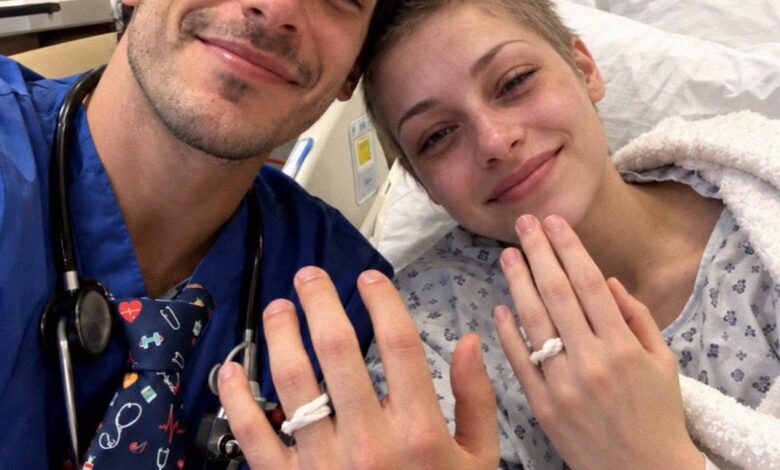
I thought marrying my dying patient was an act of kindness. But after her funeral, her sister handed me a sealed box with my name on it—and what I discovered inside changed everything.
My name is Lucas. I was 30, a young doctor still struggling with student loans, when I met Alicia, an 18-year-old cancer patient whose humor could brighten even the darkest hospital room.
When her treatment stopped working, she was given only a few days to live. Then she made an unexpected request: she wanted to marry me. She said I was someone who listened to her and wanted one last meaningful choice before her life ended.
Despite knowing the professional boundaries involved, I agreed. We married in her hospital room, surrounded by a few flowers, handmade rings, and tears of happiness. Two days later, Alicia passed away.
At her funeral, her sister Nora approached me with a sealed box. Inside was a lawyer’s letter revealing that Alicia had left me a large inheritance—enough to erase every dollar of my student debt.
Nora was furious. She accused me of marrying her sister for money and threatened to report me to the hospital. I was horrified. I hadn’t known about the inheritance, but I understood how suspicious everything looked.
The next morning, my supervisor took my hospital badge and launched a formal investigation. Soon, Nora’s public accusation spread online, threatening my career and reputation.
I decided to refuse the inheritance. But when I finally opened Alicia’s personal letter, I discovered why she’d chosen to leave me the money. She remembered how hard I’d worked to become a doctor and wanted to give me a chance at the life I’d sacrificed so much to build.
Still, her kindness didn’t erase my mistake. I had crossed a professional boundary, and I had to accept responsibility.
When I met Nora, I admitted that agreeing to the marriage had been poor judgment. I asked her only to tell the hospital what she’d actually witnessed. After a difficult conversation, she submitted a statement explaining what she knew—and what she didn’t.
Weeks later, the hospital reached its decision. I wasn’t found to have deliberately exploited Alicia for money, but I received a formal reprimand, mandatory boundary training, and supervised clinical duties.
I returned to work without the inheritance, still burdened by my loans, but determined to learn from what had happened.
On my first morning back, I held my new hospital badge against the scanner. My hands trembled as the door clicked open.
Dr. Patel looked at me and said, “No more weddings, Lucas.”
I nodded.
I’d wanted to give Alicia one last happy memory. Instead, I learned that even good intentions don’t excuse every decision—and that doing the right thing sometimes means accepting consequences you never expected.