My Parents Abandoned Grandma at a Nursing Home—But When I Drove 190 Miles to Rescue Her, She Told Me to Go Straight to the Courthouse…
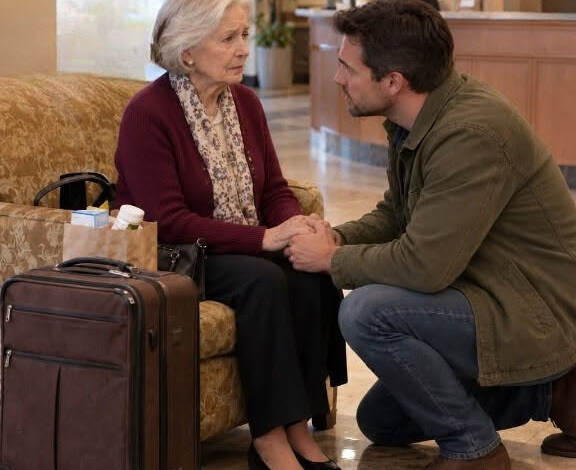
My parents told my grandmother they were taking her out for lunch. Three hours later, I received a call from a nursing home. Her suitcase had been left in the lobby, and my parents had disappeared before completing the admission paperwork.
I drove 190 miles to bring her home.
When Grandma got into my car, she fastened her seatbelt and looked at me seriously.
“Don’t call your parents, Daniel.”
“Then where are we going?”
“To the courthouse first. Then the bank.”
She pulled an old envelope from her coat. Inside was my late grandfather’s original house deed.
“Your parents weren’t trying to take care of me,” she whispered. “They wanted me out of the way.”
At the courthouse, we discovered that Grandma’s house had supposedly been transferred to a company called North Field Holdings. The deed carried a signature she insisted was forged. Even worse, my mother was listed as the company’s organizer, and my father was its manager.
The house was already listed for sale.
At the bank, we uncovered $55,000 in suspicious withdrawals. Grandma had temporarily given my father power of attorney after surgery, trusting him to manage her finances. Instead, it appeared that my parents had used that trust to take control of her money and property.
When Dad finally called, Grandma confronted him.
“Who signed my name on the house deed?”
He claimed he knew nothing about it.
But when we returned to her house, we found packed boxes, empty shelves, and family photographs removed from the walls. My parents had already started preparing the home for someone else.
Grandma was devastated. She had lived there for nearly fifty years, and now her own son had left her at a nursing home while her belongings were being packed away.
With help from an attorney, we reported the suspected fraud and began challenging the property transfer. Investigators contacted the notary whose name appeared on the deed. She denied witnessing Grandma sign it, and further records connected the suspicious transactions to a business debt my parents had concealed.
Eventually, my father admitted that he knew about the transfer. He had convinced himself he was solving a financial problem, even though he knew Grandma had never agreed to sell her home.
Months of legal proceedings followed. The disputed deed was eventually set aside, Grandma’s ownership was restored, and the bank recovered some of the missing money.
But getting her house back didn’t erase the betrayal.
When Dad finally came to apologize, Grandma listened quietly.
“I believe you regret what happened,” she told him. “But I’m not ready for you to come inside.”
For the first time, she was setting the boundaries she had been too afraid to establish before.
That spring, we planted orange marigolds around the porch. Grandma laughed as she remembered how Grandpa used to complain that the flowers were too bright, even though he bought her new trays every year.
One afternoon, she discovered an old note tucked behind the original deed. In Grandpa’s familiar handwriting were the words:
“Ellie, this house is ours because we kept choosing it.”
She handed me the note.
“I want you to remember that, too, Daniel.”
Watching her sit beneath the porch roof Grandpa had repaired decades earlier, I finally understood something important.
My parents had believed that growing older meant Grandma could no longer make decisions for herself. They had mistaken her kindness for weakness and her trust for permission.
But they had forgotten one thing.
Grandma still had her voice—and this time, she was determined to use it.