My Daughter Was Mocked at Prom for Being in a Wheelchair—Then the Principal Took the Microphone and Silenced the Entire Room
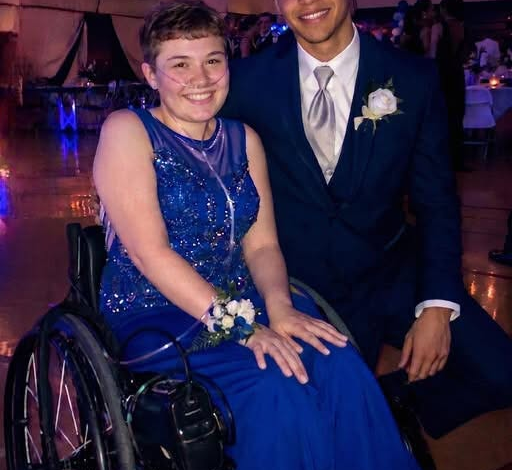
My daughter, Nora, had dreamed of going to prom for years. But after a cancer diagnosis, multiple surgeries, and the need for a wheelchair and oxygen, even the simplest teenage experiences became difficult.
Most of her friends had slowly disappeared. When they discussed prom, nobody invited her.
“I just want to see the decorations and hear the music,” she told me quietly. “Just once.”
My heart broke. So I called the principal, Mr. Green, and asked if Nora could attend.
He immediately agreed.
On prom night, I helped her into a beautiful blue dress, checked her oxygen supplies, and wheeled her into the decorated gym.
Conversations stopped. Students stared. Whispers spread across the room.
Then the music changed, and a young man named Jude approached her. He wore a navy suit and looked nervous, but he smiled warmly.
“Hey, Nora. Dance with me?”
Her eyes widened.
“Me?”
“Yeah. You.”
He gently wheeled her onto the dance floor, held her hand, and swayed with the music. For the first time in months, my daughter wasn’t thinking about hospitals or treatments. She was simply a girl enjoying prom.
Then someone laughed.
“Oh my gosh, he’s actually doing it,” a girl whispered while filming them.
Another student called the moment awkward.
Nora’s smile disappeared. Tears filled her eyes.
I rushed toward the girl with the phone.
“Put it down.”
Then I turned to Brittany, one of Nora’s former friends.
“You’ve spent years in my home. How could you let this happen?”
Brittany looked away before snapping, “She wasn’t supposed to come. Everyone knew it would be weird.”
My daughter heard every word.
I took hold of her wheelchair and began guiding her toward the exit. I had wanted to give her a beautiful memory, not another reason to feel different.
But before we reached the doors, Principal Green stepped in front of us.
“Mrs. Walker, please. Give me one minute.”
He looked at Nora.
“She belongs here. This is her prom, too.”
Then he took the DJ’s microphone. The music stopped, and the entire gym fell silent.
“We invited Nora because she deserves the same respect as every other student,” he announced. “Mocking another student and recording her humiliation is unacceptable. There will be consequences.”
Nobody moved.
Then he revealed something that made everyone reconsider what they had witnessed.
“A few weeks ago, one student came to me with a simple request. He wanted to make sure Nora could experience a real prom night—not because she needed sympathy, but because she deserved kindness.”
He looked directly at Jude.
“That is what decency looks like.”
The room was silent.
Jude returned to Nora and knelt beside her wheelchair.
“If you still want to dance, I’m here.”
Through her tears, Nora smiled.
“Okay.”
The music began again. This time, other students approached to apologize. One girl even tied a ribbon from the corsage table onto Nora’s wheelchair.
The night wasn’t perfect, but something had changed.
On the drive home, Nora leaned back, exhausted but smiling.
“Mom, when Jude asked me to dance, I forgot about the oxygen tank.”
I reached over and held her hand.
“For a little while, I felt like myself again,” she whispered.
That night, as I tucked her into bed, I realized something I would never forget: sometimes, one person’s kindness can make a difference when an entire room chooses to look away.
And sometimes, the most powerful lesson comes from the person everyone else underestimated.