A Nurse Told Me About the Woman Visiting My Dying Husband—Then a Letter Revealed the Truth About a 5-Year-Old Boy
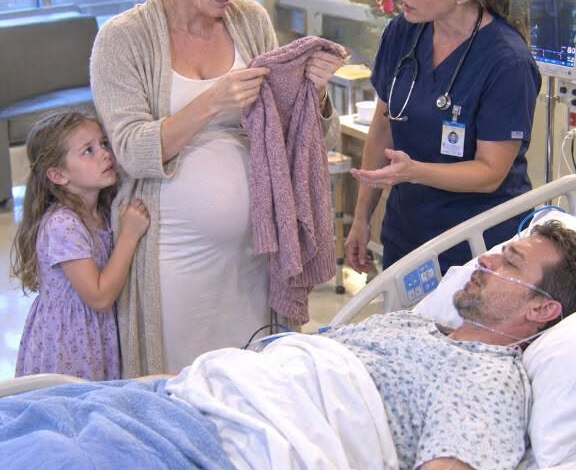
When my husband, Simon, died while I was six months pregnant, my entire world fell apart.
I was left raising our four-year-old daughter, Sadie, while facing funeral expenses, medical bills, and a mountain of debt. I thought I knew everything about the man I had loved since high school.
Then a nurse handed me a gray cardigan that didn’t belong to me.
She explained that a mysterious woman had visited Simon several times during his final months. The woman brought documents, spent hours with him, and seemed to share a secret he had never told me.
I couldn’t understand why my dying husband had kept this woman hidden from me.
A few days later, she appeared at my front door.
Her name was Nora, and she carried a sealed envelope Simon had instructed her to deliver only after his death.
Inside was a letter that changed everything.
Simon wrote about a five-year-old boy named Leo. He asked me to find the child, but he made one thing clear: the decision to become involved was entirely mine.
My first thought was devastating.
Had my husband secretly fathered another child?
Desperate for answers, I searched his laptop. I found legal documents, childcare payments, and a financial trust established for Leo. I also discovered an address Simon had visited repeatedly.
I drove there, determined to uncover the truth.
That’s where I met Leo, a little boy living with an approved foster family. He already knew who I was because Simon had shown him pictures of me and Sadie.
He even remembered Simon talking about our family’s everyday routines.
And when I saw how much the boy resembled my late husband, my suspicions grew stronger.
But the truth was nothing like I had imagined.
After contacting an elderly woman named Mrs. Callahan, I learned that Simon had discovered he once had an older brother named Julian.
Their parents had died when they were young, and mistakes in the foster care system had separated them. Each brother grew up believing he had no surviving family.
By the time Simon finally discovered Julian’s existence, his brother had already died.
Leo was Julian’s son.
He wasn’t Simon’s secret child.
He was Simon’s nephew.
My husband had spent his final months trying to help a little boy who had already lost too much. Knowing what it meant to grow up without family, Simon was determined to make sure Leo wouldn’t be forgotten.
Suddenly, the mysterious visits, the documents, and the financial trust made sense.
Simon had kept his search secret because he knew how much I was already carrying. I was caring for him, raising Sadie, preparing for another baby, and struggling to keep us financially afloat.
He believed that if he told me about Leo, I would immediately try to help, even if it meant sacrificing what little strength I had left.
He wanted me to have a choice.
Still, understanding his intentions didn’t erase the hurt.
I loved Simon, but I wished he had trusted me enough to tell me the truth. Nora agreed that his intentions had been understandable, but she admitted that he should have been honest with me.
I could love my husband and still acknowledge that keeping such an important secret had hurt me.
As I investigated further, I discovered that Simon had protected the financial benefits intended for me and our children, keeping them separate from Leo’s trust.
For the first time since his funeral, I felt something other than grief. There was sadness, relief, and even a little laughter as I recognized the familiar way Simon had tried to plan for everyone’s future.
But I wasn’t ready to make promises I couldn’t keep.
I contacted Leo’s social worker, met with his foster family, and consulted a family lawyer. I explained that I couldn’t immediately take on legal guardianship while preparing to welcome my new baby.
This time, I wanted to make a thoughtful decision—not one driven by guilt, grief, or the fear of disappointing my husband.
Eventually, Leo began visiting our home on weekends to play with Sadie. We let the relationship grow naturally while the guardianship process continued.
There were no instant solutions, no magical answers to the pain we had all experienced. Just small steps toward building something new.
One day, I visited Simon’s grave and placed an old photograph of him and Julian beside his headstone.
I told him that although he had found his brother too late, he had found Leo in time to make sure the boy wasn’t forgotten.
I couldn’t bring Simon back. I couldn’t undo the years his family had lost.
But I could make sure that family wasn’t lost a second time.
In the end, Simon’s greatest gift wasn’t a responsibility I was forced to accept or a burden I was expected to carry.
It was the chance to decide what kind of future I wanted to build—and the opportunity to give a little boy the possibility of belonging again.