Harrison Ford Revealed His Deepest Struggle: “I Was More Than Depressed”—Then One College Class Changed His Life
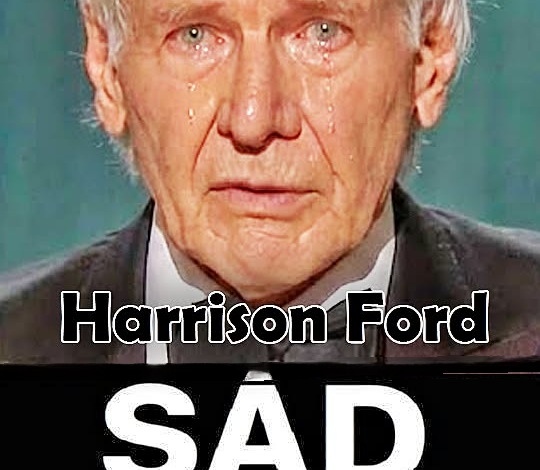
Before becoming one of Hollywood’s biggest stars, Harrison Ford experienced a dark period in his life that left him isolated, struggling, and unsure of where he belonged.
While attending Ripon College in Wisconsin, Ford later recalled experiencing what he now recognizes as depression. He described spending much of his time alone in his room, ordering pizza, eating, and returning to bed rather than attending classes or socializing.
“I was more than depressed. I think I was ill,” Ford explained. “I was socially ill, psychologically not well.”
At the time, he had little idea how dramatically his life would change.
Hoping to find an easier route to a good grade, Ford enrolled in a drama class. He expected to read and analyze plays, but soon discovered that students were also required to perform in them.
He had never done anything like that before.
Yet the experience introduced him to people he had previously considered fellow outsiders. He discovered that many of them were fascinating storytellers who understood human behavior in ways he had never expected.
For the first time, Ford began to feel that he had found a place where he belonged.
“I think I simply found my place amongst storytellers,” he recalled. “It really changed my world, changed my life.”
That unexpected college class helped set him on the path toward acting and the extraordinary career that followed, including his iconic roles as Han Solo in Star Wars and Indiana Jones.
Decades later, Ford continues to work in Hollywood. In the Apple TV+ series Shrinking, he portrays Dr. Paul Rhoades, a therapist living with Parkinson’s disease. His performance has earned praise, including from Michael J. Fox, who has spoken publicly about his own experience with the condition.
It is important to distinguish the character from the actor: Ford’s portrayal of Parkinson’s disease does not mean he has the condition himself.
Ford’s story offers a powerful reminder that sometimes the experiences that change our lives begin unexpectedly. A class he chose almost by accident helped him discover a passion, a community, and a future he could not have imagined during his darkest days.
His journey also highlights something many people struggle to recognize: feeling lost at one stage of life does not mean you will always feel that way. Sometimes, finding the right environment and people can open a door to an entirely different future.