My Daughter-in-Law Served My Homemade Ham to Her Parents While Telling Me to Eat Leftovers — So I Took It Home and Changed Everything
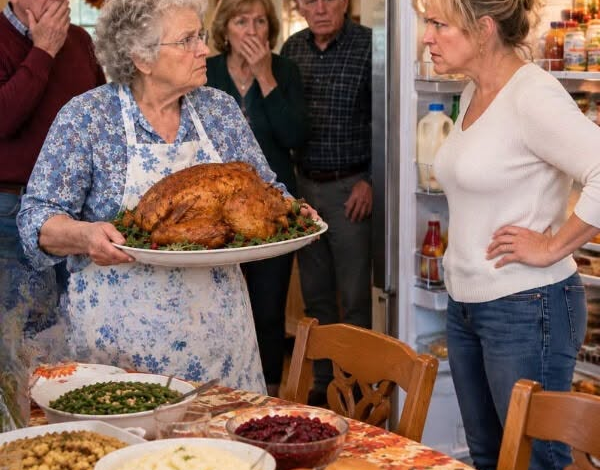
Dorothy, there’s food in the refrigerator if you’re hungry. Tonight’s dinner is for our special guests.”
My daughter-in-law, Christa, gestured toward the refrigerator while I stood in her kitchen holding the twelve-pound honey-glazed ham I had spent two full days preparing.
Through the doorway, I could see a beautifully arranged dining table with five place settings for my son, Owen, his wife, their ten-year-old daughter, Maya, and Christa’s parents, Gerald and Elaine.
There was no seat for me.
I had driven forty minutes from Barrie, Ontario, carrying an $84 ham and Maya’s favorite scalloped potatoes. At sixty-three, I had spent most of my life working hard, paying off my mortgage, and saving for retirement after raising Owen largely by myself.
Even after he became an adult, I continued helping his family with groceries, phone bills, car insurance, and a monthly $400 contribution toward Maya’s expenses.
I looked at Owen, waiting for him to say something—to remind his wife that I was his mother and deserved the same respect as everyone else.
Instead, he kept his eyes fixed on the floor.
That was when something inside me finally changed.
Without arguing, I picked up the meal I had lovingly prepared, secured the heavy roasting pan in the passenger seat of my Honda Civic, and drove home.
As I traveled along Highway 400, my phone lit up with a message from Owen.
“Mom, where are you going? Christa’s parents haven’t eaten yet.”
He was worried about his in-laws’ dinner, not about how I had been treated. He didn’t ask whether I was hurt or offer an apology.
By the time I arrived home, I was remembering everything I had done for them over the years: the $1,400 I had contributed toward a family vacation, the birthday cakes I baked, the groceries I delivered, and the bills I paid without ever expecting praise or repayment.
That night, I sat at my own kitchen table, served myself a generous portion of ham and potatoes, and enjoyed the meal I had worked so hard to prepare.
Then I opened my banking account and began reviewing the financial arrangements I had allowed to continue for far too long.
I arranged for Owen and Christa to take responsibility for their own phone plan, contacted my insurance broker about separating Owen’s vehicle coverage, and canceled the automatic $400 monthly transfer.
Remembering that Christa still had a spare key to my home, I also called a locksmith to have the locks changed.
I wasn’t doing this out of spite. I was simply finished treating my financial help as something my family was automatically entitled to receive.
The following Friday, Christa arrived at my house and discovered that her key no longer worked.
She knocked furiously and demanded to know why I had suddenly changed everything.
Her reaction told me more than she probably intended.
When I opened the door, I calmly explained that I was retired and needed to protect my savings and manage my finances responsibly.
Christa accused me of making a dramatic fuss over one uncomfortable dinner.
I reminded her that I had been invited to bring food, only to be told I wasn’t welcome to share the meal with everyone else.
She called my decision immature, as though I had no right to determine what happened to my own money.
I refused to argue.
With help from my longtime insurance broker, I made sure the necessary changes were handled correctly so everyone understood their new responsibilities. I also began reviewing my retirement plans, future expenses, and estate arrangements, considering whether I needed professional legal advice to ensure everything was in order.
My home, my savings, and my future belonged to me.
I had spent decades building a secure life, and I wasn’t going to sacrifice my peace simply to keep other people comfortable.
Still, one concern weighed heavily on my heart: Maya.
She had always been one of the greatest joys in my life, and I didn’t want the disagreement between the adults to make her feel responsible.
A few weeks later, she called me on a video chat and quietly asked whether I was angry with her.
I reassured her immediately that she had done nothing wrong. I told her I loved her and that we would always find time to talk and spend time together.
Then, one afternoon, Owen showed up at my house alone.
He sat across from me at the oak kitchen table, looking more uncomfortable than I had seen him in years.
Finally, he admitted the truth.
He had known I was being treated unfairly that night, but he had remained silent because he didn’t want to create an argument between himself and Christa.
For the first time, we spoke honestly about the things we had both avoided for years.
Owen apologized for failing to defend me, and I accepted his apology.
But forgiving him didn’t mean I would immediately restore the financial arrangements.
From then on, he and Christa were responsible for their own household expenses.
For the first time in years, I started putting some of my retirement money toward the things I had always postponed.
I replaced my aging furnace, planned a trip to Cape Breton with my longtime friend Cecilia, and enrolled in cello lessons—a childhood dream I had nearly forgotten.
Slowly, my relationship with Owen began to improve.
Maya continued visiting and calling, and our bond remained strong.
One weekend, she came over to spend time with me. We made soup together, watched old musicals, and set the dining table for dinner.
This time, there were two plates: one for her and one for me.
“Grandma, your house always feels nice,” she said with a smile.
Her simple words touched me more deeply than she could ever have imagined.
I still enjoy cooking for the people I love. I still believe that generosity can bring families closer together.
But I have learned that being generous should never mean accepting disrespect or giving away so much that I neglect my own needs.
That twelve-pound ham became a symbol of the day I finally stood up for myself.
I didn’t take it home because I wanted revenge. I took it home because I realized I deserved to sit at the table, too.
At sixty-three, I was ready to enjoy the life I had worked so hard to build, surrounded by people who appreciated me for who I was—not merely for the money, meals, and favors I could provide.