A Doctor Married His Dying Patient — But After Her Funeral, Her Sister Accused Him of Marrying Her for Money
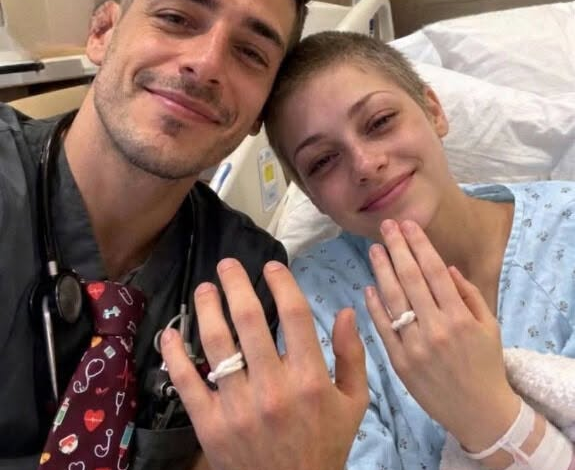
I was thirty years old, a physician with a medical degree and student loans that still kept me awake at night.
Then I met Alicia, an eighteen-year-old cancer patient who could make the entire oncology ward laugh, even on her worst days.
She often joked with me, especially when she noticed how exhausted I looked from working weekends to pay for medical school.
But when her treatment stopped working, everything changed.
One Tuesday, her doctors told her family she might have only three days left.
Instead of asking about another treatment, Alicia asked me to sit beside her.
“I have one final wish,” she said.
“What is it?”
“I want to marry you.”
I initially thought she was joking. But she explained that she wanted one important moment in her life that she could choose for herself.
I was her physician, and I knew there were serious professional boundaries involved. I transferred her care to another doctor, but I never sought proper guidance about whether agreeing to the marriage was appropriate.
The next day, we held a small ceremony in her hospital room. I wore a tie instead of my white coat, and a nurse made two simple rings from strips of bandage. Alicia wore a white scarf like a bridal veil.
Her sister, Nora, brought flowers and thanked me for giving Alicia a special day.
For a few hours, the hospital room felt like somewhere else entirely.
Two days later, Alicia died.
At her funeral, Nora approached me carrying a sealed box with my name written on it.
“She wanted you to open this only after she was gone,” she whispered.
Inside was a lawyer’s letter explaining that Alicia had left me her share of her grandmother’s inheritance.
The amount was enough to pay off every student loan I owed.
I was stunned.
But before I could finish reading the documents, Nora saw the inheritance papers.
“What the hell? She left you Grandma’s money?”
I tried to explain that I hadn’t known about it.
“Then why did you marry her?” she demanded.
I reminded her that she knew the wedding wasn’t romantic. But she no longer believed me.
She accused me of taking advantage of her dying sister and threatened to report me to the hospital.
I stood beside my car holding the box, suddenly realizing that my career could be at risk.
That evening, I opened my laptop and entered the inheritance amount into my student loan calculator. Every debt disappeared.
For a moment, I imagined what it would feel like to finally be financially free.
Then I closed the laptop.
The next morning, I contacted the estate lawyer and formally refused the inheritance.
I also called Nora, hoping she would understand.
She didn’t.
“You only changed your mind because you got caught,” she replied.
Then she hung up.
When I arrived at the hospital, Dr. Patel was waiting for me.
“Your patients have been reassigned,” she said. “I need your identification badge.”
She explained that marrying a patient crossed a professional boundary, and transferring Alicia’s care did not automatically make my decision appropriate.
I handed over my badge.
I had spent years working toward becoming a doctor. Now I wasn’t even allowed to enter the ward in my professional capacity.
That evening, I finally opened Alicia’s handwritten note.
She explained that her grandmother had left money for both sisters, hoping they could build better futures.
“You told me you worked your way through medical school. Everyone says you’re lucky to be a doctor. I don’t think they understand what it cost you.”
She continued:
“Nora still has her half. I can’t use mine to live the life Grandma wanted for me. Maybe it can help you get some of yours back.”
Then came the words that broke my heart:
“The wedding was something I wanted. This is something I want to give you. You deserve to have a good life, Doc.”
I couldn’t bring myself to accept it.
Meanwhile, Nora posted a photograph of our wedding online, accusing me of marrying her dying sister for her inheritance.
The photograph spread quickly.
People began questioning my intentions, and even former colleagues wanted explanations.
I considered posting Alicia’s letter as proof, but I realized that exposing her private final message just to defend myself would be wrong.
Instead, I prepared an honest statement for the hospital.
I admitted that Alicia had asked me to marry her and that I had agreed. I also acknowledged something I had avoided saying before: I was the medical professional, and I was responsible for maintaining appropriate boundaries.
I couldn’t blame Alicia for my decision.
When I met Nora again, I returned Alicia’s scarf and the little bandage ring.
I told her I understood why the inheritance had raised questions, but I had never married Alicia for money.
“I should have refused the marriage,” I admitted. “But I didn’t marry her for her inheritance.”
Nora remained angry.
She refused to withdraw her complaint, but she eventually agreed to tell the hospital what she had actually witnessed.
In her statement, she explained that she had helped arrange the wedding knowing it wasn’t romantic. She also acknowledged that she had no firsthand knowledge that I had expected an inheritance, while maintaining her concerns about my professional judgment.
She even revised her social media post.
It wasn’t an apology, and it wasn’t an endorsement of what I had done. But it was the truth as she understood it.
Several weeks later, the hospital completed its investigation.
They found no evidence that I had deliberately exploited Alicia for financial gain. However, they concluded that marrying a patient demonstrated poor professional judgment.
I was allowed to return under strict conditions: a formal reprimand, mandatory professional-boundary training, and supervised clinical duties.
I accepted.
Alicia’s inheritance refusal was finalized, and my student loans remained.
My parents helped me through the difficult weeks, and I even began working some Saturdays at my father’s shop while waiting for the hospital’s decision.
On my first morning back, I stood outside the oncology ward holding my replacement identification badge.
My hands trembled slightly.
Dr. Patel looked at me and said sternly:
“No more weddings, Lucas.”
I nodded.
The door unlocked, and I stepped back into the hospital.
I had lost some of my professional standing, faced public accusations, and learned a painful lesson about the boundaries I was responsible for protecting.
But I had also learned that good intentions do not automatically make every decision right.
And perhaps the most important way to honor Alicia wasn’t to accept her money or defend myself endlessly.
It was to become a better doctor.