I Went to Withdraw $300 for My Grandson’s Birthday — Then the Bank Teller Told Me $61,000 Was Missing, and My Daughter Confessed
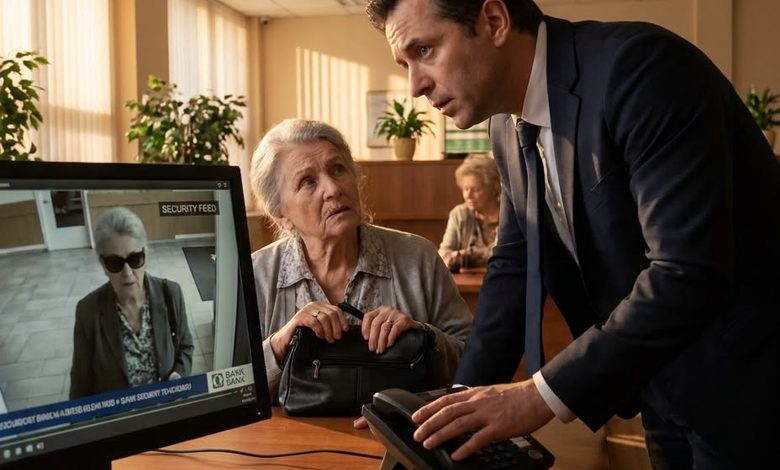
I went to my bank to withdraw $300 for my grandson’s seventeenth birthday, but instead discovered that someone had stolen $61,000 from my savings account—and the person responsible was someone who’d sat at my kitchen table, attended my church, and known my family for decades. My name is Eleanor Lane. I’m eighty years old, and I’ve banked at First Miami Valley Bank in Dayton, Ohio, since March 1971, when my late husband Harold and I opened our first savings account with just forty dollars. Harold taught shop class for thirty-four years before dying of a stroke six years ago. He left me our paid-off house, a modest pension, and a $140,000 life insurance policy. I’d carefully protected those savings, recording every balance in a green ledger at my kitchen table. At the end of October, my account held $87,412.18. But when the bank manager, Mr. Okafor, asked me to come in for an urgent meeting, he showed me three withdrawal slips totaling $61,000. The amounts were $20,000, $21,000, and another $20,000, all taken over three weeks. Each slip carried my name, but none had my signature. Then he showed me a security photograph of a gray-haired woman wearing my old green wool coat, the one I’d mysteriously lost at Easter. The teller, Brittany, apologized tearfully, explaining that the woman knew my birthday, my mother’s maiden name, and even the name of my cat, Pickles. She’d also known he was recently sick. I remembered telling my fifty-four-year-old daughter Karen about Pickles just weeks earlier. I asked Mr. Okafor to put Karen on speakerphone. When she answered, I asked where my green coat had gone. There was a long silence. Then my daughter whispered, “Mom, please don’t hang up.” Eleven seconds later, she said four words I’ll never forget: “It was my idea.” I looked at the manager, who was quietly writing down her confession, and asked her to explain exactly what she’d done with my husband’s money.
Karen was our only daughter, born when Harold and I had nearly given up hope of becoming parents. She was bright, determined, and dreamed of becoming a veterinarian. She earned a scholarship to Ohio State but left college during her second year to marry Brian Whitaker, a handsome salesman Harold never trusted. Over the years, Brian moved from one unsuccessful business to another, and Karen frequently came to us for financial assistance. I’d lent her $4,000 in 2009, $11,500 in 2014, and $18,000 in 2019 for what she claimed was a necessary roof replacement. I never demanded repayment or written agreements. She was my daughter, and I believed helping her was part of being a mother. Karen and Brian had two sons, Tyler and Ben. Ben loved fishing, just as Harold had, and I wanted to give him $300 for his birthday, tucked into a card decorated with a fish. Instead, I sat in the bank manager’s office listening as Karen admitted that Brian had secretly borrowed $210,000 against their house to open a gym. The business failed, the loan went into default, and foreclosure was approaching. Rather than tell me the truth or ask for help, they decided to take money from my account without permission. Brian had taken my identification from my purse during Easter dinner. Karen supplied personal information that would help someone answer the bank’s security questions. Then Brian’s seventy-eight-year-old mother, Diane, dressed in my missing green coat and visited my bank three times, pretending to be me. Diane had been my friend for fifteen years. We’d attended church together, exchanged meals, and comforted each other through our husbands’ deaths. Now I learned she’d looked my teller in the eye and used my name to withdraw money I’d spent a lifetime protecting. Karen insisted they’d intended to return it, explaining that Brian expected another business deal to provide the funds. When I asked how much remained, she admitted only about $11,400 was left. The rest had covered overdue mortgage payments and improvements to their kitchen, including an expensive Wolf range and quartz countertops. I couldn’t believe my husband’s life insurance money had been turned into someone else’s luxury appliances. But what hurt most was Karen’s explanation that she’d considered the money an advance on the inheritance she’d eventually receive. I reminded her of something she seemed to have forgotten: I was still alive.
Mr. Okafor explained that the bank would open a formal fraud investigation, although reimbursement wasn’t guaranteed because the withdrawals had been made in person using identification and correctly answered security questions. He also told me the evidence would need to be reported to the appropriate authorities. I wasn’t interested in hiding what had happened merely because my family was involved. Before leaving, I arranged for my remaining savings to be transferred into a new account with stricter verification procedures and a private security password. The manager contacted an attorney named Philip Reyes, who’d prepared Harold’s will many years earlier, and a police officer named Alvarez agreed to meet us at Karen’s house. I telephoned my daughter and instructed her to gather whatever money remained and have it ready when we arrived. An hour later, I walked into her beautiful Centerville kitchen with an officer and an attorney beside me. On the island lay bank envelopes, cash, jewelry, and Brian’s watch. Karen had managed to gather $11,400. Then Diane appeared in the doorway wearing a navy cardigan and pearls. She looked like the woman I’d known for years, except now I understood that she’d impersonated me at the bank. She admitted wearing my green coat and making all three withdrawals. She explained that after her husband Frank died, she’d struggled financially and emotionally. Brian had supported her for years, and when his gym failed, she was terrified of watching him lose everything. He’d convinced her that my savings would eventually belong to Karen anyway, so taking them early was somehow acceptable. Diane admitted she knew it was wrong from the beginning. She said she feared losing her son and believed helping him was the only way to remain close to him. Then she said something that nearly broke my heart: she’d rather become my thief than be completely alone. I crossed the kitchen and took her trembling hands. I told her I was angrier than I’d ever been, but I wouldn’t pretend she was beyond redemption. Philip prepared a repayment agreement acknowledging the $61,000 taken without authorization. Karen and Brian would repay the amount with interest through monthly payments, and a mortgage would be recorded against their home to help secure the debt. The police took statements, and the bank opened its investigation. I thought I finally understood the full extent of the betrayal. But Officer Alvarez mentioned something else before leaving. She recalled an unresolved shortage in our church’s roof fund, money that had disappeared years earlier without anyone determining why. Diane had been involved with church collections for a long time. The following Sunday, our church treasurer Gloria quietly approached me after the service. She admitted she’d discovered a discrepancy of more than $11,000 but had hesitated to accuse a longtime volunteer. I asked to see the church’s financial records. For the next week, I examined twelve years of ledgers using the bookkeeping skills I’d learned long before marrying Harold. The more accounts I checked, the more missing money I discovered. There were shortages in Christmas offerings, memorial donations, and even the food pantry fund. When I finished adding the figures, the total came to $27,640. I took the ledger to Diane’s house, placed it on her coffee table, and asked whether she’d stolen that money too. She closed her eyes, nodded, and said—
“Yes, Eleanor. I took it.” Diane confessed she’d been taking small amounts from church collections for years and giving the money to Brian, hoping that if she helped her son financially, he’d visit more often and make her feel needed. She admitted her loneliness had become so overwhelming that she’d convinced herself each small theft was a temporary solution. I listened, then told her she needed to confess to the church herself. She was terrified she’d be expelled from the congregation she’d attended for thirty years. I promised to sit beside her, though I made clear that my friendship didn’t mean the thefts were forgiven. That November, Diane stood during a Sunday service and admitted what she’d done, stating the amount she’d stolen and apologizing without making excuses. The congregation was stunned. Then Gloria, the treasurer, stood and acknowledged that she’d discovered suspicious transactions earlier but hadn’t acted because she was afraid of confronting a friend. Other members began speaking about mistakes they’d made, and the service became an unexpected moment of painful honesty. The church council eventually arranged a modest repayment schedule, required Diane to step away from handling collections, and recommended counseling. They also strengthened financial controls so two unrelated people would count and document future donations. Diane was allowed to continue attending services, and some members welcomed her back to coffee hour. Meanwhile, the investigation into my missing savings continued. Authorities determined that Brian had taken my identification, prepared the forged withdrawal slips, supplied his mother with my information, and driven her to the bank. Karen had knowingly participated, while Diane admitted impersonating me. The prosecutor pursued the case primarily against Brian, with Karen and Diane cooperating. Brian eventually pleaded guilty to theft and forgery offenses and received three years of community control, community service, financial counseling, and a restitution order. Karen separated from him that summer. For months, she barely spoke to me, although repayment checks continued arriving. Then, one cold Sunday in February, she appeared at my door looking exhausted. She explained she’d begun therapy and finally understood how fear of losing Brian had shaped her decisions for decades. She’d been afraid that refusing him would mean the end of their marriage. I reminded her that she always had the right to say no. Karen apologized for stealing from me, but said paying back the money wasn’t enough. She wanted to rebuild our relationship and finally learn what I wanted from my remaining years. I thought about Harold, his fishing trips with Ben, and how much I’d missed having my family together. Then I told her I wanted something simple: a day fishing with my grandson at Caesar Creek, the place Harold used to take him. Karen promised to arrange it. That April, the three of us sat on a wooden dock with our fishing lines in the water. Ben told me he knew what had happened at the bank and was sorry. I told him he hadn’t done anything wrong. When he caught a tiny bluegill and released it back into the water, I watched him smile and felt something inside me begin to heal.
The months that followed didn’t erase the betrayal, but they showed me that accountability and compassion didn’t have to be enemies. Karen found work as a receptionist at a veterinary clinic and began taking evening classes toward the career she’d dreamed of when she was young. She told me she’d be fifty-seven by the time she finished. I reminded her she’d turn fifty-seven whether she studied or not. The repayment agreement continued, with monthly checks arriving and the debt secured against the house. The bank eventually acknowledged that its staff hadn’t followed required signature-verification procedures for large withdrawals and offered me a $15,000 settlement. I used part of that money to establish a small account for Ben’s future. Diane continued counseling and volunteered at the church food pantry, carefully counting donations and supplies. She also sent me fifty dollars every month with a note that simply said, “For the coat.” I deposited those payments into the pantry fund. We eventually began sitting together at church again. I didn’t pretend we’d returned to the friendship we once had, but I believed people could face the consequences of their actions while still being treated as human beings. Almost a year after discovering the theft, I returned to First Miami Valley Bank on another October morning. Brittany, who’d since been promoted to assistant manager, greeted me warmly. I asked to withdraw $300 for Ben’s eighteenth birthday. She checked my identification, compared my signature carefully, and counted out the bills. I placed them inside another birthday card with a fish on the front. Before leaving, I jokingly asked whether she remembered my cat’s name. “Pickles,” she answered immediately. Then I asked what my late husband’s name had been. Her expression softened. “Harold, Mrs. Lane.” I thanked her and drove home. At my kitchen table, I opened the green ledger I’d maintained for fifty-three years and wrote down the latest balance. It was smaller than it should have been, but it was still mine. Then I closed the book, put the kettle on, and called Karen. She answered on the first ring. I went to the bank that first morning thinking $300 would make my grandson happy. Instead, I discovered how much trust my family had stolen. The money would take years to recover, but I’d already learned something more important: loving your family doesn’t mean allowing them to take what belongs to you, and forgiveness means very little unless the truth comes first.