Woman Noticed Her Husband’s Wedding Ring Was Missing at His Funeral – A Week Later, She Saw It on a Stranger’s Hand
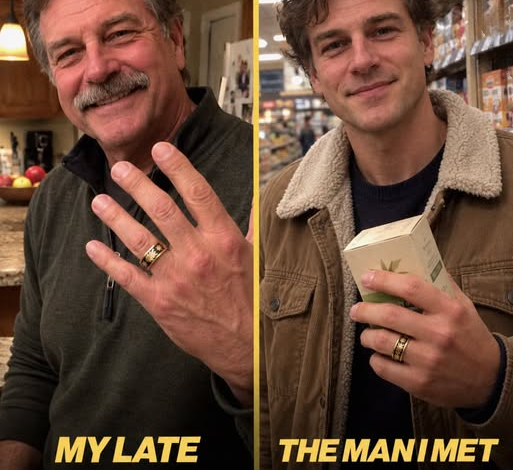
At my husband’s funeral, I noticed something that made my grief even harder to bear: the wedding band he had worn throughout our 23-year marriage was gone. I suspected someone had taken it. Seven days later, however, I spotted that unmistakable ring on the finger of a young stranger—and learned that Henry had been keeping a secret from me.
For twenty-three years, Henry had been more than my husband. He was my closest companion, my safest place, and the person I could always count on.
We had endured the heartbreak of losing two babies late in pregnancy. After the second loss, I spent months searching for something I could have done differently. I wondered whether I had failed them.
Henry never let me carry that blame alone. When I wept, he held me. When words were impossible, he stayed beside me in silence. He never suggested that our inability to have children made me any less worthy of love.
In time, we learned how to be happy together again.
Our wedding bands had been designed especially for us. Henry’s ring carried a delicate golden leaf and two little stars, representing the children we never got to raise. He wore it constantly.
Then, without warning, a heart attack took him from me at fifty-one.
That morning he had been standing in our kitchen preparing coffee. Only hours later, I sat in a hospital waiting room listening to someone explain that he would never come home.
At the funeral, I bent over his casket and reached for his hand, wanting one final touch. But the finger where his wedding ring belonged was empty.
I examined his hand, even looking under his shirt cuff.
“Where is Henry’s ring?” I demanded.
My sister Diane gently slipped an arm around my shoulders. “Marissa, sweetheart…”
“Someone must have taken it!”
I asked the funeral director to search again, then again. I phoned the hospital and questioned the people who had cared for Henry. In my desperation, I even accused someone of stealing it.
No one knew where the ring had gone.
Eventually, exhausted by grief, I told myself that perhaps Henry had misplaced it before he died.
Seven days after the funeral, I finally made myself visit the grocery store. I stopped in front of a shelf holding Henry’s favorite tea, but the box was too high for me to reach.
“Excuse me,” I asked a young man standing nearby. “Would you mind getting that tea down?”
He lifted his arm, and his sleeve slid toward his elbow.
I saw a golden leaf. Then two tiny stars. And beside the second star, a small scratch.
I knew that scratch. Henry had made it while trying to fix our kitchen door.
“Where did you get that ring?” I asked.
The young man turned toward me. “Sorry?”
“That ring!” I caught his wrist before I could stop myself. “It’s my husband’s. He died last week!”
All the color disappeared from his face.
“Your husband?” he whispered.
“Henry. My husband was Henry.”
The tea fell from his hand.
“Are you Marissa?”
I let go of him immediately. “How could you possibly know who I am?”
He glanced from my face to the band on his finger.
“Henry gave it to me,” he said. “What are you saying? He’s dead?”
His eyes began to shine with tears.
“That can’t be true. He told me he was going to call.”
I held tightly to my shopping cart. “Who are you?”
“Patrick,” he answered, wiping his cheeks. “My name is Patrick.”
Then he said something that made the entire store seem to tilt around me.
“Henry was planning for us to meet. He said he wanted the three of us to become a family.”
“A family?” I repeated. “What does that mean?”
Patrick lowered his eyes to the ring. “He made me promise not to say anything until he had spoken with you. He was worried you might not want me in your life.”
I knew we could not have that conversation beside the grocery shelves. I asked him to join me at the coffee shop across the road.
Patrick appeared to be around eighteen. His dark hair was untidy, his sneakers looked well worn, and he had the uneasy expression of someone accustomed to being blamed for things.
We took seats across from one another.
“Tell me everything,” I said. “From the beginning.”
He had first met Henry through the weekend program at our church. Every Saturday, my husband helped organize food deliveries, repair things, and support young people who needed someone dependable.
I knew Henry volunteered. What I hadn’t known was how important Patrick had become to him.
“I grew up in foster homes,” Patrick explained. “I turned eighteen a few months back.”
After leaving foster care, he had rented a room and struggled to secure reliable employment. Henry helped him write a résumé, took him to job interviews, and showed him how to work on his bicycle.
“At first I assumed he was helping because he pitied me,” Patrick admitted.
“What made you think differently?”
“He didn’t go away.”
When Patrick missed a Saturday activity because he was ill, Henry appeared with medicine and soup. When the heating in his rented room broke, Henry helped him speak to the landlord and followed up until it was repaired.
“He never made me feel like I had to pay him back.”
That was exactly the Henry I knew.
Still, one question troubled me. “He used to tell me about the people he helped. Why did he never tell me about you?”
Patrick paused. “Because I asked him not to.”
“Why would you ask that?”
“I didn’t want everyone treating me like some sad charity case.”
Henry had respected that wish. Even as their connection deepened, Patrick remained afraid of becoming a subject of other people’s conversations.
“About a month ago,” he continued, “Henry started bringing up the idea of family.”
My hands tightened around my coffee cup. “What exactly did he say?”
“He wanted to know if I’d ever thought about adoption.”
I looked at him in disbelief.
“He told me adults can sometimes be adopted, too. He had already started researching it.”
“Henry wanted to adopt you?”
“He wanted to talk to you first. He said it would only happen if all three of us agreed.”
I leaned back in my chair, remembering a conversation from many years earlier. After our second baby died, I had suggested adoption myself. But I was still grieving and couldn’t imagine going through with it. Eventually, the subject disappeared from our marriage.
I had believed Henry had stopped wanting children, just as I had stopped discussing them.
“Why would he think I might say yes?” I asked.
Patrick shifted uncomfortably. “He wasn’t sure you would.”
Then he repeated something Henry had told him, something that hurt because it felt so true.
“He said you had a good life together. But he wondered if you’d both given up talking about a family because neither of you wanted to reopen the other’s pain.”
I stared at the table. Henry had understood us better than I’d realized.
“Then why did he hand you his wedding ring?”
Patrick brushed a thumb across the golden leaf.
“Because I told him I couldn’t believe his promises.”
He had lived in five different foster homes. When he was twelve, one family spoke about adopting him. He began calling them Mom and Dad, only for them to decide that raising him was too difficult. Another foster parent promised to stay in contact after he left. They never called.
“When Henry said I could be family, I thought he’d eventually back out, too.”
“What did you say to him?”
“I told him everybody leaves in the end.”
Patrick looked down at his hands.
“He said he couldn’t decide what you’d want, but he could promise that he wasn’t going to walk away from me.”
Then Henry had slipped his wedding band off his finger.
“He said he’d been wearing it for twenty-three years. He showed me the stars and told me about the two babies you lost.”
My throat tightened.
“He told me it was the most precious thing he owned. He wanted me to hold on to it until we could all meet.”
Patrick’s voice trembled as he remembered Henry’s words: “He said he was trusting me with something priceless so I’d understand he meant what he said.”
I covered my mouth. In all our years together, I’d never seen Henry willingly remove that ring.
“When were we supposed to meet?” I managed to ask.
“That Sunday. He was going to call me after speaking with you.”
I shut my eyes. That Sunday had fallen the day after Henry’s funeral.
Patrick had spent a whole week thinking the man he trusted had abandoned him.
“I called four times,” he confessed. “I thought he’d decided I wasn’t worth it.”
“Patrick…”
“I was going to return his ring. And then you told me he died.”
Tears slipped down his cheeks. “I’ve been angry at him this whole time.”
I reached across the table. “You had no way of knowing.”
After wiping his face, he asked, “Can I ask you something?”
“Anything.”
“Did Henry ever say he wanted a son?”
I remembered the way he taught neighborhood children to ride bicycles, helped with their school assignments, and spent so many Saturdays at church. He had always enjoyed being around young people. Yet after our losses, he rarely mentioned fatherhood.
“I believe he wanted to be a father more than he ever said,” I answered.
Patrick nodded, then slowly took off the band and laid it on the table.
“I should return this to you.”
I lifted it and traced the familiar mark beside the second star.
“No,” I told him. “You should keep it.”
“But it belongs to you.”
“Henry placed it in your hands for a reason.”
He studied my face. “You really mean that?”
I thought of our babies, represented by those two stars.
“Yes. Just promise me you’ll look after it.”
He nodded and carefully slid the ring back on.
That night, I told Diane everything. She listened, then asked how I felt about Henry having hidden such an enormous decision from me.
“I truly don’t know,” I admitted.
Part of me loved him even more for caring so deeply about Patrick. Another part was wounded that he’d considered changing our lives without including me sooner.
Diane reminded me that he had intended to tell me.
“Maybe he was still figuring out how to begin that conversation.”
“Maybe,” I said.
But now I would never be able to ask him.
Two days later, I went to the church to speak with Ruth, the volunteer coordinator. She knew Patrick well. When I mentioned adoption, she seemed genuinely surprised.
“Henry spoke to me about Patrick,” she said, “but he never mentioned adopting him.”
“What did he tell you?”
“That Patrick needed someone willing to remain in his life, even when it wasn’t easy.”
Ruth explained that several months earlier, Patrick had almost stopped attending the program. He had been offered a better-paying position in another town, but the employer withdrew the offer before he could move. Humiliated and furious, he stopped responding to calls.
“Henry kept reaching out,” Ruth told me. “For a while, Patrick wouldn’t even let him visit.”
I had imagined their friendship growing simply because Henry was kind. Now I understood that it had already endured Patrick trying to push him away.
“Was Henry upset with him?” I asked.
“Not once. He always said Patrick had reasons to be careful about trusting people.”
Before leaving, I asked whether Patrick had many others to rely on. Ruth shook her head.
“Very few.”
On the drive home, I thought about the enormous difference between doing kind things for someone and committing to being there for them, year after year.
Henry had been willing to make that commitment. Could I do the same?
The next evening, I called Patrick.
“Would you like to have dinner at my house?”
He sounded confused. “Why?”
“Because I want to know you better.”
After a silence, he said, “You don’t owe me anything because of Henry.”
“I understand that.”
He arrived on Friday with a bunch of flowers, looking uncertain.
“I didn’t know what I was supposed to bring.”
I’d cooked chicken soup, a dish Henry had apparently told him about many times. Over dinner, Patrick spoke about working in a hardware store and hoping to study heating and air-conditioning repair.
He was quick-witted, attentive, and remarkably stubborn. He turned down a second helping of soup three times before admitting he was still hungry.
After we ate, he noticed that the kitchen door was sticking.
“Henry used to complain about this door,” he said.
I laughed. “He tried to fix it more than once.”
Patrick asked where the toolbox was. Twenty minutes later, the door shut without catching.
He smiled proudly. “Looks like he taught me a useful trick.”
Then the smile vanished. “I wish I could show him.”
“So do I,” I whispered.
As he prepared to leave, he asked whether I would like him to visit the following week.
“I would love that,” I said, and relief crossed his face.
But the next Friday he canceled an hour before dinner. The week after that, he ignored my invitation entirely.
I wondered if he’d only come because he thought he was expected to. When I finally got him on the phone, I asked him plainly whether he actually wanted to continue seeing me.
“Yeah,” he replied.
“Then why are you avoiding me?”
He hesitated. “I figured maybe you were only being nice because you felt sorry for me.”
Suddenly I understood. He needed to see whether I would disappear the moment our relationship became difficult.
“Patrick, you aren’t required to take Henry’s place in my life,” I said. “And you don’t have to become my son simply because he hoped for it.”
He said nothing.
“I’d still like us to get to know each other. But you have to want that, too.”
A long moment passed. “Could I come this Friday?”
“Of course you can.”
Over the following months, our relationship developed in its own way. He helped me sort through Henry’s garage. I helped him study for his community college entrance assessment. We laughed together, and sometimes we argued.
One afternoon, Patrick invited me to see his rented room for the first time. It was small but tidy, with a narrow bed, a desk, and two chairs that didn’t match.
On his desk stood a photograph of Patrick and Henry outside the church.
“Henry gave me that picture,” he said.
I picked it up. My husband had an arm resting around Patrick’s shoulders, and both of them were smiling.
Then I noticed something: Henry’s wedding ring was missing.
Patrick followed my gaze. “We took that photo on the day he gave it to me.”
I studied Henry’s expression. He didn’t look worried or sorrowful. He looked proud.
“Could you make a copy for me?” I asked.
Patrick smiled. “I was hoping you’d ask.”
That evening, I set the photograph next to our wedding portrait. For the first time, I could picture the family Henry had wanted us to become.
But I also knew that his wishes alone couldn’t create it. Patrick and I would have to choose each other ourselves.
Three months after our unexpected meeting, Patrick came to help me plant flowers. We worked in the backyard for most of the afternoon, then sat on the porch with glasses of lemonade.
“Patrick, may I ask you something?”
“Sure.”
“Do you still think about being adopted?”
He turned to me. “You mean by you?”
I smiled. “Yes. By me.”
He looked toward the garden. “I thought adoption was Henry’s idea.”
“It was originally. But I’ve been thinking about what I want, too.”
He stayed quiet.
“You wouldn’t have to call me Mom, or move into my house. I wouldn’t expect anything in return.”
“Then why would you do it?”
“Because you’ve become important to me. I want to celebrate when you finish school and find your first apartment. I want to be there when life is difficult, not just when everything is going well.”
My voice shook. “I want you to have someone you know you can depend on.”
Patrick looked at Henry’s ring.
“What happens if you change your mind?”
“One bad day between us won’t make me stop caring about you.”
“People have told me that before.”
“I know they have.”
I took his hand. “I can’t show you what the next twenty years will bring. All I can do is tell you what I want, then prove it by being there.”
For a long time, he said nothing.
Finally, he asked, “Would it be all right if I called you Mom one day?”
Tears filled my eyes. “Whenever you feel ready.”
He leaned forward and hugged me.
“I think I want you to adopt me.”
Together, we researched adult adoption and made arrangements without rushing. Several months later, the adoption was official.
Diane took a photograph of us afterward, and Patrick insisted that we celebrate with dinner. He was still wearing Henry’s wedding band.
When we returned home, Patrick handed me a little envelope. Inside was another copy of the picture of him standing beside Henry outside the church.
On the back, Patrick had written: “He promised I wouldn’t have to be alone. You made sure that promise came true.”
I embraced him. Then I said the words I’d been wanting him to hear for months.
“Patrick, I didn’t adopt you just because Henry wanted me to.”
He looked up at me.
“I adopted you because you’re my son.”
His face softened into a smile. “Thank you, Mom.”
I miss Henry every single day. I wish he’d survived long enough to bring Patrick into our home himself. I wish we’d been able to talk about his hopes and decide together what our future family might look like.
But I understand something now that I couldn’t understand at his funeral. Henry hadn’t been searching for someone to replace the two children we lost. He had found a young man who desperately needed people to call family, and he hoped that perhaps we could become those people.
The ring I once believed had been stolen from my husband’s hand had actually been given away as an act of love.
It still bears the same golden leaf, the same two stars, and the little scratch beside the second one. But whenever I notice it on Patrick’s finger, I no longer think only of what was missing when we buried Henry.
I think about the family that was beginning to form long before I knew it was possible.
And I wonder: if you discovered after your spouse’s death that they had promised someone a place in your family, would you feel bound to fulfill that promise—or would you need to discover your own reasons for welcoming that person into your life?