Abdul El-Sayed Sends Cheeky Message to JD Vance After Historic Senate Election Victory
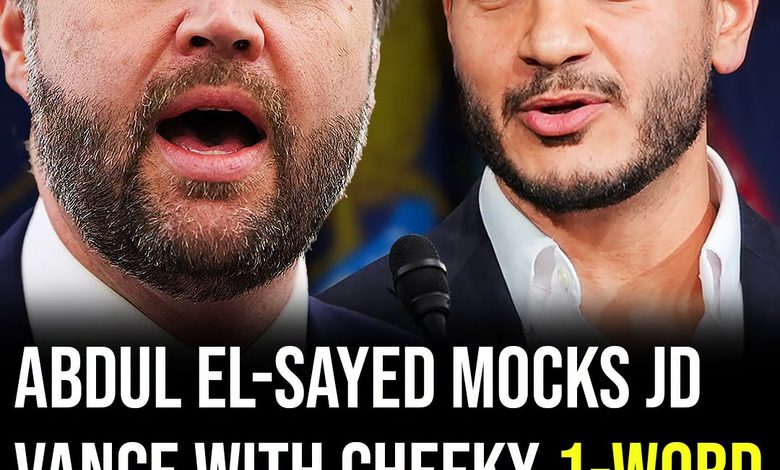
Abdul El-Sayed had a pointed message for Vice President JD Vance after securing a major victory in Michigan’s closely watched Senate race.
The 42-year-old Democrat defeated Republican Mike Rogers and is set to become the first Muslim American elected to the United States Senate. During his victory celebration in Detroit, El-Sayed took the opportunity to address two prominent Republicans who had criticized him throughout the campaign: Vance and President Donald Trump.
His message to the vice president began with a single Arabic word.
“JD, habibi,” El-Sayed said, using a term of affection commonly translated as “my dear” or “my beloved.”
He then reminded Vance of a responsibility awaiting him when the new senator takes office in January.
“There is this delicious irony in the fact that you’re constitutionally obligated to swear me in in January,” El-Sayed told the cheering crowd.
He followed the remark with a reference to one of college sports’ fiercest rivalries: “So you know what that means, Wolverine one, Buckeye zero.”
The joke played on the rivalry between the University of Michigan Wolverines and Ohio State Buckeyes. Vance attended Ohio State, while El-Sayed has strong connections to Michigan.
The comment quickly sparked mixed reactions online. Some critics described the newly elected senator as overly confident and predicted that he would face difficulties in Washington. Others praised the remark, calling it funny and well-timed.
Donald Trump Also Received a Message
Vance was not the only Republican leader mentioned during El-Sayed’s victory speech. The Democrat also directed a remark toward President Donald Trump, who had repeatedly criticized him during the campaign, including making comments about his name and Muslim background.
“Donald, look, I know you struggled with my name, so after JD swears me in in January, you could just go on and call me senator,” El-Sayed said.
The exchange followed a particularly contentious campaign. El-Sayed accused Republicans of running an aggressive campaign that focused heavily on his identity, religion and political positions.
“They went all in on one of the ugliest campaigns we’ve seen in our lifetimes,” he told supporters.
He argued that the attacks were part of a broader effort to make people from different backgrounds feel unwelcome in American public life.
“They hate the idea of an America big enough for anyone who looks a little different, or prays a little different, or whose family comes from a different part of the world,” he said.
His Republican opponent, former congressman and FBI agent Mike Rogers, had received strong support from Trump and national Republican figures.
A Historic Moment for the Senate
Beyond the exchanges with Trump and Vance, El-Sayed’s victory marks a significant milestone in American political history.
The son of Egyptian immigrants, El-Sayed is a former public health official who previously led health departments in Wayne County and Detroit. He first attracted wider political attention in 2018, when he unsuccessfully ran for governor of Michigan.
His Senate campaign focused on issues including the rising cost of living, access to healthcare and reducing the influence of corporate money in politics.
His views on Israel and the war in Gaza also became major campaign issues, attracting both support and criticism.
El-Sayed has also repeatedly rejected claims that he has links to the Muslim Brotherhood.
“I have never been a member of the Muslim Brotherhood, I never will be a member of the Muslim Brotherhood,” he told Fox News in October.
During his victory speech, he defended his support for Palestinian rights, arguing that advocating for equality should not be portrayed as hatred.
“If you believe in equal rights to peace, dignity and self-determination that’s not hate, it’s love,” he said.
For El-Sayed, the election result represented more than a personal political achievement. He presented it as a message about inclusion and the kind of country he believes the United States should be.
And with January approaching, his victory has created an unusual moment for JD Vance: the vice president will be constitutionally required to swear in a senator who made him part of the punchline on election night.