Safest US states to be in if WW3 breaks out as fears grow following attack on Iran
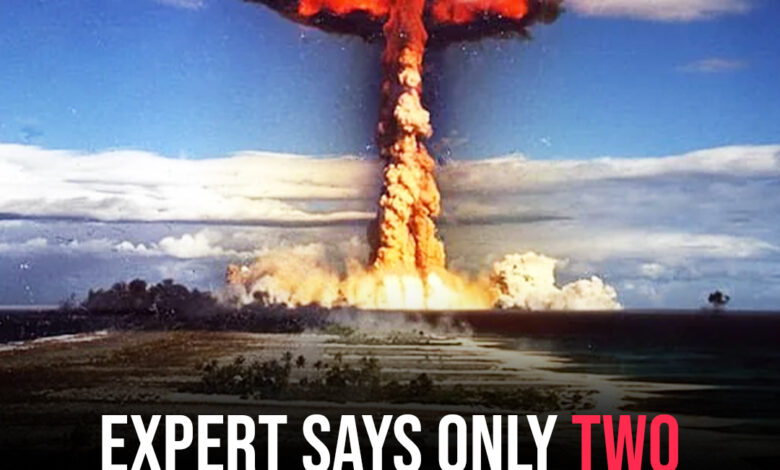
As global tensions reach a jagged peak following the massive, coordinated airstrikes launched against the Islamic Republic of Iran by the United States and Israel over the weekend, a chilling, once-dormant question has resurfaced in the American consciousness: If this spiraling conflict escalates into a Third World War, where—if anywhere—within the borders of the United States could a person actually stand a credible chance of survival?
The Return of Nuclear Anxiety
There was a definitive era in American history when students were systematically trained to “duck and cover” under their wooden desks, a psychological balm intended to brace them for a Soviet nuclear strike. These exercises provided a thin veneer of preparedness, though they offered virtually no practical protection against the thermal radiation or blast waves of a thermonuclear weapon.
Today, the geopolitical actors have changed, but the underlying dread has returned with a vengeance. With the United States now actively engaged in a kinetic military conflict with Iran, the old anxieties of the 20th century are being projected onto a 21st-century canvas.
The Casus Belli: Claims and Realities
The administration of President Donald Trump, supported by his closest national security aides, has justified the current escalation by asserting that Iran has successfully restarted its clandestine nuclear program. The administration further claims that Tehran now possesses enough weapons-grade fissile material to assemble a nuclear device within a matter of days and is in the process of perfecting long-range ballistic missiles capable of striking the American heartland.
However, these justifications are under heavy fire. According to investigative reporting by The New York Times, all three of these core assertions are either demonstrably false or remain entirely unproven by international intelligence standards. Despite this lack of verified consensus, the U.S. has moved forward with a devastating offensive.
The joint campaign, officially designated Operation Epic Fury, has struck deep into the Iranian interior. According to Sky News, the operation hit high-value targets in Tehran, Isfahan, Tabriz, Kermanshah, and Qom. Most significantly, the strikes reportedly resulted in the death of Supreme Leader Ayatollah Ali Khamenei, the man who had exerted absolute control over the nation for more than three decades.
While President Trump has issued stern warnings against any form of Iranian retaliation, strategic analysts are sounding the alarm. The fear is that any counter-offensive could specifically target U.S. nuclear missile silos, a move that would catalyze a cycle of escalation from which there may be no exit.
The Nuclear Target Map: The ‘Silo States’
The primary vulnerability of the United States lies in its “sponge” of nuclear infrastructure. According to Nuclear Forces, the vast majority of America’s approximately 2,000 active nuclear warheads are concentrated in the sparsely populated regions of Montana, North Dakota, and Nebraska, with significant stockpiles also maintained in Wyoming and Colorado.
In the event of a “counterforce” strike—an attack aimed at neutralizing the enemy’s nuclear weapons—these sites would become ground zero for catastrophic radiation. Analysts estimate that residents in the “silo states” (Montana, Wyoming, Colorado, Nebraska, South Dakota, North Dakota, Iowa, and Minnesota) could be exposed to radiation levels ranging from 1 Gy to a staggering 84 Gy. To put that in perspective, a dose of 8 Gy is considered universally lethal to humans.
Because of this concentration of targets, analysts at Newsweek suggest that the best statistical chance of surviving the initial exchange lies in the states farthest removed from this “triad” of land-based silos. Their “safety list” includes:
- The Northeast & Mid-Atlantic: Maine, New Hampshire, Vermont, Massachusetts, Rhode Island, Connecticut, New York, New Jersey, Pennsylvania, Delaware, Maryland, and Washington D.C.
- The South & Appalachia: Virginia, West Virginia, North Carolina, South Carolina, Georgia, Florida, Alabama, Mississippi, Tennessee, and Kentucky.
- The Rust Belt: Ohio, Indiana, and Michigan.
- Western Outliers: Washington, Utah, New Mexico, and Illinois.
Newsweek clarifies that this ranking is based on average radiation exposure risk calculated for every latitude and longitude point, measuring the estimated cumulative radiation dose over a four-day window in grays (Gy).
The Long-Term Horizon: The Failure of Agriculture
Even if one survives the initial thermal blast and the first week of fallout, the long-term prognosis remains grim. No location in the U.S. is entirely insulated from the environmental collapse that would follow a full-scale nuclear exchange.
In 2023, Scientific American warned that a concentrated attack on U.S. silo fields would not only annihilate local life but would contaminate the nation’s most fertile agricultural land for years, if not decades.
Investigative journalist Annie Jacobsen, speaking on the Diary of a CEO podcast, painted an even bleaker picture of the “Nuclear Winter.” According to Jacobsen, the soot from burning cities would block the sun, causing global temperatures to plummet.
“Places like Iowa and Ukraine would just be snow for 10 years,” Jacobsen explained. “Agriculture would fail, and when agriculture fails, people just die.” She emphasized that a depleted ozone layer would make subsequent sunlight deadly, driving any survivors into a brutal, subterranean existence to fight over dwindling food supplies.
The ‘Down Under’ Contingency
Jacobsen’s research suggests that for those seeking true long-term survival, the Northern Hemisphere is a lost cause. The highest probability of sustaining life exists in the Southern Hemisphere—specifically New Zealand and Australia.
Aside from being thousands of miles away from the primary nuclear targets of the Great Powers, these regions possess the unique climate and geographical isolation required to sustain agriculture during a decade-long nuclear winter. Jacobsen’s advice to those with the means to move is blunt and uncompromising: “No one is truly safe in a nuclear war. But if you’re looking for the best possible odds… pack your bags for down under.”
As Operation Epic Fury continues to unfold, the logistical reality of nuclear fallout is no longer a fringe concern. Would you like me to analyze the specific fallout patterns based on current wind currents, or provide more detail on the strategic importance of the ‘Silo States’ to the U.S. defense posture?