Neil Sedaka dies aged 86
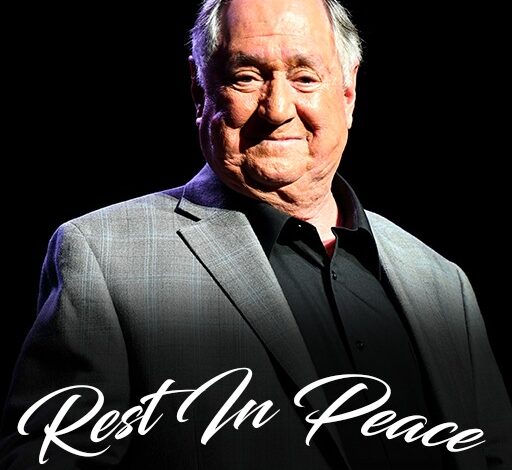
Neil Sedaka, the quintessential singer-songwriter whose melodic fingerprints defined the golden age of the 1950s and orchestrated a legendary comeback in the 1970s, has died at the age of 86. The news of his passing marks the end of a seven-decade odyssey through the heart of American popular music, leaving a void in the industry that spans from the Brill Building to the Songwriters Hall of Fame.
According to a poignant statement released by the late hit-maker’s family, Sedaka passed away this past Friday. The announcement conveyed a profound sense of grief, describing the family as “devastated by the sudden loss” of a man who was as much a pillar of their home as he was a titan of the stage.
“Our family is devastated by the sudden passing of our beloved husband, father and grandfather, Neil Sedaka,” the official statement reads. “A true rock and roll legend, an inspiration to millions, but most importantly, at least to those of us who were lucky enough to know him, an incredible human being who will be deeply missed.”
The Prodigy of Brighton Beach
Born in Brooklyn, New York, in 1939, Sedaka’s trajectory toward stardom was fueled by a rigorous classical foundation. Trained on the piano from a tender age, his transition from the conservatory to the jukebox was seamless. By the late 1950s, he had become a primary architect of the “Teen Idol” era, co-writing and recording a staggering string of pop anthems that served as the soundtrack for a generation.
His early catalog—bolstered by hits like “Oh! Carol,” “Calendar Girl,” and “Happy Birthday Sweet Sixteen”—established him as a household name. However, it was the 1962 chart-topper “Breaking Up Is Hard to Do” that truly cemented his status as a fixture of the Billboard charts, showcasing a sophisticated grasp of harmony that transcended the standard bubblegum pop of the day.
Survival and the Great Resurgence
The arrival of the British Invasion in the mid-1960s represented a seismic shift in the musical landscape, one that threatened to render the clean-cut stars of the early rock era obsolete. While many of his contemporaries faded into obscurity, Sedaka proved to be a survivor. He navigated a period of professional challenge with characteristic resilience, eventually engineering one of the most successful “second acts” in music history.
The 1970s saw a massive resurgence for Sedaka, fueled by a more mature, introspective sound. With the chart-topping success of “Laughter in the Rain” and the haunting “The Hungry Years,” he reclaimed his place at the summit of the industry. His influence extended beyond his own vocal performances; he was a vital force behind the scenes, notably involved in the Captain & Tennille’s Grammy-winning rendition of “Love Will Keep Us Together,” a song that once again proved his pen was as sharp as ever.
A Seven-Decade Symphony
Over the course of his monumental career, Sedaka composed and recorded hundreds of compositions, selling millions of units globally and earning a well-deserved induction into the Songwriters Hall of Fame. His versatility allowed his music to reach across genres, influencing everything from the doo-wop of the fifties to the soft rock of the seventies.
While the specific clinical details surrounding his cause of death have not been disclosed to the public, Sedaka remained remarkably active well into his ninth decade. He continued to perform and engage with the medium he loved into his eighties, maintaining a connection with a fanbase that spanned multiple generations.
Neil Sedaka leaves behind a catalog that is nothing short of timeless. He was a man who understood the mechanics of a perfect hook and the emotional weight of a simple lyric. As the lights dim on this particular chapter of music history, his indisputable legacy remains.
Rest in peace, Neil Sedaka. The music, thankfully, will keep us together.
Neil Sedaka’s ability to reinvent himself is a masterclass in professional longevity. Would you like me to analyze the specific songwriting techniques he used in the Brill Building era, or perhaps look into the impact his 1970s comeback had on the singer-songwriter movement?