‘Bo’ Gritz, Army Veteran Who Claimed to Inspire Sylvester Stallone’s ‘Rambo,’ Dies at 87
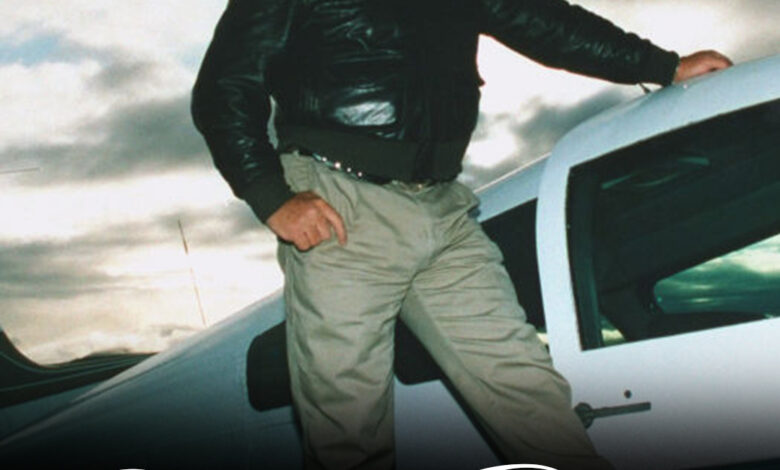
James “Bo” Gritz, the highly decorated and often controversial retired U.S. Army Special Forces officer who claimed to have inspired Sylvester Stallone’s iconic character John Rambo, has died at the age of 87.
His passing was confirmed by his wife, Judy Gritz, who shared that he died peacefully while at home. In a message reflecting on his final moments, she said he passed away “looking into the eyes of our Savior.”
Gritz lived a life that blended extraordinary military service with a post-retirement career that often placed him at the center of political and cultural debate. To supporters, he was a fearless soldier who continued defending American citizens long after leaving active duty. To critics, he was a polarizing figure whose activism and unconventional missions raised difficult questions about patriotism and authority.
Regardless of perspective, few dispute that Gritz left a lasting imprint on both military history and American political culture.
A Decorated Green Beret
During the Vietnam War, Gritz served as a lieutenant colonel with the 5th Special Forces Group (Airborne). Known for operating in some of the most dangerous regions of Southeast Asia, he became one of the most decorated soldiers of the conflict.
Among his honors were three Silver Stars, awarded for gallantry in combat.
These decorations placed him among the elite ranks of Special Forces officers whose actions were recognized for extraordinary courage under fire.
Gritz commanded Detachment B-36, a specialized MIKE Force unit composed of American Green Berets and Cambodian-Vietnamese fighters. Their operations took place in the volatile III Corps region near the Cambodian border, an area heavily contested during the war.
The missions were often complex, dangerous, and conducted deep behind enemy lines.
The U-2 Spy Plane Mission
One of the most widely cited episodes of Gritz’s military career occurred in December 1966, when he led a mission into Cambodia to recover sensitive equipment from a downed Lockheed U-2 reconnaissance aircraft.
The aircraft had crashed in hostile territory, and retrieving its black box was considered critical for intelligence reasons.
According to accounts from the time, the mission required penetrating enemy territory and navigating dense jungle terrain under the constant risk of ambush.
The operation contributed to Gritz’s reputation as a soldier willing to undertake missions that others might consider impossible.
Even years after the war ended, he often spoke of the Special Forces as his lifelong calling.
“They are my mistress,” he once said, referring to the elite military community that shaped his identity and career.
Life After the War
When Gritz left active military service, his life did not become quieter.
Instead, he emerged as a public figure in political and activist circles. He became closely associated with the Christian Patriot movement and the broader American militia movement that gained visibility in the late twentieth century.
In 1992, Gritz even ran for president of the United States as the Populist Party candidate.
Although his campaign attracted limited mainstream attention, it reinforced his image as a man deeply committed to his interpretation of constitutional principles and national sovereignty.
Throughout these years, he continued to portray himself as someone willing to step forward in moments of crisis.
“When people, American citizens, get into trouble,” Gritz once said, “I’ve been wanting to hold up my hand.”
He added that he would willingly face danger again if it meant helping fellow Americans.
The Ruby Ridge Standoff
Perhaps the most nationally visible moment of Gritz’s post-military life came during the 1992 Ruby Ridge standoff in Idaho.
The confrontation between federal authorities and Randy Weaver’s family had already turned deadly, with Weaver’s wife and teenage son killed during the siege.
Federal agents asked Gritz to act as an intermediary.
Ignoring advice from the FBI, Gritz entered the Weaver family cabin to negotiate directly with Randy Weaver. During the tense encounter, he assessed Weaver’s injuries and worked to calm the situation.
Ultimately, Gritz helped persuade Weaver to surrender peacefully, bringing an end to one of the most controversial standoffs in modern American law-enforcement history.
Reflecting on the experience years later, Gritz described the scene as devastating.
“It was just a terrible scene,” he said in an interview with the Las Vegas Review-Journal. “Weaver hadn’t fired a shot at anybody, and yet his son was dead.”
For Gritz, the episode reinforced his belief that the Constitution required constant defense.
“This is not supposed to happen in America,” he said in 2020. “I took an oath to defend the Constitution.”
Controversial Missions and Activism
While his bravery during the Vietnam War was widely recognized, Gritz’s later activities were often controversial.
He organized several privately funded missions into Laos, claiming that American prisoners of war were still being held there after the Vietnam War ended.
These efforts ultimately failed to locate surviving POWs, but they generated significant attention and fueled debate about unresolved wartime mysteries.
Gritz also attempted to mediate the Montana Freemen standoff, an 81-day confrontation between federal authorities and an anti-government group.
Unlike Ruby Ridge, his involvement in this case did not lead to a decisive breakthrough.
These actions further solidified his reputation as a figure operating on the boundary between patriotism, activism, and controversy.
The Rambo Connection
In later years, Gritz embraced comparisons between his life and the fictional character John Rambo, portrayed by Sylvester Stallone.
Rambo, the Vietnam War veteran featured in the film series beginning with First Blood, became a cultural symbol of the misunderstood warrior returning from conflict.
Gritz claimed that his experiences had influenced aspects of the character’s creation.
While historians of the films debate the accuracy of this claim, Gritz leaned into the association.
His larger-than-life persona was explored in the 2017 documentary Erase and Forget, which examined how American war narratives and Hollywood storytelling sometimes overlap.
In the film, Gritz spoke openly about his view of himself as a warrior fighting for what he believed were traditional American values.
Final Years in Sandy Valley
For more than four decades, Gritz lived in Sandy Valley, a remote desert community located near the California-Nevada border.
The area, known for its quiet landscape and wide desert vistas, became the place he considered home.
His wife recently explained that she had chosen to keep him there rather than move him to a long-term care facility.
The decision honored his longtime wish to remain in the place he loved most.
“Bo has told me several times he wants to die in Sandy Valley,” she wrote in a message shared with friends and supporters.
She added that he also hoped to be buried there.
A Complex Legacy
James “Bo” Gritz leaves behind a legacy that is both complicated and unforgettable.
To some, he was a decorated war hero who never stopped defending his country and fellow citizens.
To others, he was a controversial figure whose activism challenged political and legal boundaries.
What remains undeniable is that his life spanned some of the most turbulent chapters of modern American history — from the jungles of Vietnam to domestic political conflicts decades later.
Gritz is survived by his wife and four children.
While the exact cause of death was not publicly detailed, his passing closes the final chapter on a life marked by courage, conflict, and unwavering conviction.
For those who followed his story, James “Bo” Gritz will be remembered as a soldier, a mediator, and a man who never stopped fighting for what he believed.