For 26 Years My Husband Went “Fishing” Alone the Same Week Every October — After He Died, the Cabin Owner Called: “The Other Guest Is Asking for Him”
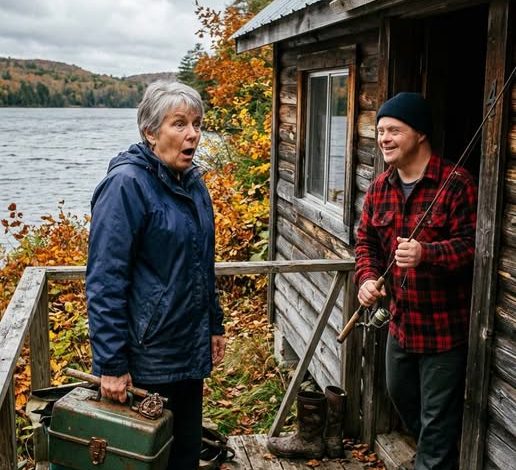
For twenty-six years, my husband Walt spent the second week of October at the same little cabin on Pike Lake. Alone. Every single year.
He called it his fishing trip. In twenty-six years, he never once brought home a fish.
“They’re smarter than me, Di,” he’d say, kissing my forehead and setting his tackle box by the back door. “One of these years I’ll catch the big one.”
The Week I Never Asked About
We were married forty-one years. Walt was a mail carrier, a deacon, the kind of man who shoveled the neighbors’ driveways before his own. He wasn’t a secretive person. That’s why I never pushed.
Once, early on, I asked if I could come along. He went quiet in a way I’d never seen. “Just give me this one week, honey. Please. I’ll tell you about it someday.”
Someday never came. Walt had a heart attack in our garden last March, holding a bag of tomato seeds. He was sixty-seven.
I got through the funeral, the casseroles, the paperwork, the first summer alone. Then October came, and for the first time in twenty-six years, nobody packed a tackle box.
The Phone Call
On the second Monday of October, my phone rang. An older man’s voice, gravelly and careful.
“Is this Diane Harmon? My name is Gus. I own the cabins up at Pike Lake. I’m calling about Walt.”
I told him Walt had passed in March. There was a long silence.
“I’m so sorry, ma’am. I didn’t know. That explains it.” He cleared his throat. “Thing is, Walt’s room is paid up through 2040. He prepaid it years ago. But he didn’t show up yesterday, and the other guest keeps asking where he is. He’s been sitting on the dock since Sunday morning waiting.”
“The other guest?”
“Ma’am… Walt never came up here alone. Not once in twenty-six years.”
I don’t remember hanging up. I remember sitting on the kitchen floor with the phone in my lap, running every terrible possibility through my head. Another woman. Another family. Twenty-six Octobers of lies.
The next morning, I drove three hours north.
Cabin 4
Gus met me in the gravel lot. He was in his seventies, with a face like a tree stump and kind eyes. He didn’t say much. He just walked me down the path to Cabin 4 and handed me an envelope with my name on it in Walt’s blocky handwriting.
“He left this with me five years ago. Said if he ever didn’t show, I was to give it to you. Only you.”
Before I could open it, the cabin door creaked.
A man stepped out. He was in his early sixties, in a red flannel shirt buttoned all the way up, holding Walt’s old canvas fishing hat in both hands like it was something holy. And when he looked up at me, I stopped breathing.
He had Walt’s eyes. Walt’s exact eyes.
“You’re Diane,” he said, smiling. “Walt said you’d come someday.”
Teddy
His name was Teddy. He had Down syndrome, a laugh like a screen door slamming, and the same crooked front tooth my husband had. He was Walt’s younger brother.
The brother Walt’s parents told everyone had died as a newborn in 1963.
I sat on the dock and read Walt’s letter while Teddy fished beside me, humming.
“Di. If you’re reading this, you’ve met Teddy, and I’m sorry I didn’t introduce you myself. When I was cleaning out Mom’s house after she died, I found twenty-five years of payment receipts from a state institution. That’s how I learned I had a brother. Mom and Dad sent him away the day he was born and told the whole town he hadn’t survived. I was four. I grew up thinking I’d had a baby brother who died.”
“I found him in a group home up north. He was thirty-seven years old, and nobody had ever visited him. Not once. The staff told me he loved two things: fishing shows and anybody who’d sit with him. So I rented a cabin and I sat with him.”
“I meant to tell you that first year. Then I was so ashamed of what my parents did, and so ashamed I hadn’t known, that every year it got harder to say out loud. That’s on me, not on him. Teddy’s room is paid through 2040, and the group home knows to bring him every October. If you can find it in your heart, sit with him sometimes. He’s the best fishing partner a man ever had. He’s caught a fish every single year. I never have.”
Twenty-Six Years of Photographs
Inside the cabin, a corkboard covered one whole wall. Twenty-six photographs, one for every October. Walt and Teddy on the dock. Walt and Teddy in matching rain ponchos. Teddy holding up a fish, every single year, grinning, while Walt pointed at it like it was the Super Bowl.
In the middle of the board was a photo I recognized. It was our wedding picture. Walt had given Teddy a copy.
“That’s my sister-in-law,” Teddy said proudly, tapping it. “Walt says you make the best pie in the whole state.”
I’d spent the drive up imagining another woman. Instead, my husband had spent twenty-six Octobers being the only family a forgotten man ever had. And he’d done it quietly, the way Walt did everything good.
“Where’s Walt?”
That evening, Teddy asked me. I’d been dreading it. I told him as gently as I knew how.
He was quiet for a long time. Then he put Walt’s hat on my head, a little crooked. “Then you have to fish now,” he said. “Somebody has to.”
I stayed the whole week. I have never fished in my life. Teddy taught me to bait a hook with more patience than any teacher I’ve ever had. On Thursday, I caught a perch about the size of a dinner roll. Teddy cheered so loud that Gus came running down the path.
I caught a fish my first year. Walt never did. I think he’d have laughed about that for a month.
Every October Now
Teddy spends Thanksgiving with me now. And Christmas. And his birthday, which nobody in this family celebrated for sixty-two years. My grandchildren call him Uncle Teddy and argue over who gets to sit next to him.
I had his name added to the family Bible, right under Walt’s, where it should have been since 1963.
And every second week of October, I pack a tackle box and drive three hours north. The room is paid through 2040. I intend to use every one of those years.