Half a Century of Cryonic Preservation: The Story of the First Frozen Human
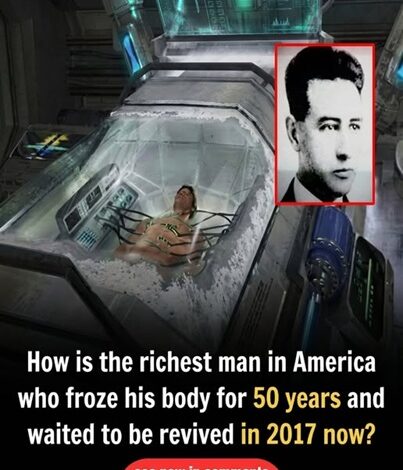
In January 1967, a decision was made that would echo through the history of experimental science and human imagination: Dr. James Hiram Bedford became the first person to have his body cryonically preserved after death.
Bedford’s choice — to entrust his remains to a process once considered fringe and speculative — represented a bold and controversial attempt to bridge the gap between mortality and the possibility of future medical advancements.
More than half a century later, his body remains stored in liquid nitrogen, a testament to early efforts in cryonics and the enduring human hope of transcending biological limits.
Who Was James Hiram Bedford?
James Hiram Bedford was born on April 20, 1893. He was an American psychology professor at the University of California, where he wrote several books on occupational counseling and worked with students and colleagues in higher education.
Bedford was not a physicist, biologist, or engineer — but his professional life placed him within intellectual circles where fringe ideas about life extension and human longevity were being discussed in the 1950s and 1960s.
By the mid‑1960s, Bedford — a World War I veteran and scholarly academic — had been diagnosed with kidney cancer that had spread to his lungs.
Medical treatments at the time were extremely limited, and his condition was considered terminal. Recognizing that traditional medicine offered little hope, Bedford began exploring more experimental ideas documented in emerging literature on aging and future medicine.
Cryonics and Early Influences
The idea of cryonics — preserving the human body at extremely low temperatures in the hope of future revival — was pioneered not by Bedford himself but by others who had published on the concept.
In 1962, Dr. Robert C. W. Ettinger, a physics teacher, published The Prospect of Immortality, a book proposing that technological progress might one day allow the dead to be revived and cured of their diseases.
Ettinger’s work was the first major popular treatment of the idea that human beings could be frozen and reanimated, and it attracted the attention of Bedford and like‑minded thinkers.
At the time, cryonics was scarcely more than a speculative proposal. There were no established scientific protocols, no regulatory framework, and very little acceptance from mainstream science.
Yet Bedford became deeply interested in the concept and believed that his own experience could contribute to understanding whether the idea had merit.
The Preservation of Bedford: What Actually Happened
January 12, 1967: A Milestone in Experimental Science
When James Bedford died of cancer on January 12, 1967, at age 73, his death was followed by a cryonic preservation procedure that was unprecedented in human history — and remains unique among early cases.
A team from the Cryonics Society of California — led by Robert Nelson, with assistance from Robert Prehoda and Dr. Dante Brunol — immediately set about preparing Bedford’s body for long‑term cold storage.
In the first hours after Bedford’s legal death, his body was treated with a cryoprotective solution — including dimethyl sulfoxide (DMSO) and other compounds — in an early attempt to reduce ice crystal formation during freezing.
These methods were “primitive” by today’s standards; modern cryonics uses advanced cryoprotectants and processes that were not yet developed.
Unlike most modern procedures, Bedford’s blood was drained and replaced with a saline solution before being infused with DMSO, a strategy once thought to help protect tissues.
After this preparatory phase, his body was cooled toward subzero temperatures and eventually placed in a dewar — a vacuum‑insulated container — filled with liquid nitrogen at approximately −196 °C (−321 °F).
At that time, Bedford’s goal was not immediate restoration — he publicly stated that his aim was to contribute to the exploration of cryonics and the possibility that future generations might one day benefit from advances in science that could reverse or cure conditions now considered fatal.
Early Challenges and Multiple Storage Locations
Cryonics in 1967 was rudimentary, improvised, and ad hoc. Bedford’s body did not remain in a single facility. After the initial freezing in California, his body was moved repeatedly over the following years: first to facilities in Arizona, then to California storage spaces, and eventually into long‑term care arrangements.
In 1969, one of his first moves was from a basic storage arrangement to a cryogenic facility owned by a commercial storage company in Anaheim.
Later, Bedford’s daughter and son — particularly his son Norman Bedford — fought legal challenges from other relatives who sought to have him buried traditionally. These disputes, coupled with logistics and cost issues, resulted in multiple relocations.
In 1976, Alcor Life Extension Foundation was established, becoming one of the key organizations dedicated to cryonic preservation. Bedford’s body was eventually transferred into Alcor’s care, with permanent storage beginning in 1982. In 1991, his remains were placed into a new, modern dewar designed for long‑term high‑vacuum storage.
Alcor later moved its entire facility from California to Scottsdale, Arizona, partly due to earthquake concerns, and Bedford’s body has remained there ever since.
Condition and Scientific Evaluation Over Time
Assessments and Preservation Status
One of the most compelling aspects of Bedford’s case is the periodic assessment of his physical state, particularly during equipment transfers.
When Alcor performed a thorough check during the 1991 transfer, technicians noted that his body had survived decades at liquid‑nitrogen temperatures with remarkably little deterioration.
Facial features appeared preserved, corneas appeared ice‑white, and while some skin discoloration existed, overall preservation of tissues was notable given the primitive techniques of the 1960s.
These evaluations highlighted that, under deep cold, metabolic activity essentially halts, significantly slowing tissue decay.
However, modern cryonics experts acknowledge that Bedford’s early preservation methods — especially the limited cryoprotectants and lack of vitrification — likely caused significant cellular damage, particularly to the brain, making future revival as originally imagined extremely unlikely with today’s technology.
Cryoprotectants like DMSO were used based on the limited knowledge of the time, and subsequent advances have focused on better protecting tissues from ice‑related rupture.
Cryonics Then and Now: Scientific Context
Origins of Cryonics
The formal idea of storing human bodies at extremely low temperatures after death stems from theories about suspended animation and the hope that future medicine might be able to repair or regenerate damaged tissues.
This concept was first articulated in scientific circles in the 1960s but built on earlier research into cryopreservation of cells and reproductive tissue.
Cryonics advocates have long argued that rapid cooling after clinical death could preserve the structural information in tissues, particularly the brain’s neural architecture, which some researchers speculate might one day be retrievable or repairable through future technologies.
However, as of 2025, no human has been revived from cryonic suspension, and the scientific community remains skeptical about the practical feasibility of restoring life to cryogenically preserved bodies.
Legacy and Significance
James Bedford’s preservation marked a symbolic turning point. He became known within cryonics circles as a pioneer and the first true “cryonaut” — an individual whose body is being stored in expectation, however uncertain, of future revival. Enthusiasts sometimes celebrate January 12 as “Bedford Day,” commemorating the anniversary of his preservation.
Although scientific and ethical debates about cryonics continue, Bedford’s case helped formalize the field and inspired organizations like Alcor and the Cryonics Institute to pursue more sophisticated techniques.
Over the decades, thousands of individuals have signed up for cryopreservation with the hope — however slim — that future advancements in nanotechnology, regenerative medicine, and neurological repair might one day make reanimation possible.
Philosophical and Cultural Impact
Bedford’s choice also raises deeper questions about human attitudes toward death, immortality, and the limits of medical science.
Cryonics intersects with philosophical considerations about what it means to be alive, how identity and memory might be preserved, and how society should balance experimentation with realistic expectations.
Some see cryonic preservation as an expression of optimism and faith in future science; others critique it as speculative, costly, and currently unsupported by evidence.
Nonetheless, Bedford’s case remains part of the cultural conversation about life extension and the ethical implications of pushing beyond conventional biological boundaries.
Bedford Today: Waiting in Deep Freeze
As of 2025, Dr. James Hiram Bedford’s body remains cryogenically preserved at the Alcor Life Extension Foundation in Scottsdale, Arizona, suspended in liquid nitrogen at temperatures near −196 °C (−321 °F). He continues to serve as a historical landmark in cryonics — the first person ever preserved and one whose case helped shape how the field evolved over decades.
His body, along with those of other individuals stored at Alcor and similar facilities, is maintained under strict monitoring and care protocols designed to ensure stable temperatures and ongoing preservation.
Though no revival technology exists today, nor is it clear whether future science will ever enable reanimation, Bedford’s preservation stands as a symbol of one person’s willingness to place hope in the long arc of scientific progress.
Conclusion: A Legacy Frozen in Time
Dr. James Hiram Bedford’s decision to be cryonically preserved was at once audacious and visionary — an experiment born of personal hope and a belief in the potential of future science.
His case helped formalize cryonics as a field of study, spurred debates about the nature of death and identity, and captured the imagination of those who see human life extension as a frontier worth exploring.
More than fifty years after his body was first frozen, Bedford remains part of an ongoing story about the limits of medicine, the possibilities of technology yet to come, and the enduring human quest to transcend death.
His legacy is not simply that of a man frozen in time, but of an idea that continues to inspire curiosity, ethical debate, and scientific inquiry.