I Begged a Judge to Spare the Teen Who Caused My Son’s Death—18 Years Later, He Walked Out of My Granddaughter’s Surgery
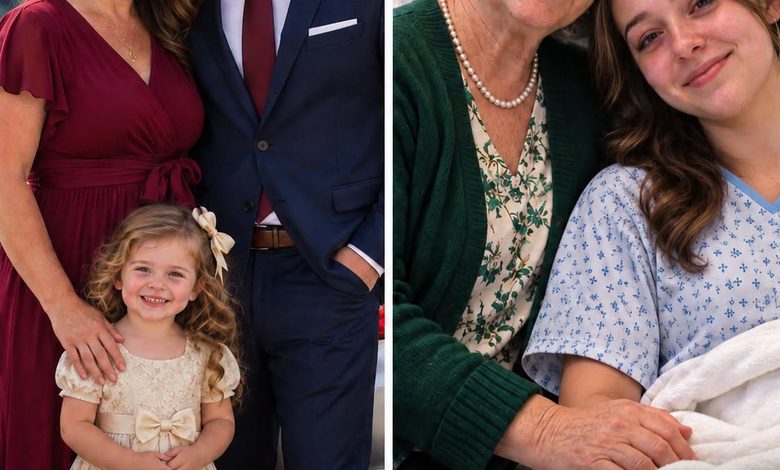
Part 1: The Call at 10:40
“Grandma, what’s the fastest way to know if food poisoning is serious?”
It was 10:40 on a Tuesday night in October, and I had been asleep for almost an hour. I sat up so fast that my reading glasses slid off the quilt and clattered onto the hardwood.
“Why are you asking me that?”
“Because the cafeteria chicken might be trying to murder me.”
My granddaughter laughed, but the laugh broke in the middle like a rubber band pulled too far. Then I heard a hard, flat smack, the sound of something hitting a floor.
“Sophie?”
Nothing. I counted the seconds without meaning to: three, four, five.
“I dropped my phone,” she whispered. “I can’t stand up straight.”
I don’t remember deciding anything. I told her I was calling an ambulance, hung up, and dialed 911 with a thumb that wouldn’t hold still.
The dispatcher asked for an address. I walked to the refrigerator, where Sophie had stuck an index card under a magnet shaped like a cardinal back in August: Kessler Hall, Room 412, written in her loopy purple ink. I read it out loud twice, then stood there staring at the numbers long after the dispatcher had them.
Next I called Kayla, her roommate, whose number was on the same card under the word EMERGENCIES, underlined three times. Kayla was at her boyfriend’s apartment across campus. She said she’d run.
I pulled my coat on over my nightgown and drove the twenty-five minutes into Columbus with the radio off.
Sophie was twenty, a junior studying library science, which she said was the only major that came with a guaranteed quiet room. She worked Saturdays and Sundays at a used bookstore called Paperback Lane. Every Sunday she called me from the basement laundry room of her dorm, the dryers thumping behind her like a slow heartbeat.
Michael used to do the same thing. He called me from the laundromat on Fifth Avenue every Sunday of his junior year, complaining about quarters.
I never told Sophie that. There were a lot of things about her father I never told her.
When she asked about him, she always lowered her voice, as if remembering him required a closed door. I gave her what I could stand to give. I told her he once tried to make lasagna without boiling the noodles and served it anyway. I told her he could recite the 1990 Reds lineup in order, and that he once drove six hours round-trip because Rachel had mentioned, once, in passing, that she missed the peaches from a roadside stand in Kentucky.
I told her he was kind. I did not tell her how he died, or what I said in a courtroom eight months afterward.
Rachel never asked me to stop talking about him. She just went quiet whenever I started, the way a room goes quiet when someone opens a window in winter.
Three weeks before that phone call, we had all been together for Sophie’s twentieth birthday. The argument was about cake, of all things.
Sophie loved chocolate. Rachel had ordered vanilla from Dunmore’s Bakery because the woman at the counter said it was their bestseller. I watched my granddaughter push the frosting around her plate with her fork, and I couldn’t keep my mouth shut.
“She’s twenty,” I said. “I think she knows what cake she likes.”
Rachel glanced at the bakery receipt on the counter, folded it once, and set it aside. She looked tired, as though we’d had this conversation a hundred times before.
“You really can’t help yourself, can you?”
I thought she meant the cake.
By the time I found the emergency entrance at Riverside Memorial, a nurse in purple scrubs was already wheeling Sophie toward imaging. My granddaughter’s face was the color of skim milk, and her knees were pulled up to her chest under the thin blanket.
“Don’t tell Mom yet,” she said, grabbing my sleeve.
“Why on earth not?”
“She’s in Denver for that conference. She’ll panic.”
“Your mother has earned the right to panic.”
Sophie managed a crooked little smile. “That’s what she says about you.”
An hour later, a young ER doctor with a gray streak in her ponytail sat down beside me. Sophie’s appendix had ruptured. She needed surgery now, not in the morning.
“Will she be okay?” I asked.
“We’re moving quickly,” she said. “That’s the best thing we can do for her.”
It was not a yes. I had heard that kind of not-a-yes before.
I stepped into the hallway and called Rachel. She picked up on the second ring, and before I could open my mouth she said, “Is Sophie okay?”
“She’s having surgery. Her appendix ruptured.”
There was a long silence, filled only by the hum of a hotel ice machine somewhere on her end. “Are you with her?”
“Yes.”
“Stay there. I’m booking a flight.”
“Rachel, the doctors know what they’re doing, she’s going to be—”
“Don’t,” she said sharply.
“Don’t what?”
“Tell me everything will be fine when you don’t know.”
The line went dead.
I had almost told her to calm down. The words had been sitting right there on my tongue, worn smooth from years of use. Only the sudden silence of the disconnected call stopped them.
My phone died at 12:52. I sat down in a vinyl chair in the surgical waiting room on the third floor, holding a vending machine turkey sandwich so dry it crackled, and I tried to pray.
But the room kept turning into a different room, from eighteen years ago, where I had prayed just as hard.
And where my son never came out.
Part 2: The Name on the Badge
In 2008, the waiting room was at Grant Medical Center, and the chairs were orange instead of blue. It was the second week of May, and somebody had left a vase of grocery store tulips on the side table.
Rachel was twenty-six then, the same age as Michael. She paced from the window to the double doors and back again, wearing his faded red Cincinnati Reds sweatshirt with the frayed cuffs. Every time a nurse passed, she asked whether anyone had checked his pulse again.
Sophie was two. A neighbor was watching her, and I remember thinking, absurdly, that she would need her pink sippy cup at bedtime and that nobody knew which one.
When the doctors finally came out, they spoke about my son in the past tense. He was a strong young man. He had fought hard.
I hated them for that grammar. I hated God more.
And I remember looking across the room at my daughter-in-law, folded in half in an orange chair with her face buried in that sweatshirt, and having absolutely no idea how to reach her. I put my hand on her back. She didn’t move toward me or away.
Even then, Rachel was the one I couldn’t reach.
Now, eighteen years later, I sat in the blue chair and watched the clock above the nurses’ station. 1:30. 1:58. 2:20. A janitor ran a floor polisher down the hall, back and forth, back and forth, and I counted the passes because counting was easier than thinking.
At 2:41, nearly three hours after they took her back, the surgery doors swung open.
A surgeon in navy scrubs came toward me, pulling off a scrub cap printed with tiny cartoon tacos. He was tall, maybe mid-thirties, with close-cropped dark hair and the slightly gray look of a man who had been on his feet since the previous morning.
“Family of Sophie Bennett?”
I stood up too fast and had to grab the armrest. “That’s me. I’m her grandmother.”
“She’s stable. The operation went well. There was significant infection, so she’ll need IV antibiotics for a few days and then oral ones at home, but we expect a full recovery.”
Something unclenched in my chest that had been clenched since 10:40. “Thank you,” I said. “Thank you, thank you.”
He nodded, but he didn’t turn to leave. Instead, he stood there with the cap in his hands, studying my face the way you study a photograph you think you’ve seen before.
“Mrs. Bennett?”
“Yes?”
“Is your first name Helen?”
My stomach tightened. “Do we know each other?”
His eyes dropped to the floor tiles. I looked at the laminated badge clipped to his pocket: DANIEL WHITAKER, MD, GENERAL SURGERY.
I knew that name. For a second it floated just out of reach, like a word on the tip of my tongue.
Then I looked at his face again, really looked, and the years peeled away. Under the stubble and the tiredness was the thin, frightened seventeen-year-old who had sat at the defense table in a borrowed blue blazer two sizes too big for him.
My knees nearly gave out. I put my hand over my mouth, and I couldn’t stop the sound that came out of me, a small, strangled noise I didn’t recognize as my own.
Eighteen years earlier, Daniel Whitaker had taken his parents’ Buick without asking. He had a learner’s permit and a girl to impress. At the intersection of Livingston and Parsons, he panicked at a yellow light, hit the gas instead of the brake, and drove into the driver’s side of my son’s Honda Civic.
Michael was on his way home from work. He had a bag of takeout from the Thai place on the passenger seat, pad see ew for Rachel, extra lime.
“I didn’t know,” Daniel said quickly. His voice was low and careful. “When I operated, I didn’t know Sophie was connected to you. I saw your name on her emergency contact sheet afterward, in recovery. I wasn’t sure until I saw you just now.”
“You couldn’t tell from her information? Her last name?”
“Bennett is a common name, ma’am. And she came in septic. All I was looking at was her vitals.” He swallowed. “If I’d known, I would have told the team and asked another surgeon to take over, if there had been time.”
I wasn’t sure I believed him. But he didn’t sound like a man reciting something. He sounded like a man who had imagined this exact conversation a thousand times and was still unprepared.
“I can ask another doctor to manage her care from here on,” he said. “Dr. Okafor is very good. I’ll arrange it tonight.”
I looked past him at the closed doors. Somewhere behind them, my granddaughter was breathing.
“You saved her?”
“My team and I treated her. She got here before the infection spread any further.” He hesitated. “Your call to 911 mattered more than anything I did.”
I should have thanked him and sat down. I should have asked him to leave. Instead, I just stood there, and so did he.
His cap twisted between his fingers, around and around. The calm voice he’d used to talk about antibiotics and recovery had vanished, and when he spoke again, it came out rough.
“Ma’am, there’s something your son said to me that night. I’ve wanted to tell you for eighteen years.”

Part 3: Three Pages I Never Read
“Now?” I said. “You want to tell me this now?”
“I know this isn’t the place.” He took a step back. “I can go. I’m sorry. I shouldn’t have—”
I had three folded pages in my dresser drawer at home, tucked under my winter scarves. I had written them at my kitchen table over four nights in December of 2008, in blue ballpoint, crossing out lines until the paper was soft at the folds.
They were everything I wanted the judge to know about Michael. His first word, which was truck. The science fair volcano that set off the smoke detector. The way he called me every Sunday from the laundromat. The peaches.
When the judge looked at me over his reading glasses and asked whether I wished to make a statement, I unfolded those pages and stood up. Then I looked across the courtroom at Daniel’s mother, a small woman in a gray cardigan who had been crying silently through every statement, her shoulders shaking, a wad of tissues in her fist.
I folded the pages back up and put them in my purse.
“I’ve lost my son,” I said. “I don’t want another mother to lose hers. Please show him mercy.”
Daniel, who had stared at the table through the whole hearing, finally lifted his head. His face was wet. He got probation, community service and a suspended license, and his juvenile record was later sealed.
Afterward, out on the courthouse steps, Rachel walked past my car without a word and climbed into her sister’s minivan. I told myself she needed a few days to cool off.
The days turned into months. She never mentioned the hearing, and I took her silence as a sign that she wanted distance from it, and maybe from me. For eighteen years I tried not to wonder whether I had done the right thing.
Now that boy stood in front of me in surgical scrubs, waiting for permission.
“What is it?” I heard myself ask.
Daniel drew a breath. “Michael was alive when I got out of the car.”
The room tilted. I gripped the back of the blue chair.
I knew Michael had reached the hospital alive. I had never known what happened at that intersection in the minutes before the ambulance came. I had never let myself ask.
“I ran to his window,” Daniel said. “I kept saying I was sorry. Over and over. I was crying so hard I couldn’t get the words out right.”
“Stop,” I whispered.
He stopped. I stood there with my heart pounding in my ears, and then I said, “No. Tell me. What happened?”
“Your son looked at me. He said, ‘It was an accident. Don’t let it ruin the rest of your life.’”
I closed my eyes.
That was Michael. That was exactly Michael, the boy who once gave his brand-new bike to a kid at church whose bike had been stolen, and then told me he’d lost his.
“Why didn’t you tell anyone?”
“I thought you’d believe I made it up,” Daniel said, and his voice broke on the last word. “That I was trying to get sympathy. My lawyer said it would sound self-serving.”
“Then why tell me now?”
“Because you deserve to know what he said. I should have found a way to tell you back then. I was a coward about it.”
I cried so hard that a night nurse brought me a paper cup of water and a box of tissues and stood beside me until I could hold the cup. Daniel waited a respectful distance away, then said quietly that he would hand Sophie over to Dr. Okafor and left.
I could never know whether he remembered Michael’s words exactly as they’d been spoken. Eighteen years is a long time, and terror rewrites things.
But I wanted to believe him. And for the first time since that courtroom, I let myself wonder whether my son might have understood what I did there.
Sophie woke up a little after six in the morning. She was pale and puffy-eyed and had an IV taped to the back of her hand, but she was fully capable of complaining.
“Why does everyone keep asking me to rate my pain from one to ten?” she croaked. “It’s terrible. That’s the rating. Terrible.”
I laughed, and the laugh turned into something wetter halfway through. She noticed right away. She always noticed.
“Grandma. What happened?”
“Something unexpected.”
“Did Mom miss her flight?”
“No, sweetheart. She lands at eleven.”
So I told her. I told her who her surgeon was. I told her about the hearing, about the three pages, and about the words her father spoke through a broken car window. She listened without interrupting once, her hazel eyes fixed on my face.
When I finished, she was quiet for a long moment. “Does Mom know?”
“Not yet.”
Sophie reached for her phone on the tray table, wincing. “I want to call her.”
“Honey, maybe we should wait until—”
But she was already dialing. Rachel picked up from a gate at Denver International, the boarding announcements echoing behind her. Sophie put her on speaker.
“Mom, you won’t believe who operated on me.”
I tried to cut in twice. Sophie talked right over me, the way her father used to when he got excited, the story tumbling out in one long breath.
When she finished, the line was silent for so long that I checked to see whether the call had dropped.
“Is he still there?” Rachel finally said.
“I don’t know. Maybe. Mom, Dad told him it was an accident.”
“Don’t.” Her voice was the same voice she’d used on me at midnight, flat and cold as a knife on a cutting board.
“Rachel,” I said, leaning toward the phone, “I know this is a shock—”
“Of course you know, Helen. You always know exactly what everyone should feel.”
Sophie frowned. “Mom, he saved my life.”
“Your father didn’t get the chance to live his life. Why does the man who killed him get to tell us how to feel about it?”
“He wasn’t telling us anything like that.”
“Your grandmother has been telling me for eighteen years.”
The call ended.
Sophie kept staring at the blank screen in her hand. I had heard her and her mother argue plenty of times over curfews, majors and a nose piercing, but I had never seen my granddaughter look so unsure of which question to ask first.
She turned to me. “Grandma, what does she mean?”
I started to explain how grief made people say things they didn’t mean, how it came out sideways, how her mother had been through so much.
Sophie shook her head slowly. “That’s not what I asked. What did you say to her?”
And suddenly I was remembering every Thanksgiving when I’d touched Rachel’s arm in the kitchen and asked her not to be bitter. Every one of Michael’s birthdays when I’d said, gently, so gently, that he wouldn’t want us carrying a grudge.
“I thought I was helping,” I said.
“That wasn’t my question either.”
I looked away, at the window, at the gray October sky over the parking garage. Neither of us said anything for a long time.
At 2:15 that afternoon, the door opened. Rachel stood there in a wrinkled navy blazer, still gripping the handle of her carry-on suitcase.
She crossed the room in four steps, kissed Sophie’s forehead, and checked her temperature with the back of her hand the way she had since Sophie was a baby. Then she straightened up and turned to me.
“Where is he?”
Part 4: The Choice That Wasn’t Mine
“Rachel, please,” I said. “You’ve been traveling all day. You haven’t slept.”
“I want to speak to him.”
For once in my life, I didn’t argue. I went to the nurses’ station and asked them to pass along her request.
Fifteen minutes later, Daniel knocked on the open door. Dr. Okafor, a gray-haired woman with a clipboard, stood beside him. He had changed into a fresh set of scrubs, but he looked like he hadn’t slept either.
Rachel stood up. “Are you Daniel?”
He went very still. “Yes.”
“I’m Michael’s wife.”
Daniel lowered his eyes. “I’m so sorry, Mrs. Bennett.”
“You told my mother-in-law something this morning.”
“I told her what Michael said to me at the crash.”
“And did you think telling her would make this easier? For you?”
“No, ma’am.”
Rachel’s hands were shaking. She pressed them flat against her blazer to stop it. “You got a second chance. Michael didn’t. And now you show up and tell us he forgave you?”
Daniel didn’t move toward her or away. He didn’t make a speech. He just stood in the doorway and took it.
“I caused the accident,” he said. “Michael died because of what I did. Becoming a doctor doesn’t undo that. Nothing does.”
“Then why tell her?”
“Because I thought she deserved to know what he said. But I chose the wrong moment. I chose it for me, not for you.”
Rachel’s eyes filled, and I watched her fight it. “Even if he said those words, it would have been much better for all of us if you’d kept them to yourself.”
Daniel nodded slowly. “You’re right. I’m sorry.”
He turned to Dr. Okafor, murmured that she would be handling Sophie’s care from here, and walked out. I listened to his footsteps fade down the corridor until the hum of the IV pump was the only sound left.
Nobody spoke. Rachel sat down hard in the chair by the window. I stood by the foot of the bed with my hands knotted together.
Then Sophie pushed herself higher against her pillows, grimacing at the stitches.
“Mom. I understand why you’re angry.”
Rachel wiped her face with the heel of her hand. “Do you?”
“I think so. But I wanted to thank the doctor who helped me. I didn’t know any of this. Nobody ever told me any of this.”
“You don’t owe him anything,” Rachel said.
“I know.” Then Sophie turned her head and looked straight at me. “And Grandma, you don’t get to decide what Mom owes him either.”
“I never said she did.”
“You did, though.” Sophie suddenly looked very tired, and very young. “You said Dad wouldn’t want her to be angry. You said it at Christmas when I was twelve. You said it again when I asked why Mom stopped coming to the anniversary gatherings at the cemetery.”
Rachel turned slowly toward me. “You told her that?”
Sophie nodded. Her chin was trembling. “I always thought you stopped going because you didn’t want to remember Dad.”
Rachel made a sound I hadn’t heard from her since the orange chairs at Grant Medical. She got up, sat on the edge of the bed, and pulled her daughter carefully into her arms, minding the IV line.
“No, baby,” she said into Sophie’s hair. “Never. Not ever.”
I stood there, and the shame came up through me slowly, like cold water rising in a basement.
I thought about the vanilla cake. I thought about Rachel folding that bakery receipt in half and setting it aside, and saying, with eighteen years of exhaustion in her voice, You really can’t help yourself, can you?
It had never been about the cake. It had been about every holiday I had told her what Michael would want. It had been about every time I’d decided, out loud and in front of her child, how a widow should grieve.
I pulled the second chair to the bed and sat down beside them.
“I’m sorry,” I said. “I made my choice in that courtroom. It was mine. And then I spent eighteen years acting as though you had to make the same one.”
Rachel stared at the floor. “You kept saying Michael would want peace.”
“I didn’t know what he wanted,” I said. “I only knew what I wanted for myself. I needed what I did to be right, so I needed you to agree with it.”
She didn’t say it was okay. She didn’t say anything at all for a while. Outside, a helicopter crossed over the parking garage, and the window glass hummed.
She didn’t forgive me that afternoon. But she let me stay.
I wanted to ask her, right then, whether letting me stay meant something. Whether it was a beginning. The question sat in my mouth, ready.
I swallowed it. Asking would have made her responsible, one more time, for easing my guilt. That was a job I had been handing her for eighteen years.
Four days later, Sophie was discharged with a bottle of antibiotics, a lifting restriction and strict instructions to rest at her mother’s house in Westerville. I brought soup. Rachel let me in.
That evening, Rachel went upstairs and came back down with a cardboard shoebox I had never seen before. Inside, wrapped in tissue paper, was a stack of photographs. On top was one I had never seen either: Michael in the Reds sweatshirt, sitting on a hospital bed, holding a red-faced newborn with both arms locked stiff as if she might shatter.
“He was more nervous holding you than he was on our wedding day,” Rachel told Sophie. “His hands were sweating so badly he made me check that you weren’t slipping.”
Sophie laughed, then pressed a pillow to her stitches. “Was he a good dad? There’s so much I can’t remember.”
Rachel looked at the photo for a long time. Then she looked at me.
She was waiting, I realized, to see whether I would answer for her. Whether I would jump in with the lasagna and the peaches and the baseball lineup, the way I always had.
My mouth opened. I closed it again.
For the first time in eighteen years, I didn’t answer for her.
“He was wonderful, honey,” Rachel said softly, turning back to her daughter. “What do you want to know?”
We stayed up past midnight with that shoebox spread across the coffee table. Rachel told the stories she’d been keeping to herself: the night Michael sang to the colicky baby until his voice went hoarse, the crib he assembled backward, the peaches. I told only the ones she asked me for.
When Sophie finally limped off to bed, Rachel handed me a slip of paper from the kitchen drawer. It was an order form from Dunmore’s Bakery, blank except for one word in her handwriting under the flavor line.
Chocolate.
“For next September,” she said. “I figured I’d ask her myself.”
Have you ever made a choice in grief that you later realized someone else had to pay for?
Disclaimer: This story is a work of fiction inspired by real-life themes. Names, characters, places and events are fictionalized, and any resemblance to real persons is purely coincidental. Images are for illustration purposes only.