You’re kidding me
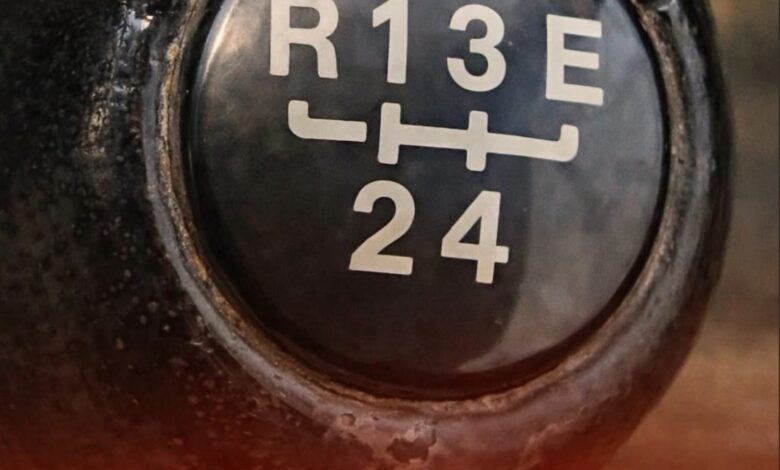
For the modern motorist, the geography of the gear selector is a settled science. Whether you are rowing through a six-speed manual or toggling a contemporary automatic, the lexicon is universal: the numbered gates of a stick shift, or the standard “PRNDL” (Park, Reverse, Neutral, Drive, Low) sequence that has governed the American driving experience for over half a century.
However, for those sliding behind the wheel of certain vintage specimens, a cryptic outlier occasionally appears among the chrome and leather: the letter “E.” For many millennial and Gen Z drivers, this symbol represents a forgotten dialect of automotive design—a mechanical relic from an era before the silicon chip took command of the drivetrain.
The Original ‘E’: A Mechanical Pursuit of Efficiency
The explanation for this vintage marking is far more pragmatic than its mysterious aura suggests. In select models from the late 20th century, the “E” stood squarely for “Economy.”
Long before “Eco-Mode” was a digital toggle on a touchscreen, the Economy setting was a physical hardware solution designed to optimize fuel consumption, particularly during the steady-state cruising of highway travel. By selecting “E,” the driver signaled the transmission to shift earlier and hold higher gears longer, effectively keeping the engine’s revolutions per minute (RPM) at a minimum.
This was a pioneer’s approach to fuel management—a way for the driver to consciously intervene in the vehicle’s mechanical behavior to stretch a gallon of gasoline just a few miles further. It was a feature born of necessity, often gaining popularity in the wake of the fuel crises that defined the 1970s and 80s.
The Digital Displacement
As automotive engineering entered the 21st century, the dedicated “Economy” gear began to vanish from the center console. The reason wasn’t a lack of interest in efficiency, but rather the sheer sophistication of the technology replacing it.
Modern vehicles now utilize hyper-advanced computerized engine management systems, precision fuel injection, and adaptive transmission logic that can optimize efficiency thousands of times per second. Today’s cars don’t require the driver to manually “choose” a more efficient gear; the vehicle’s “brain” adjusts performance in real-time based on throttle position, incline, and atmospheric conditions. This technological leap effectively rendered the physical “E” marking obsolete, turning it into a trivia point for automotive historians.
A New Identity for a New Era
In a poetic turn of industry nomenclature, the letter “E” has recently staged a high-profile comeback, though its definition has undergone a total systemic overhaul.
Today, the “E” is almost exclusively the calling card of the Electric Vehicle (EV). It represents the seismic shift away from internal combustion and toward alternative energy and zero-emission transit. Unlike the multi-speed gearboxes of the past that required an “Economy” setting to mitigate waste, modern electric motors operate with streamlined, often single-speed transmissions.
In this new context, the “E” serves as a bridge between two worlds. It is a linguistic echo of the practical, fuel-saving efforts of the past, now repurposed to symbolize the industry’s aggressive movement toward a sustainable, electrified future. What was once a humble mechanical setting for saving a few cents at the pump has become the standard-bearer for the next century of mobility.