Prince William’s Sharp 3-Word Warning to Kate Middleton After Andrew’s Arrest
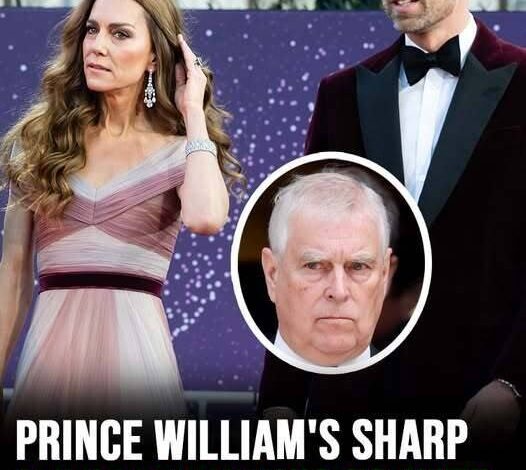
When scandal touches a royal family, it doesn’t just make headlines—it reshapes dynamics behind palace doors.
In late 2019, the British monarchy was rocked by controversy surrounding Prince Andrew, whose association with convicted sex offender Jeffrey Epstein led to public outrage, legal scrutiny, and eventually his withdrawal from royal duties. The fallout was swift, global, and deeply damaging to the institution’s image.
But while headlines focused on Andrew’s infamous interview with BBC and the aftermath, insiders suggested that younger royals were thinking several steps ahead—particularly Prince William.
Amid the chaos, reports circulated that William offered a sharp, three-word warning to his wife, Catherine, Princess of Wales:
“Stay above scandal.”
While never officially confirmed as a direct quote, the sentiment aligns closely with what royal observers believe became a defining strategy for the future king and queen.
This moment—real or reconstructed—reflects something far more significant than a private exchange. It represents a turning point in how the next generation of royals navigates risk, reputation, and responsibility.
The Scandal That Shook the Monarchy
To understand the weight of that warning, you have to revisit the atmosphere at the time.
In November 2019, Prince Andrew gave a now-infamous interview to the BBC’s Newsnight, attempting to address his ties to Jeffrey Epstein. Instead of clearing his name, the appearance intensified criticism. His explanations were widely viewed as tone-deaf and damaging.
Public trust eroded quickly. Within days, Andrew announced he would step back from public duties.
For a monarchy already navigating the pressures of modern scrutiny, the scandal was a stark reminder of how quickly reputation can unravel.
And for Prince William—second in line to the throne at the time—it was likely a moment of clarity.
A Different Approach to Royal Duty
From early on, Prince William has been perceived as cautious, strategic, and highly aware of public perception. As the eldest son of King Charles III and the late Princess Diana, he grew up witnessing both the privileges and pitfalls of royal life.
He saw firsthand how media narratives could elevate or destroy.
Unlike previous generations, William and Catherine have operated with a noticeably tighter inner circle, a controlled public presence, and carefully chosen causes. Their engagements feel deliberate. Their messaging is measured.
So when scandal engulfed Andrew, it likely reinforced an already firm philosophy: avoid unnecessary risk at all costs.
“Stay above scandal” isn’t just a warning—it’s a survival strategy.
Why the Stakes Were So High
At the time of Andrew’s withdrawal, the monarchy was also dealing with the impending transition of power from Queen Elizabeth II’s long reign.
Though Queen Elizabeth II remained widely respected, it was clear that the institution’s future rested increasingly on the shoulders of Charles and William.
Public confidence in the monarchy depends heavily on perception. Royal scandals don’t stay isolated—they ripple outward, affecting the entire family.
For William and Catherine, maintaining moral credibility wasn’t just personal—it was institutional.
Any misstep could undermine the carefully cultivated image of stability and modern relevance they represent.
Catherine’s Role in the Modern Monarchy
Catherine, Princess of Wales, has long been praised for her composure, discretion, and work ethic. Since marrying William in 2011, she has maintained a near-scandal-free public profile.
Her focus on early childhood development, mental health, and family-centered initiatives has shaped her image as both relatable and dignified.
But being scandal-free doesn’t happen by accident.
Royal watchers often note that Catherine avoids controversy by:
- Steering clear of overt political commentary
- Maintaining strict boundaries with media
- Keeping her inner circle small
- Prioritizing consistency over visibility
In that context, William’s alleged three-word warning reads less like a rebuke and more like reinforcement.
It’s a reminder that in royal life, perception is power.
Learning from Past Mistakes
The British monarchy has endured its share of crises over the decades—from marital breakdowns to financial controversies.
Princess Diana’s tumultuous relationship with the press shaped how William views media exposure. The highly publicized separation of Charles and Diana in the 1990s became a defining chapter in royal history.
By contrast, William and Catherine have cultivated an image of unity and steadiness.
Andrew’s scandal underscored the cost of poor judgment and inadequate crisis management. It also highlighted how quickly public sentiment can shift in the digital age.
For the next generation of leadership, the lesson was clear: prevention is better than repair.
The Media Age: A New Battlefield
Today’s royals operate in a vastly different media environment than previous generations.
Social media amplifies scrutiny. Viral clips shape global opinion in minutes. A single miscalculated statement can ignite weeks of backlash.
Andrew’s BBC interview became a masterclass in how not to handle reputational crisis.
For William and Catherine, the takeaway was likely profound: never underestimate the power of optics.
Staying above scandal isn’t just about avoiding wrongdoing. It’s about avoiding the appearance of poor judgment.
That means:
- Carefully vetted associations
- Strategic public appearances
- Minimal personal commentary
- Clear alignment with broadly supported causes
It’s a disciplined, almost corporate approach to monarchy.
Protecting the Next Generation
Beyond institutional reputation, there’s another layer to consider: their children.
As parents to Prince George, Princess Charlotte, and Prince Louis, William and Catherine are acutely aware that their family’s legacy extends forward.
Shielding their children from unnecessary controversy likely plays a significant role in their decision-making.
Royal life already comes with intense visibility. Adding scandal to that equation increases pressure and intrusion.
“Stay above scandal” may also mean: protect the future.
The Contrast in Styles
Observers often compare the differing styles within the royal family.
Andrew’s handling of controversy was reactive. William’s appears proactive.
Where Andrew attempted to explain, William tends to avoid situations that require explanation.
Where past generations engaged directly with tabloid battles, William has often relied on quiet legal measures and strategic silence.
This contrast signals a generational shift.
The future monarchy may be smaller, more streamlined, and far more cautious.
Public Perception and Long-Term Strategy
Public approval ratings for William and Catherine have generally remained strong, particularly compared to other royal figures during times of controversy.
That popularity isn’t accidental.
It’s built on:
- Stability
- Measured communication
- Carefully chosen initiatives
- Consistent public demeanor
Andrew’s scandal reinforced the fragility of public trust.
And trust, once broken, is difficult to rebuild.
For William, safeguarding that trust may be the defining challenge of his path to the throne.
A Quiet but Firm Philosophy
Whether or not those exact three words were spoken, the philosophy they represent is unmistakable.
In a family where history is filled with dramatic headlines, William and Catherine have chosen a different route.
Less spectacle.
More structure.
Fewer risks.
Greater control.
In many ways, Andrew’s arrest and subsequent fallout became a cautionary tale within palace walls.
The modern monarchy cannot afford repeated reputational blows.
The Bigger Picture
Scandal doesn’t just impact individuals—it reshapes institutions.
Prince Andrew’s withdrawal marked one of the most significant royal crises of the past decade. It forced the family to confront uncomfortable realities about accountability and public expectation.
For Prince William, it may have solidified an already firm resolve: the future king must embody restraint.
For Catherine, it reaffirmed her role as a stabilizing presence.
“Stay above scandal” is more than advice—it’s a doctrine.
A Monarchy in Transition
With King Charles III now on the throne, the spotlight increasingly turns to William and Catherine as the monarchy’s future.
Their approach suggests they understand the assignment.
In an era of transparency and instant judgment, survival depends not just on tradition, but on strategic adaptation.
The lesson from Andrew’s crisis is simple but stark: reputation is everything.
And for those preparing to inherit the crown, protecting that reputation isn’t optional.
It’s essential.
Final Reflection
The British monarchy has endured wars, abdications, divorces, and cultural shifts. Its longevity depends on evolution.
Prince William’s reported three-word warning to Catherine encapsulates that evolution.
In a world where every action can become a headline, the safest path forward may be the simplest:
Stay above scandal.
Because in royal life, silence can be strength—and restraint can shape a legacy that lasts generations.