You Tried Melatonin. You Still Woke Up at 3am. Here’s Why — And What Actually Helps.

Falling asleep isn’t even the hard part. You’re exhausted by 9. You’re out by 11.
And then, without fail, your eyes snap open. 3:15am. Not groggy-awake. WIDE awake.
Your brain immediately starts running a marathon: the bills, tomorrow’s meeting, that awkward conversation from 2018. You lie there staring into the dark doing the math: “If I fall asleep right now, I’ll still get three and a half hours.”
Two hours later you’re still doing the math. And the cruelest part? Around 6:30, right before your alarm, you finally start drifting off again.
So you did what everyone does. You bought melatonin. When 3mg stopped working, you tried 5. Then 10. Maybe you’ve even kept a second one on the nightstand for “emergencies.”
And you’re still awake at 3am.
Here’s the part nobody tells you: melatonin and a 3am wake-up are two completely different problems. Once you understand why, the fix gets a lot simpler.
Sound familiar?
- Falling asleep is easy. Staying asleep is the problem
- You wake up at the same time every night, usually between 2 and 4am
- It doesn’t matter if you go to bed at 8:30 or midnight. You still wake up
- Your body is exhausted but your brain is “firing on all cylinders”
- Getting back to sleep takes an hour… or two… or it just doesn’t happen
- Your sleep comes in two broken chunks, and you feel like a zombie all day
If you checked two or more, keep reading. You’re not broken, and you’re definitely not alone.
And let’s be honest, you’ve probably tried everything.
- No screens before bed. Lights down. Same bedtime every night.
- Sleepy tea. Valerian. The “boring podcast” trick.
- Going to bed earlier, only to wake up at midnight instead of 3.
- A glass (or two) of wine to “knock you out.” It works for a few hours, then you’re up again.
- Melatonin at 3mg. Then 10. Then a second one at 3am.
If someone has told you it’s your fault you can’t sleep, it isn’t. You don’t need another “just relax” tip. You need to know why this keeps happening. So here’s the why, then the what-actually-helps.Skip to the solution →1
Melatonin is a timing signal, not a sleeping pill
Most people think melatonin knocks you out. It doesn’t. Melatonin is the hormone your brain releases when it gets dark to tell your body, “hey, it’s nighttime now.” It’s basically a clock signal.
That’s why it’s genuinely useful for jet lag and shift work, when your body clock is out of sync with the actual time.
But for regular sleep? When researchers pooled the clinical trials, melatonin helped people fall asleep only about 7 minutes faster on average.1 Seven minutes. Not exactly the night-saver the bottle promises.
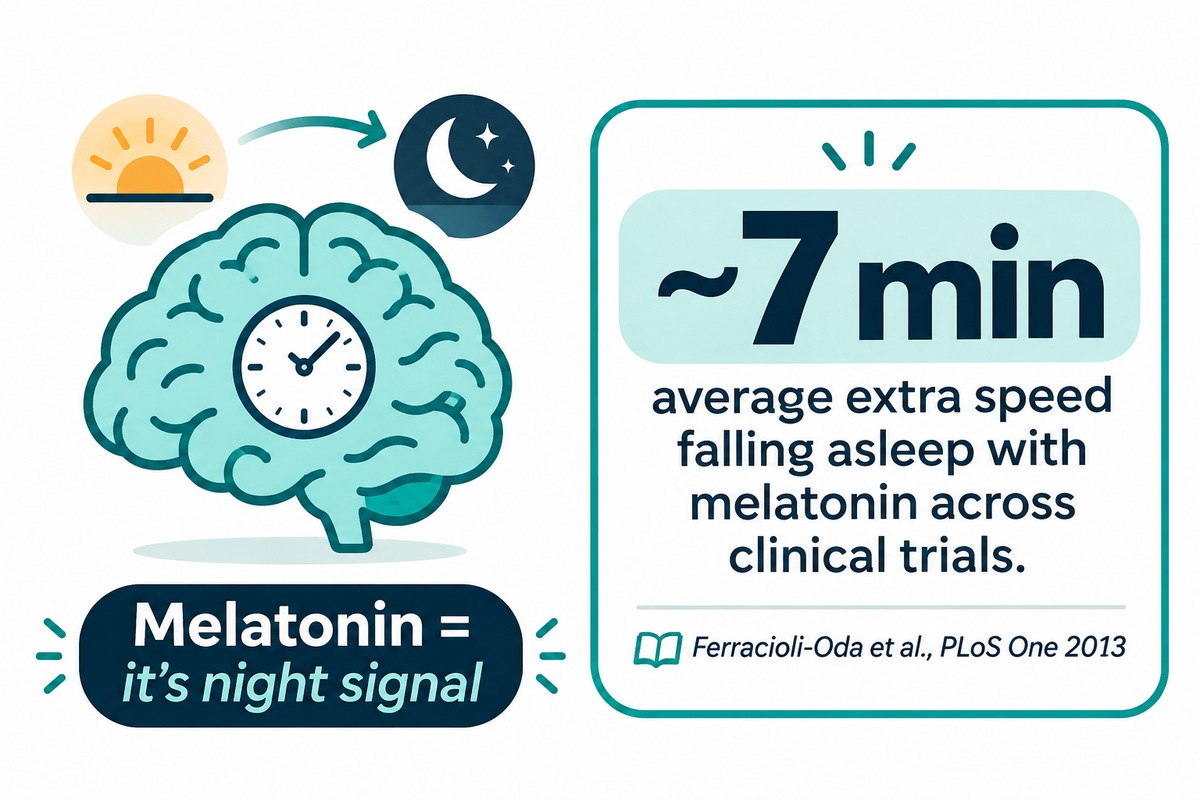
The bottom line: Melatonin tells your body when it’s night. It doesn’t keep you asleep through it.2
By 3am, your body already has the most melatonin it’ll have all night
This is the one that surprises everyone.
Your natural melatonin starts rising in the evening and peaks between about 2 and 4am.2 So the exact moment you’re lying there wide awake, your melatonin is already at or near its highest point of the night.
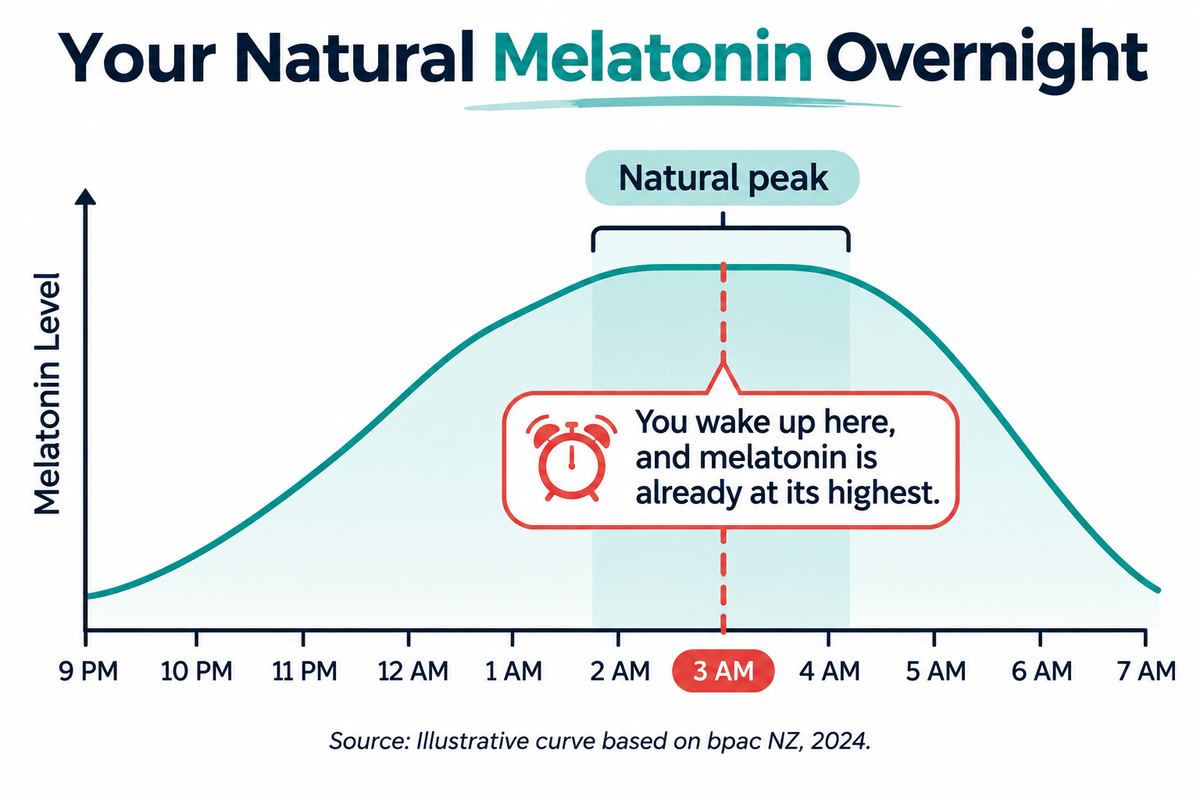
Which means the 3am wake-up isn’t happening because you’re missing melatonin. Something else is yanking you out of sleep, and more melatonin doesn’t touch it.3
Why the second melatonin on the nightstand does nothing
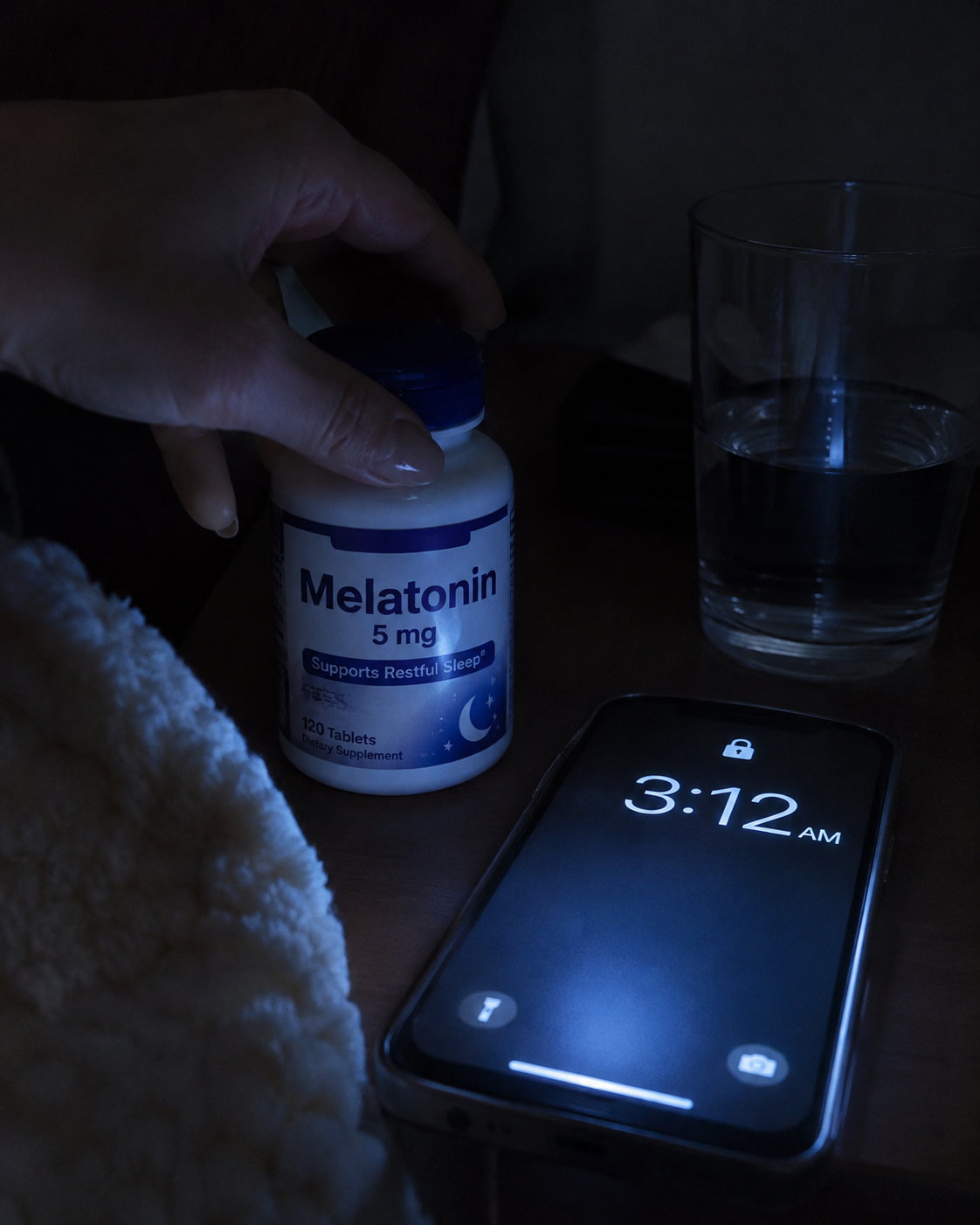
If you’ve done the 3am double-dose, or climbed from 3mg to 10mg (some people go all the way to 20) and gotten the exact same wide-awake 3am, here’s what’s really going on:
- It’s the wrong tool for the job. Your melatonin is already high. Topping it up doesn’t switch off whatever woke you.
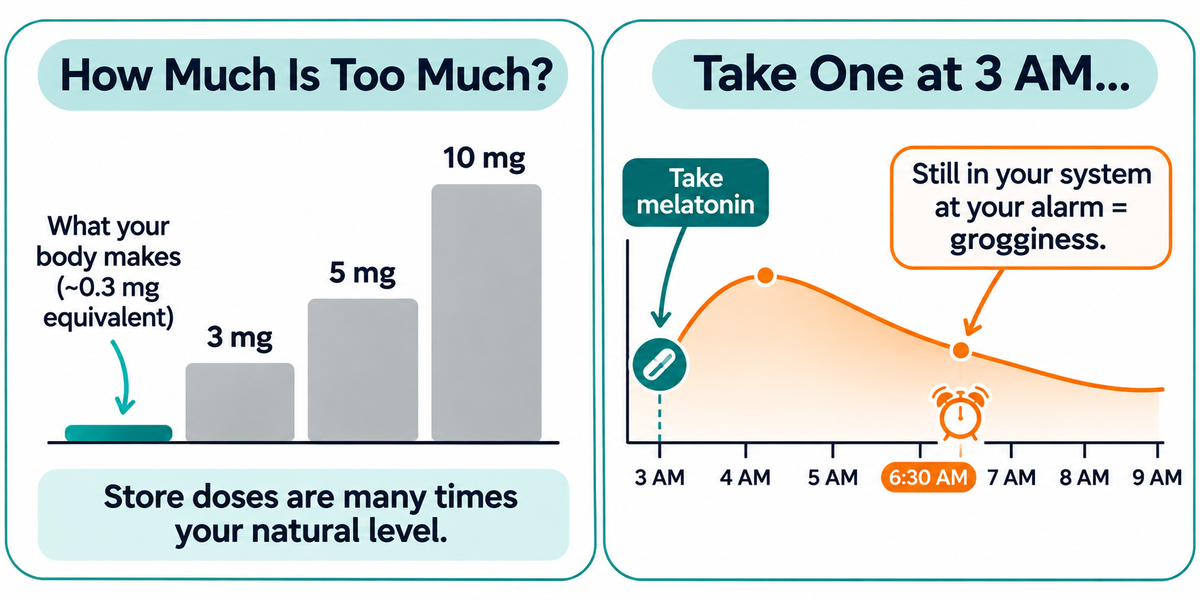
- More isn’t better. Research suggests doses as small as 0.3 mg can recreate natural nighttime levels3, and most store-bought melatonin is 3 to 10 mg. That’s many times what your body actually makes.
- It follows you into the morning. A dose taken at 3am peaks about an hour later and can still be in your system when your alarm goes off.4 That’s the “I slept, but I’m not myself today” feeling: foggy, short-fused, snapping at people (and the cat) over nothing.
So if melatonin isn’t the problem… what is?4
The real 3am culprit: cortisol meeting a stressed-out nervous system
Cortisol is your “get up and go” hormone. It’s supposed to follow a daily rhythm: lowest around midnight, then it starts climbing in the early morning hours to get you ready for the day, peaking shortly after you get out of bed.5
That early climb is completely normal. In a calm body, you sleep right through it.
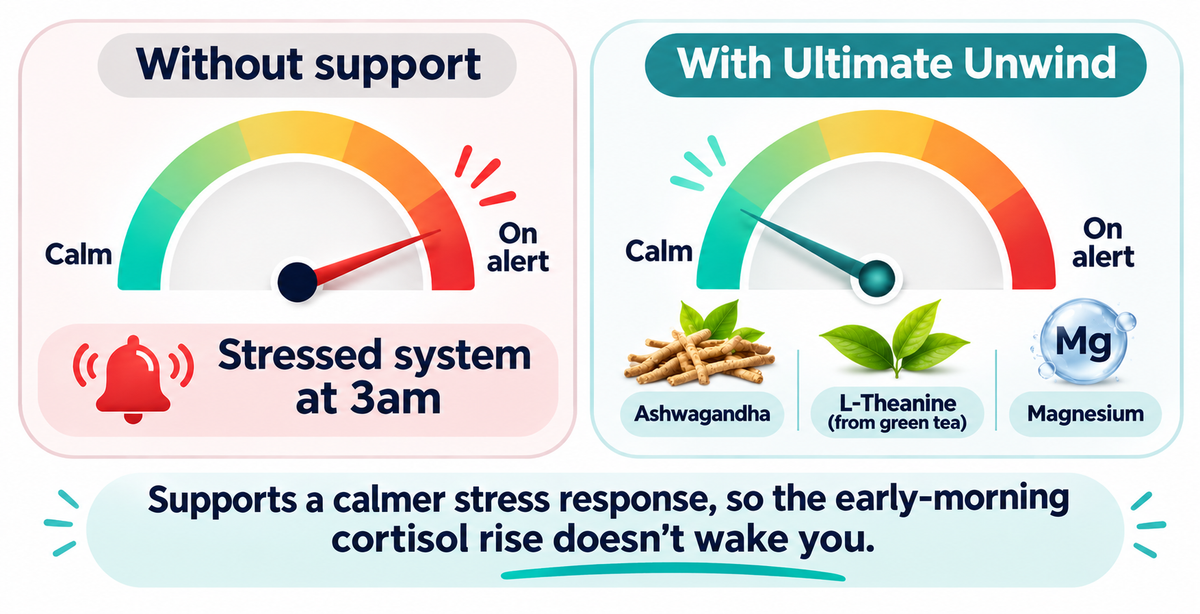
But if you’ve been running on stress for months (work deadlines, kids, money, hormones, a brain that never fully clocks out), your nervous system is already sitting closer to “on alert.” Research on chronic insomnia shows people who sleep poorly tend to have higher cortisol and stress-hormone activity around the clock, not just during the day.6
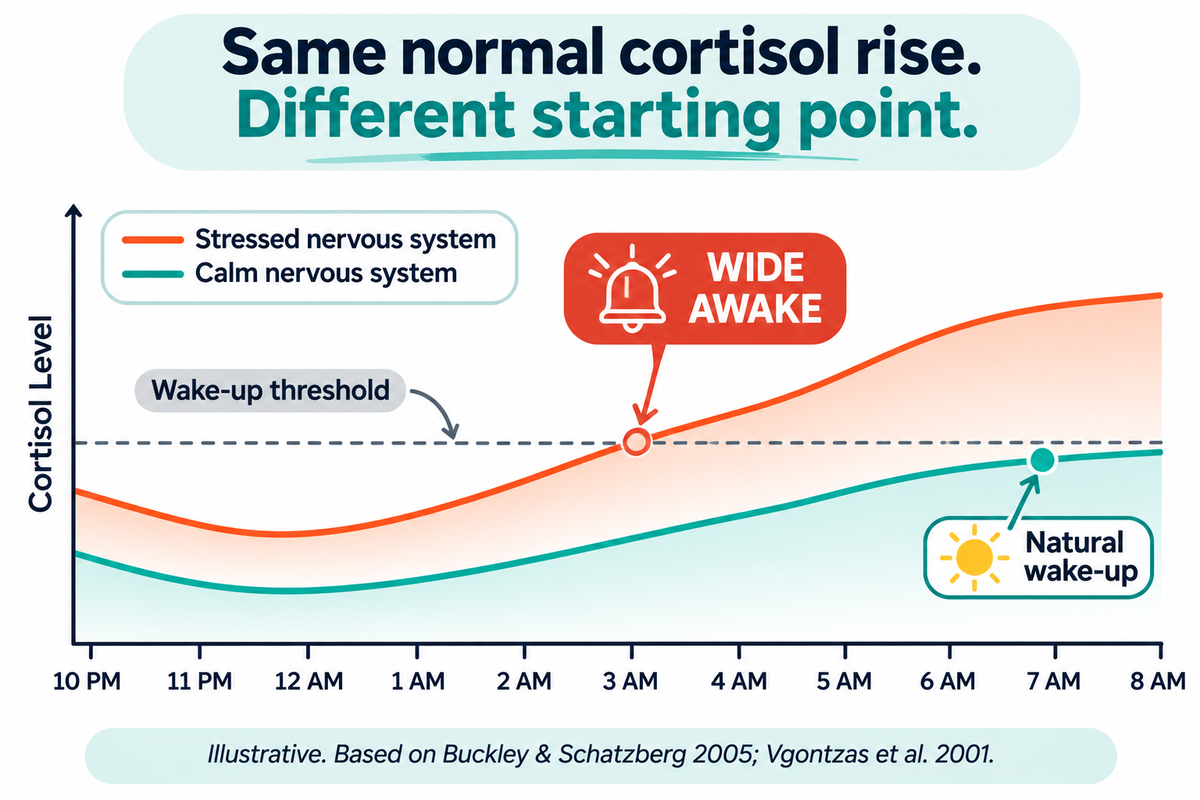
So when cortisol starts its normal rise in the middle of the night, a stressed system doesn’t roll over and keep sleeping. It flips the switch to wide awake. Same time. Every. Single. Night.
It’s why so many people describe 3am as feeling like “fight or flight.” Not anxious, exactly. Just alert. Body heavy, brain doing 1,000 miles an hour.
It’s also why going to bed earlier doesn’t fix it. Your deepest sleep happens in the first few hours of the night. Once that’s done, sleep gets lighter, and a revved-up system is easy to wake. Go to bed at 8:30 and you don’t sleep later. You just wake up at midnight instead.

That’s the 3am pattern: not low melatonin. It’s a stress system that’s way too easy to trigger right when cortisol starts rising.
The fix isn’t more sleep hormone. It’s helping your nervous system stay calm enough to sleep right through the early-morning rise.Show Me What Actually Helps →
No melatonin · 30-Night Sleep Guarantee5
Why your magnesium gummy didn’t fix it either
Maybe you’ve already heard “magnesium helps you sleep,” grabbed a bottle, and… meh. Here’s why it might have fallen flat:
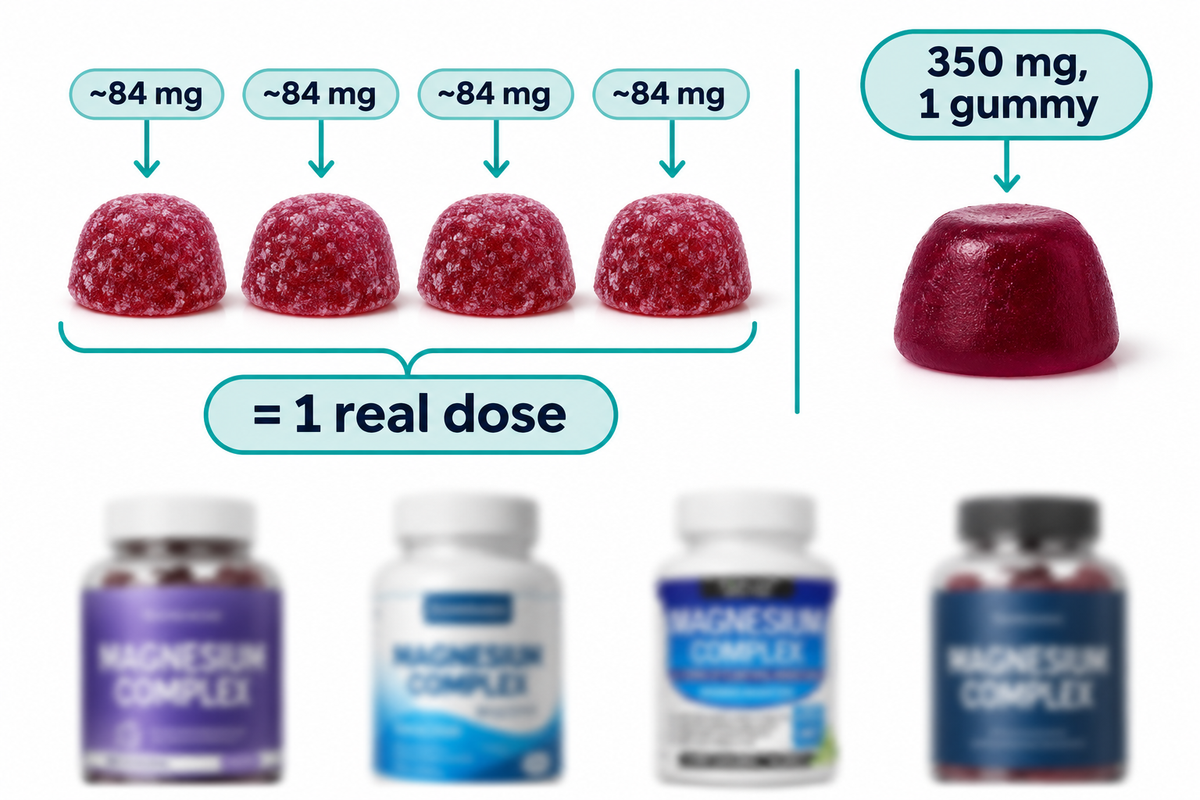
Problem #1: One form, tiny dose. Most magnesium gummies use a single form (usually magnesium citrate) at around 80–100 mg per gummy, so you need 3 or 4 gummies just to get a real dose.7
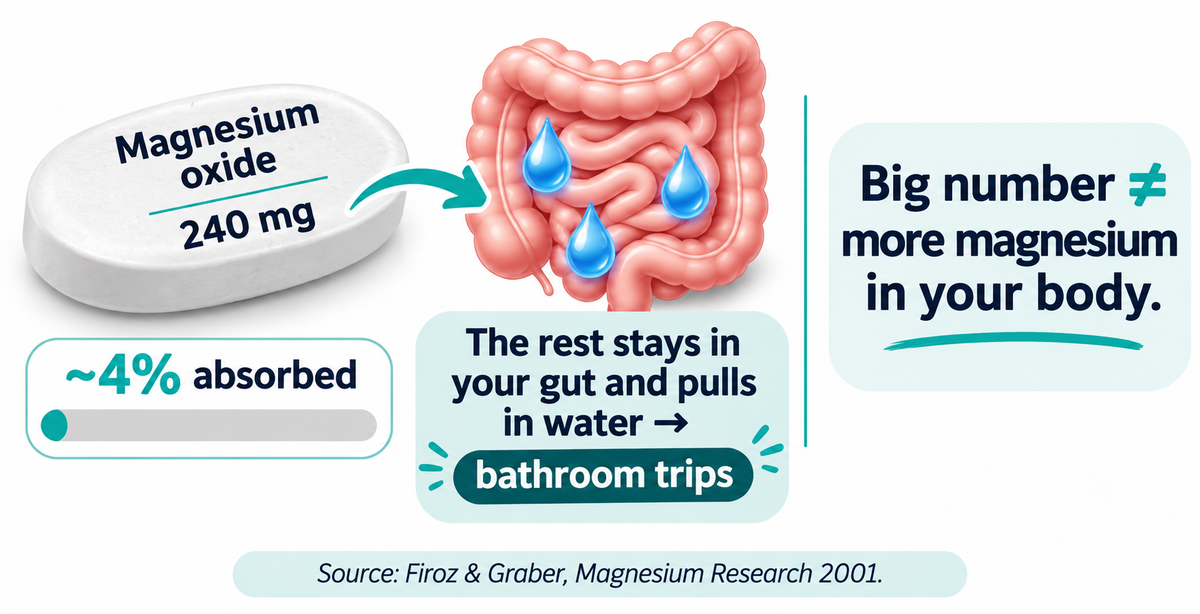
Problem #2: The “big number” trap. Cheap magnesium tablets often use magnesium oxide because it puts a big number on the label. But studies have measured oxide’s absorption at only about 4%.8 Most of it stays in your gut, where it pulls in water. That’s literally why oxide is also used as a laxative. If magnesium ever sent you running to the bathroom instead of to sleep, now you know why.
And single-form magnesium is hit or miss. Some people swear by one form, others feel nothing, and some even say a form like glycinate left them feeling wired.
Problem #3: Magnesium alone doesn’t touch the stress. Even well-absorbed magnesium is only one piece. If a wound-up nervous system is what’s waking you, you need something that supports the stress side too.6
What actually helps: a formula built for the 3am problem
“Okay, I get the problem. Tell me the solution.” Fair. Here it is.
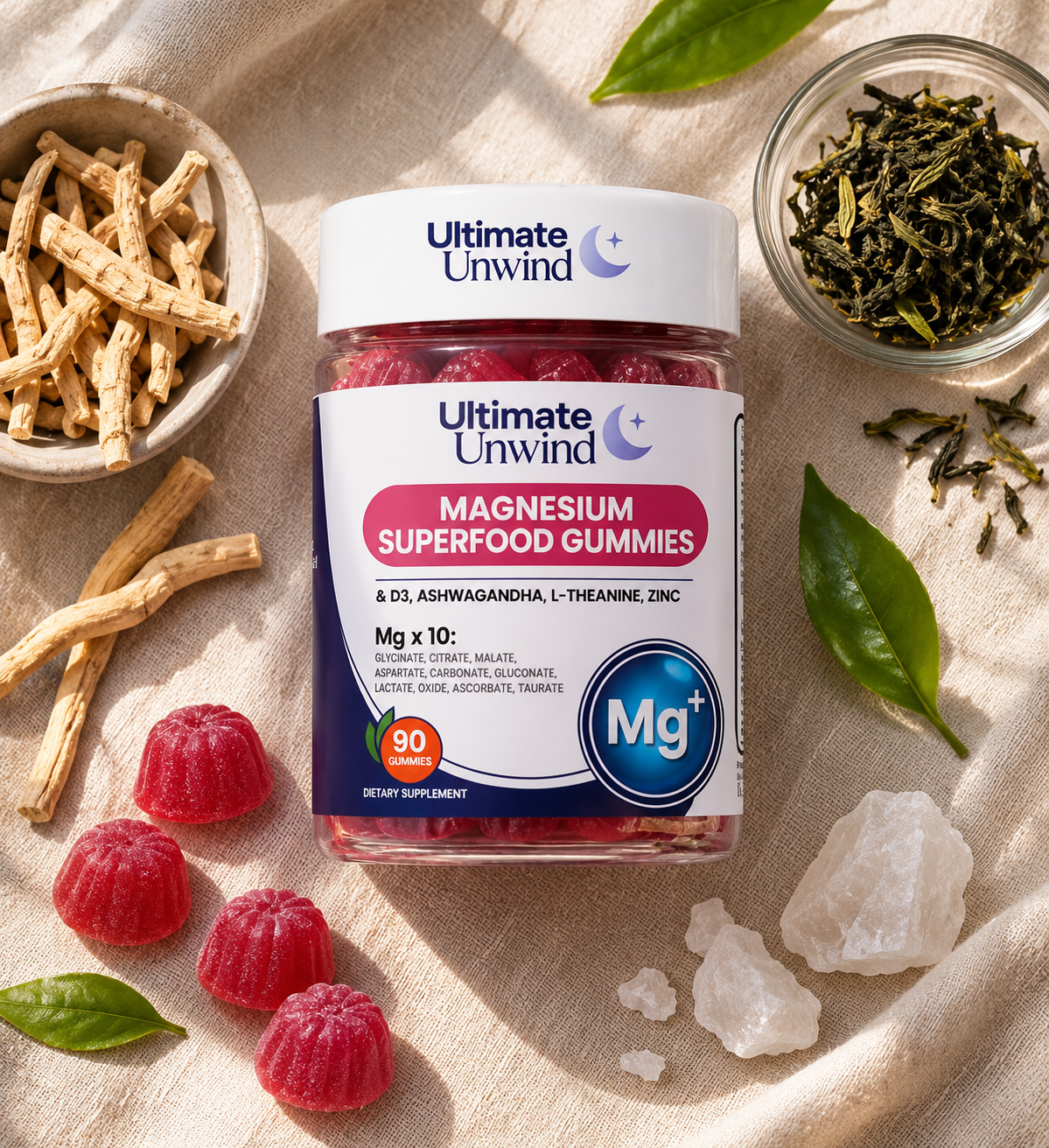
This is exactly why we built Ultimate Unwind 14-in-1 the way we did. Instead of one form of magnesium, or a sleep hormone your body already has plenty of at 3am, it combines three things in one gummy:
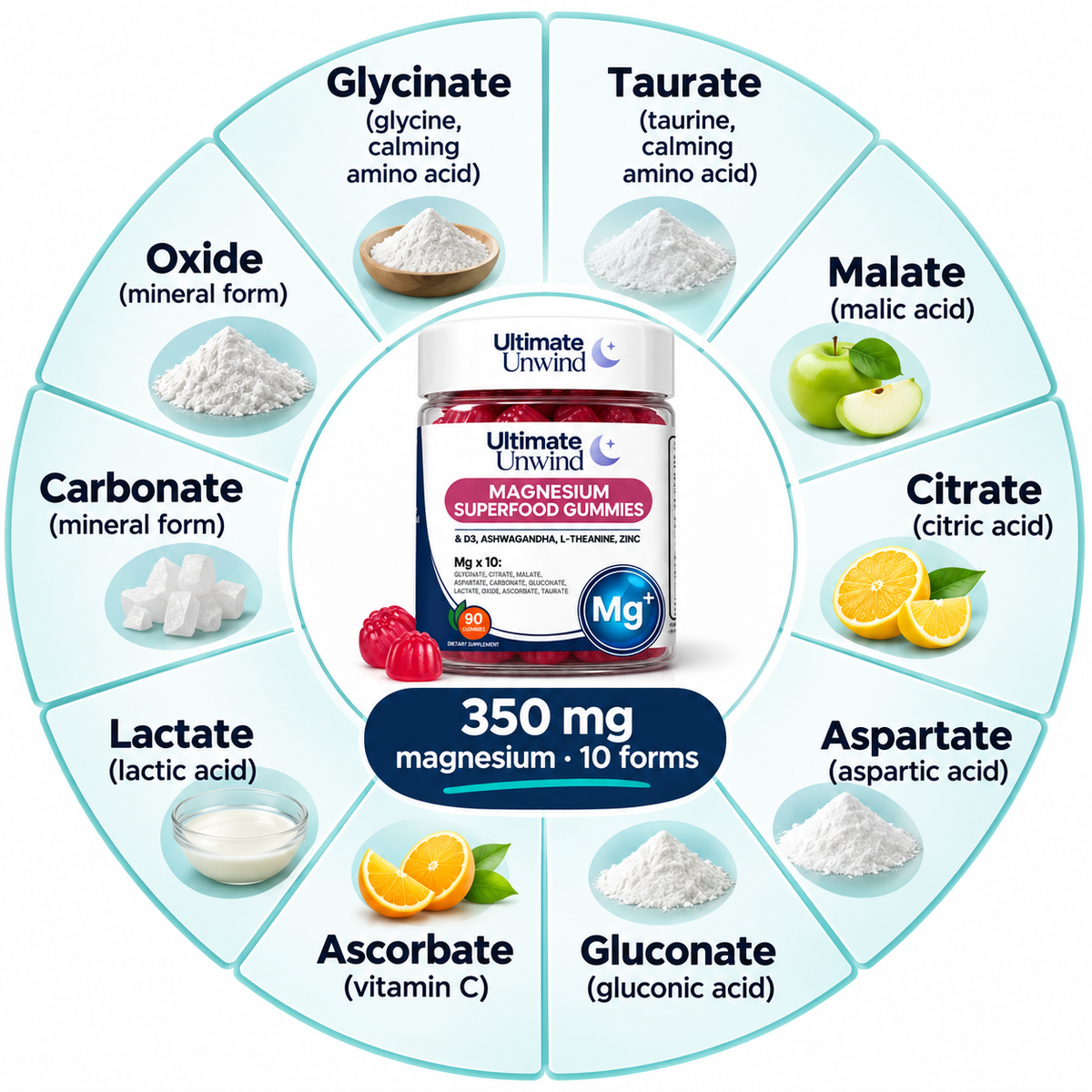
1. Ten forms of magnesium (350 mg total). Magnesium glycinate, citrate, malate, aspartate, gluconate, ascorbate, taurate, oxide, lactate, and carbonate. Different forms come bound to different carriers (like glycine and taurine, amino acids your body uses for calming signals), so no single form has to do all the heavy lifting.
2. Two ingredients for the stress side.
- Ashwagandha (500 mg, 10:1 root extract): an adaptogen studied for its effect on stress and sleep. A review of clinical trials found ashwagandha improved overall sleep, with stronger results in people with insomnia and with consistent use over 8+ weeks.9
- L-Theanine (400 mg): the “calm but clear” amino acid from green tea. In a 4-week clinical trial, people taking L-theanine reported better sleep quality, including how fast they fell asleep and how often their sleep got disrupted.10
3. Vitamin D3 (2,000 IU) and Zinc (40 mg) to round out the formula.
No melatonin. No sedatives. No prescription. Nothing that leaves you foggy and irritable in the morning. One gummy before bed, done.
| Typical magnesium gummy | Cheap magnesium tablet | Ultimate Unwind 14-in-1 | |
|---|---|---|---|
| Magnesium forms | 1 (usually citrate) | 1 (usually oxide) | 10 forms |
| Magnesium per serving | ~80–100 mg per gummy (3–4 for a full dose) | Big label number, low absorption (~4% for oxide) | 350 mg in 1 gummy |
| Stomach-friendly? | Usually fine at low doses | Oxide is the form most likely to cause diarrhea | Spread across 10 forms. Take with food if sensitive |
| Stress support | ✗ | ✗ | ✓ Ashwagandha 500 mg + L-theanine 400 mg |
| Vitamin D3 + Zinc | ✗ | ✗ | ✓ |
| Melatonin | Sometimes | ✗ | None. No morning grogginess |
| Per night | 3–4 gummies | 1–2 tablets | 1 gummy |
★★★★★
They taste great, are easy to take, and have become a favorite part of my nighttime routine. I feel like they help me relax and wind down before bed. I love how convenient they are compared to taking pills, and I’m really happy with this purchase.
Dayna SinclairI Want to Sleep Through the Night →
30 nights to try it. Still waking at 3am? Full refund.7
“Can’t I just buy all of this separately?”
You could. Here’s what building it yourself looks like (prices from major online retailers, November 2026):
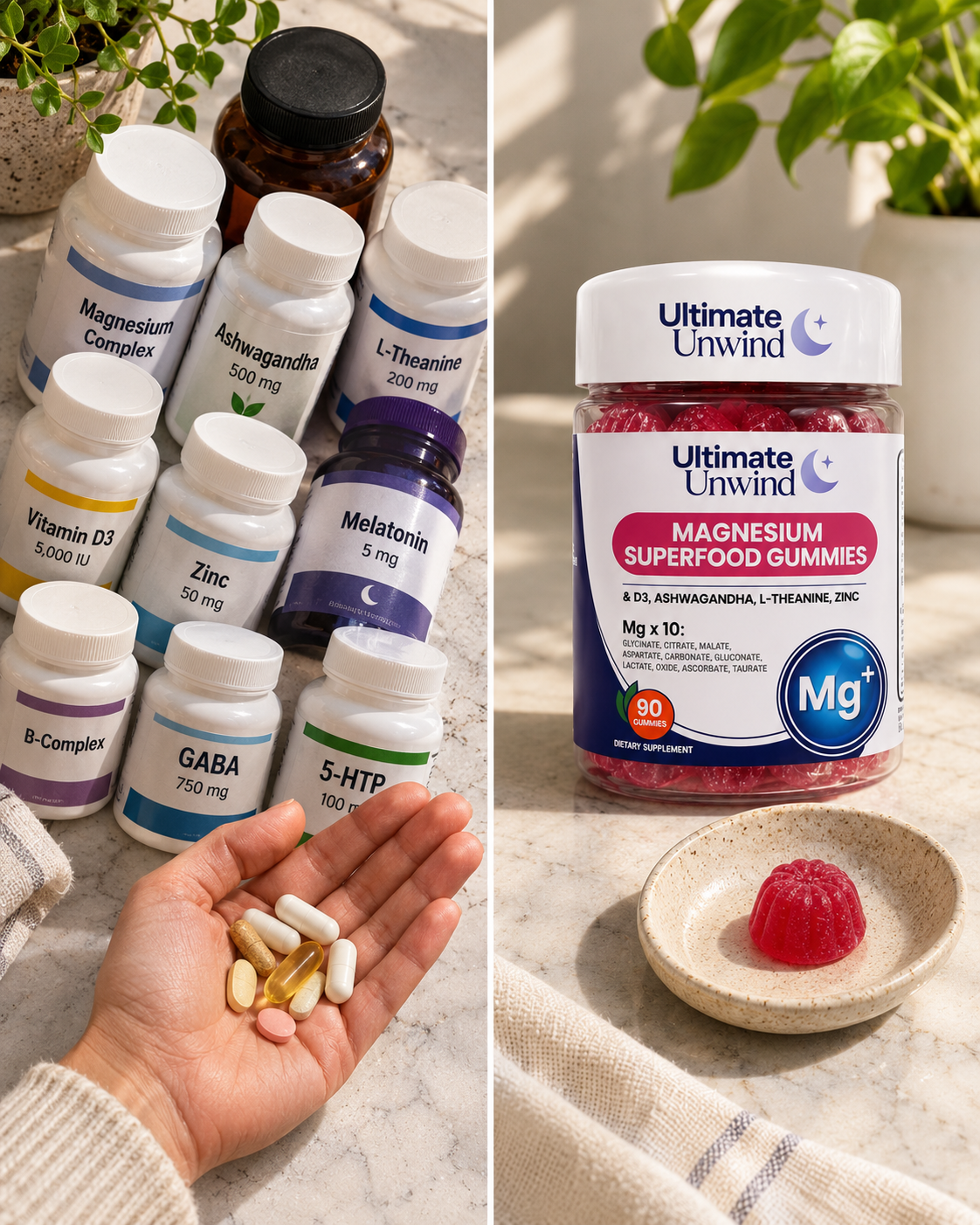
Magnesium glycinate (180 tablets)$19.59
Magnesium citrate (250 tablets)$24.49
Magnesium malate (180 tablets)$15.91
Magnesium taurate (180 tablets)$34.99
Magnesium aspartate (120 capsules)$13.46
L-Theanine 200 mg (120 capsules)$24.13
Ashwagandha extract 450 mg (90 capsules)$11.26
Zinc 50 mg (250 tablets)$11.01
Vitamin D3 2,000 IU (120 softgels)$8.00
Total: 9 bottles$162.84
…and that still only covers 5 of the 10 magnesium forms. Gluconate, ascorbate, lactate, carbonate, and oxide are hard to even find on their own.
That’s 9 bottles cluttering your counter and 10+ pills every night. Plus a catch nobody mentions: if you take the full label dose of each magnesium bottle, you’d be swallowing roughly 1,000 mg of magnesium a night, nearly three times the 350 mg daily upper limit the NIH sets for supplemental magnesium.11 That’s the fast lane to cramps and bathroom sprints.
VS
Ultimate Unwind 14-in-1
All 14 ingredients, already measured out for you
1 gummy a night · 90 gummies per bottle · $35.00
That’s about 40¢ a night.Get All 14 Ingredients for ~40¢ a Night →
One gummy. One bottle. 90 nights.8
When to expect results
Ultimate Unwind isn’t a knockout pill (and that’s the point). It supports your body over time, so you wake up feeling like a person, not a zombie. Here’s a realistic timeline:
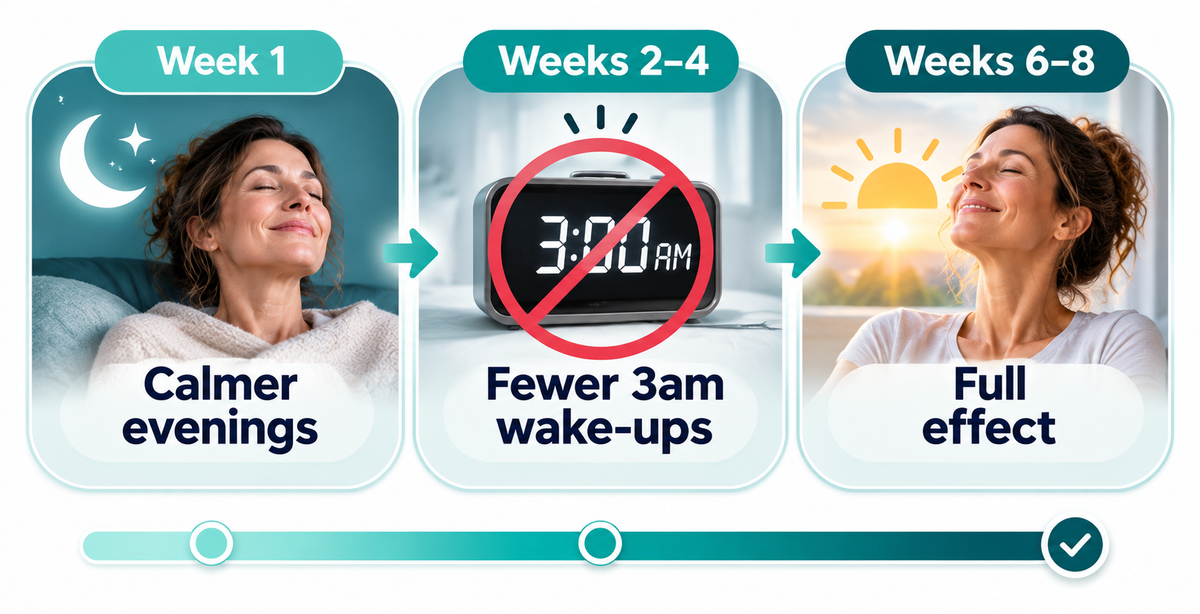
Week 1
Calmer evenings
L-theanine is the fastest-acting ingredient. Many people notice it’s easier to wind down and stop the bedtime brain-chatter in the first several days.
Weeks 2–4
Fewer 3am wake-ups
Fewer nights lying there doing the math. Magnesium builds up with consistent nightly use. In clinical trials, sleep improvements with magnesium showed up at around 3–4 weeks.12
Weeks 6–8
The full effect
Sleep that comes in one piece instead of two broken chunks. Ashwagandha’s sleep benefits in research were strongest with 8+ weeks of consistent use.9 One bottle covers 90 nights, so you’re covered for the whole window.
Pro tip: Take it every night, not just on the bad ones. Consistency is what moves the needle.