After Giving Birth to My Twin Boys, I Was Told Only One Had Survived—Then a Nurse Whispered, “Before You Trust Your Husband, Watch the Video I Sent You”
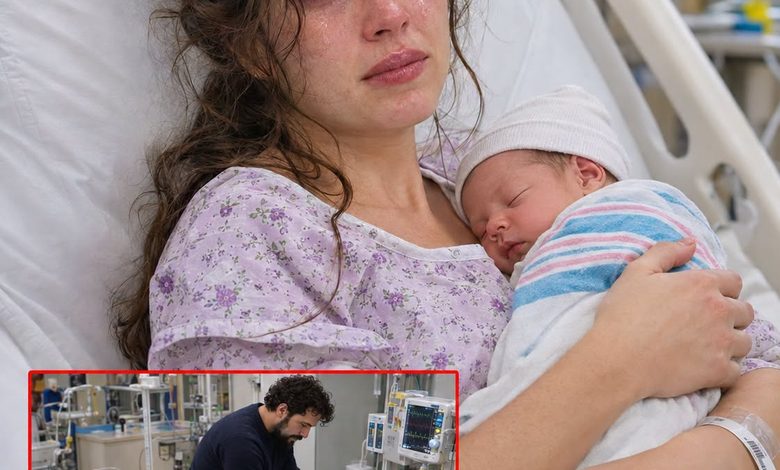
Part 1 — The Day I Lost One of My Sons
At thirty-eight weeks pregnant, I thought the hardest part of becoming a mother would be surviving the delivery.
I had prepared myself for sleepless nights, endless diaper changes, and the beautiful chaos of raising twin boys. I imagined two little faces looking up at me, two tiny hands reaching for mine, and the sound of brothers laughing together as they grew.
Never once did I imagine leaving the hospital with only one child.
And I certainly never imagined that the person I trusted most would become the center of questions I was almost too frightened to ask.
My name is Leah Hartley. At thirty-four, I was expecting my first children with my husband, Simon.
We had been married for seven years, and for most of that time, I believed we had built a happy, dependable life.
Simon worked in corporate finance, while I ran a small graphic design business from home. We lived in a quiet neighborhood outside Portland, in a house with a little garden and an upstairs bedroom we had always hoped to turn into a nursery.
For nearly three years, we had tried to become parents.
Those years had been filled with doctor appointments, disappointing pregnancy tests, and the exhausting effort of pretending I was fine whenever another friend announced she was expecting.
Then, one ordinary Thursday morning, everything changed.
I stood in our bathroom staring at a pregnancy test, unable to stop smiling.
When I showed Simon, he wrapped his arms around me and laughed.
“Are you serious?”
I nodded, crying and laughing at the same time.
“We’re having a baby.”
He kissed my forehead.
“Finally.”
A few weeks later, we went to our first ultrasound.
I remember lying on the examination table while the technician moved the probe across my stomach.
She studied the monitor for several seconds.
Then she smiled.
“Well, I have some exciting news for you.”
I looked at Simon.
“What is it?”
The technician turned the monitor toward us.
“There are two heartbeats.”
For a moment, neither of us spoke.
“Twins?” I whispered.
She nodded.
“Two babies.”
I burst into tears.
Simon stared at the screen, then let out a stunned little laugh.
“Two?”
The technician smiled again.
“Looks like you’re getting twice the excitement.”
I reached for my husband’s hand.
He squeezed it, although his fingers felt unusually stiff.
I assumed he was simply overwhelmed.
After all, I was overwhelmed too.
By the time we discovered that both babies were boys, I had already imagined a hundred different versions of our future.
We chose the names Miles and Jude.
Miles was the more active twin, constantly shifting during ultrasounds and making it difficult for the technician to get clear measurements.
Jude was quieter.
Whenever I placed my palm against the right side of my stomach, I could often feel a gentle movement beneath my fingers.
I started joking that Miles would be our little troublemaker, while Jude would be the thoughtful one who cleaned up after him.
My younger sister, Natalie, loved that idea.
“You’ve already assigned them personalities,” she laughed during one visit.
“Of course I have.”
“They haven’t even been born.”
“I know my boys.”
She rolled her eyes affectionately and continued folding baby clothes.
Natalie had been my closest friend since childhood. She was three years younger than me, wonderfully practical, and never afraid to tell me when she thought I was being unreasonable.
She helped me decorate the nursery with pale green walls, wooden shelves, and two matching cribs.
Above them, we hung a small sign that read:
Twice the love, twice the joy.
Every time I walked past that room, I smiled.
The pregnancy itself progressed remarkably well.
My appointments were reassuring, the boys continued growing, and although I experienced the usual discomforts of carrying twins, I was grateful for every movement.
Simon was attentive in many ways.
He brought me water when I forgot to drink enough.
He massaged my swollen feet after long afternoons.
He insisted on carrying every grocery bag, even when I told him I was pregnant, not helpless.
Friends often commented on how fortunate I was.
“He’s going to be such a good father,” one of my neighbors said.
I believed that completely.
Still, as the due date approached, I noticed small changes in him.
He seemed distracted during conversations about the babies.
Sometimes, I caught him staring at the nursery as though he were trying to solve a problem he didn’t know how to discuss.
He also began taking long phone calls in the garage.
Whenever I asked about them, he said they were related to work.
One evening, while I was arranging freshly washed blankets, I asked whether he still liked the names we had chosen.
“Miles and Jude,” I said. “You haven’t changed your mind, have you?”
Simon glanced up from his laptop.
“No. They’re fine.”
“Just fine?”
He smiled faintly.
“They’re good names, Leah.”
I sat beside him.
“You’re nervous, aren’t you?”
He closed the laptop.
“A little.”
“About becoming a dad?”
“About everything changing.”
I rested my head against his shoulder.
“Our lives are going to change,” I said. “But we’ll figure it out together.”
He kissed the top of my head.
“Of course we will.”
I held on to those words.
Two days later, Natalie called while I was having breakfast.
“How are my favorite nephews?”
“Very demanding,” I laughed. “One of them has been kicking me since six this morning.”
“Which one?”
“Miles, probably. Jude is usually more polite.”
She laughed.
Then she asked about Simon.
“How’s he holding up?”
“He’s nervous.”
“Just nervous?”
I frowned.
“What do you mean?”
“Nothing. He seemed a little distant when I visited.”
“He’s got a lot on his mind.”
“I’m sure he does.”
There was a short pause.
“Leah, if you need anything, promise you’ll call me.”
I smiled.
“You’re worrying too much.”
“That’s what sisters are for.”
We ended the conversation laughing.
I had no idea it would be the last completely ordinary conversation I had before my life changed.
Two afternoons later, at thirty-eight weeks and one day pregnant, I was standing at the kitchen sink rinsing a coffee mug.
Simon was working in the next room.
I remember looking out the window at a robin sitting on the fence.
Then a sudden, terrible pain spread across my abdomen.
I gripped the counter.
At first, I thought it might be a contraction.
But the pain intensified so rapidly that I couldn’t remain standing.
The mug slipped from my hand and shattered on the floor.
“Simon!”
I tried to call again, but my voice came out weak.
My knees buckled.
The next thing I knew, I was on the kitchen floor, struggling to breathe.
Simon rushed toward me.
“Leah? What’s happening?”
“I don’t know,” I gasped. “Something’s wrong.”
He grabbed his phone and called for an ambulance.
I remember hearing him give our address.
“My wife is pregnant with twins. She’s collapsed. We need help immediately.”
Then everything became fragmented.
The sound of sirens.
Someone asking me questions.
Bright lights above my face.
A medical worker telling me to stay awake.
I tried to ask about the boys.
I wanted someone to tell me they were all right.
But before I could get an answer, the world disappeared.
When I opened my eyes again, I was in a hospital bed.
Three days had passed.
A monitor beeped steadily beside me, and my body felt heavy and unfamiliar.
My abdomen ached.
My throat was painfully dry.
For several seconds, I couldn’t remember why I was there.
Then I saw Simon sitting beside me.
He immediately leaned forward.
“Leah?”
I blinked.
“Simon?”
“Oh, thank God.”
He took my hand and pressed it against his forehead.
“You’re awake.”
I tried to sit up.
Pain shot through my stomach.
“The babies,” I whispered.
Simon gently pushed my shoulder back against the pillow.
“Don’t move too quickly.”
“Where are they?”
He didn’t answer immediately.
Something about his expression frightened me.
“Simon, where are my boys?”
He swallowed.
“Miles is okay.”
Relief flooded through me.
Then I realized what he had said.
Miles.
Only Miles.
“And Jude?”
Simon’s eyes filled with tears.
“Leah, I’m so sorry.”
My heart began pounding.
“No.”
He gripped my hand.
“There were complications. They had to perform an emergency C-section. Jude was in very serious condition.”
I shook my head.
“No. No, please.”
“The doctors tried to save him.”
“Where is he?”
His voice broke.
“He didn’t make it.”
For a moment, I couldn’t understand the words.
I stared at my husband, waiting for him to correct himself.
Waiting for him to tell me this was some terrible misunderstanding.
Then I began crying.
Not softly.
Not quietly.
I cried with a desperation I had never known before.
Simon leaned over me and wrapped his arms around my shoulders.
“I’m sorry,” he whispered again and again.
I clung to him because he was the only familiar thing in a world that no longer made sense.
For months, I had carried two babies beneath my heart.
Now one was gone.
And I hadn’t even been awake to say goodbye.
Part 2 — The Nurse Who Told Me to Keep Smiling
The days following my awakening passed in a blur of pain medication, medical checks, and grief.
I had survived a serious obstetric emergency, but I barely cared about my own recovery.
All I could think about was Jude.
I wanted to know whether he had cried when he was born.
Whether anyone had held his tiny hand.
Whether he had opened his eyes.
The questions seemed endless, and every answer made me want to ask another.
Simon stayed close to me during those first days.
He brought flowers from the hospital gift shop, adjusted my pillows, and reminded me to eat when I had no appetite.
He often held my hand while I cried.
“We still have Miles,” he told me gently. “He needs us.”
I knew he was right.
Our surviving son was receiving care in the neonatal unit while doctors monitored his recovery from the difficult delivery.
Every update about him was precious.
His breathing was improving.
He was beginning to feed well.
And the nurses seemed optimistic that we would soon be able to bring him home.
But even those encouraging updates carried a painful reminder.
There should have been two.
Two babies to feed.
Two sets of medical updates.
Two tiny boys waiting for me.
Instead, whenever anyone mentioned my children, they quickly corrected themselves.
My babies.
My baby.
That small change in language hurt more than I could explain.
On the second morning after I woke up, I asked Simon whether I could read the medical records.
He was standing beside the window, scrolling through messages.
“Why?” he asked.
“Because I want to understand what happened.”
He put down his phone.
“Leah, you’ve already been through so much.”
“I know.”
“The doctors explained everything to me.”
“But they haven’t explained it to me.”
His expression softened.
“Sweetheart, you’re still recovering. You don’t need to put yourself through all those details right now.”
I looked at him.
“He was my son.”
“I know.”
“Then please understand that I need to know.”
Simon sat on the edge of the bed.
“Jude was very sick. They tried everything they could. Sometimes terrible things happen, even when doctors do their best.”
I wanted to believe that explanation.
So I let the subject drop.
But the following afternoon, I asked again.
This time, I wanted to speak directly with the neonatal specialist who had treated Jude.
Simon looked uncomfortable.
“Why keep reopening this?”
“Because it isn’t closed for me.”
He exhaled slowly.
“Leah, no conversation is going to change what happened.”
I turned away from him.
I knew grief could make people impatient or defensive.
Perhaps Simon was suffering in his own way.
Perhaps he simply couldn’t bear to discuss our son’s death.
I tried to be understanding.
Then I began noticing something strange.
There was an older nurse who regularly came into my room.
She had short silver-gray hair, gentle eyes, and a calm manner that made even uncomfortable medical checks feel less frightening.
Her name was Helen Brooks.
She was always professional.
But whenever Simon was present, I noticed a slight change in her expression.
She would glance at him, then quickly look away.
Sometimes, when he spoke, her hands would pause for a fraction of a second before she resumed what she was doing.
At first, I thought I was imagining it.
Grief had made me unusually sensitive to other people’s expressions.
One afternoon, Helen was checking my blood pressure when Simon stepped outside to answer a call.
As soon as he left, she looked at me.
“How are you feeling emotionally, Leah?”
I gave a tired smile.
“Like half my heart is missing.”
Her expression softened.
“I’m very sorry.”
I nodded.
Then I asked a question I hadn’t planned to ask.
“Were you here when my babies were born?”
She hesitated.
“I was on duty that night.”
“Did you see Jude?”
“Yes.”
My throat tightened.
“Was he very small?”
“He was a beautiful little boy.”
Tears filled my eyes.
“Did he look like Miles?”
Helen nodded gently.
“They had the same dark hair.”
I covered my mouth and began crying.
She handed me a tissue and remained beside me until I could speak again.
Then I whispered, “I wish I could remember him.”
Helen looked at me for a long moment.
“There are things about that night you deserve to understand,” she said quietly.
I lifted my head.
“What things?”
Before she could answer, the door opened.
Simon walked back into the room.
Helen immediately returned her attention to the blood pressure monitor.
“Everything looks good,” she announced pleasantly.
But I couldn’t forget what she had said.
There are things about that night you deserve to understand.
The following morning, I finally got to hold Miles.
Helen personally brought him into my room.
My baby was wrapped in a soft blue blanket, and a tiny knitted hat covered his dark hair.
When she placed him in my arms, the world seemed to grow quiet.
I stared at his little face.
His nose.
His eyelashes.
The way his fingers opened and closed.
“Hello, sweetheart,” I whispered.
Miles shifted slightly against my chest.
I kissed his forehead.
For the first time since waking up, I felt joy rise through the grief.
And then I cried because Jude wasn’t there to share it.
Simon stood beside the bed, smiling down at us.
“Look at him,” he said. “He’s perfect.”
I nodded.
“He really is.”
Helen adjusted Miles’s blanket.
Then she leaned closer to me.
“Keep smiling,” she whispered.
I almost turned toward her.
But something in her tone made me remain still.
“Don’t look at me,” she continued. “Just listen.”
My heart began racing.
She glanced toward Simon, who had turned away to answer a message.
“I need you to check your phone when you’re alone.”
I stared down at Miles.
“Why?” I whispered.
“Because I heard something on the night of your delivery. Something that has been troubling me ever since.”
My pulse quickened.
Helen continued adjusting the blanket as though we were having an ordinary conversation.
“I recorded part of it. I sent the video to the contact number listed in your chart.”
My mouth went dry.
“Recorded what?”
“Your husband. He was speaking outside the operating area.”
I wanted to ask a hundred questions.
But Simon was only a few feet away.
Helen moved even closer.
“Please watch it before you decide how much you can trust what he’s told you.”
I felt a chill spread through my body.
“What does that mean?”
Her voice dropped almost to nothing.
“There’s more to the story of your other son.”
Then she straightened.
“You’re doing wonderfully, Mom,” she said aloud.
Simon looked up.
“Everything okay?”
“Absolutely,” Helen replied with a warm smile. “Miles is settling in beautifully.”
She gave my shoulder a gentle squeeze and left the room.
I sat there holding my newborn son, trying not to let my fear show.
Simon came closer and kissed my forehead.
“You’re looking better today.”
I forced a smile.
“Thank you.”
He stayed for another twenty minutes, talking about what we would need when Miles came home.
Then he mentioned getting coffee.
“I’ll be back in a little while.”
I nodded.
“Okay.”
I watched him leave.
The moment the door closed, I placed Miles carefully in the bassinet beside me and reached for my phone.
There was a new message from an unfamiliar number.
A video attachment.
Twenty-seven seconds long.
No explanation.
No greeting.
Just a recording.
For a long moment, I stared at the screen.
Then, with trembling fingers, I pressed play.
Part 3 — Twenty-Seven Seconds That Changed Everything
The video opened on a dim hospital corridor.
At first, I couldn’t understand what I was looking at.
The camera was slightly unsteady, and the image showed part of a wall, a row of waiting-room chairs, and the entrance to the surgical wing.
Then a man walked into view.
Simon.
He was pacing back and forth with his phone pressed against his ear.
His voice was low, but clear enough to understand.
“I already told them what I wanted.”
I frowned.
He stopped walking.
“No, I’m not changing my mind.”
There was a pause.
Then he spoke again.
“I told them not to go ahead with the additional intervention for the second baby. I signed the refusal.”
My breath caught.
I stared at the screen.
Simon continued.
“They said the chances were poor anyway. I wasn’t going to put us through all that.”
He listened for several seconds.
Then he said something that made the room seem to tilt around me.
“One baby is enough. I’ve told you that before.”
I pressed my hand against my mouth.
The recording continued.
“Leah’s still unconscious. She doesn’t know what happened, and there’s no reason to make things worse by telling her every detail.”
Another pause.
Then, in a voice I barely recognized, my husband added:
“I never wanted two babies. You know that.”
The video ended.
For several seconds, I remained completely motionless.
I could hear the medical monitor beside me.
The faint sounds of footsteps in the corridor.
The soft breathing of my newborn son.
But all I could think about were the words I had just heard.
I signed the refusal.
One baby is enough.
I never wanted two babies.
I played the recording again.
Then a third time.
Each time, my heart seemed to break in a different place.
I had spent days believing that Jude’s death was an unavoidable tragedy.
Now I was hearing my husband admit that doctors had proposed an additional intervention and that he had refused it.
I didn’t know whether the intervention would have worked.
I didn’t even know exactly what it involved.
But I knew one thing.
Simon had hidden a decision that belonged at the center of every conversation we had about our son’s final hours.
And the reason he had given in that recording terrified me.
I looked toward Miles, sleeping in his bassinet.
For months, I had imagined his brother sleeping beside him.
I had pictured matching pajamas, first birthdays, and two little boys reaching for my hands.
Now those memories existed only in my imagination.
A quiet knock interrupted my thoughts.
Helen entered.
The moment she saw my face, she closed the door behind her.
“You watched it,” she said.
I nodded.
My voice was barely audible.
“Tell me what happened.”
She pulled a chair beside my bed.
“Leah, I need you to understand that your delivery was a genuine medical emergency. You suffered a severe placental abruption, and the doctors had to act quickly.”
I nodded, struggling to concentrate.
“Both babies were affected,” she continued. “Miles responded to treatment. Jude was in much worse condition.”
I closed my eyes.
Helen waited until I looked at her again.
“The team worked to stabilize him. During that time, a specialist discussed an additional option involving an urgent transfer for more advanced treatment.”
I gripped the blanket.
“Would it have saved him?”
“I don’t know,” she answered.
Her honesty hurt.
“The doctors believed the chances of success were limited. It would have been a difficult procedure, and Jude was already critically ill. Nobody could promise he would survive.”
“Then why did Simon have to decide?”
“Because you were unconscious and the medical team was seeking parental consent for the proposed treatment. Your husband was the available parent.”
I stared at her.
“He refused?”
Helen nodded.
“That’s what the documentation indicates.”
I began shaking.
“And nobody told me?”
“Your husband was the person who initially explained the outcome to you. The medical team should have made sure you received a clear account afterward. I’m concerned that didn’t happen.”
I looked toward the window.
The sky outside was bright and blue.
People were driving to work.
Shopping for groceries.
Taking their children to school.
The world was continuing as though nothing had happened.
Meanwhile, I was sitting in a hospital bed trying to understand how my husband had made a life-changing decision about our son without ever telling me.
“Why did you record him?” I asked.
Helen looked down at her hands.
“I heard him speaking on the phone after the discussion with the medical team. At first, I thought he was simply overwhelmed. Parents sometimes say things they don’t mean when they’re terrified.”
She paused.
“But then I heard what he said about not wanting two babies. And I couldn’t forget it.”
She looked directly at me.
“I don’t know whether the additional intervention would have changed Jude’s outcome. But I believed you deserved to know that the decision was more complicated than your husband had admitted.”
My eyes filled with tears.
“Why didn’t you come to me sooner?”
“You were critically ill for the first several days. Then you were recovering, and your husband was almost always beside you. I was also trying to determine how to report what I had heard.”
She swallowed.
“I wish I’d found a better way to reach you sooner.”
I looked down at my phone.
“Who was Simon talking to?”
“I don’t know.”
“Did he know you were recording?”
“I don’t believe so.”
I felt anger rising beneath the grief.
For a moment, I wanted to call Simon immediately.
I wanted to scream at him.
I wanted to demand that he come back and explain every terrible word.
But Helen gently touched my arm.
“Please don’t confront him until you’ve had support and proper advice.”
I looked at her.
“How am I supposed to sit here and pretend everything is normal?”
“You don’t have to pretend forever. But you need to protect yourself and make sure the records are preserved.”
She took a slow breath.
“The video captures what he said. The medical records will show what the doctors recommended and what decisions were documented. Both matter.”
I wiped my cheeks.
“I want those records.”
Helen nodded.
“Then ask for them formally. And I strongly recommend speaking with someone you trust.”
As soon as she left, I called the hospital administration office.
I requested access to the records concerning my emergency delivery and Jude’s treatment.
Later that afternoon, a patient-services representative came to my room.
She explained that the records were being compiled and that certain documents were also being examined as part of the hospital’s review of the unexpected outcome.
“How long will it take?” I asked.
“We can begin processing your request immediately. Some records may take additional time to assemble.”
I gripped the edge of my blanket.
“I need to see whatever my husband signed.”
“We’ll make sure your request is directed to the appropriate department.”
Her measured tone only made me more frustrated.
After she left, I stared at the doorway.
I felt powerless.
My body was still recovering from major surgery.
My newborn needed me.
I was grieving a child I would never hold.
And now I was discovering that the story I’d been given about his death was incomplete.
I opened my phone again.
This time, I contacted Natalie.
Please come to the hospital. I need you urgently. Don’t tell Simon. If you can, bring someone who understands legal matters.
She replied almost immediately.
I’m coming. Are you safe?
I looked at Miles.
Then at the hospital door.
Yes. But something terrible has happened, and I need your help.
An hour later, Natalie arrived.
She took one look at my face and hurried toward me.
“Leah, what happened?”
I handed her my phone.
“Watch this.”
She sat beside my bed and played the video.
I watched her expression change.
Confusion.
Disbelief.
Horror.
When the recording ended, she remained silent for several seconds.
Then she whispered, “Oh, Leah.”
I began crying again.
Natalie wrapped her arms around me.
For a long time, neither of us spoke.
Finally, I pulled away.
“I don’t know if Jude could have survived,” I whispered. “But Simon made that decision and never told me.”
Natalie squeezed my hand.
“Then we’re going to find out everything.”
She reached for her phone.
“I know someone who can help.”
And for the first time since watching the recording, I felt something stronger than fear.
I felt the beginning of a decision.
I was going to learn the truth about my son.
No matter how painful it became.
Part 4 — The Conversation My Husband Never Expected
Natalie returned the following morning with a man named Marcus Bennett.
Marcus was a family attorney whom she’d known for years. Although medical negligence wasn’t his primary specialty, he had already contacted a colleague experienced in healthcare litigation.
He listened carefully as I explained what had happened.
Then he watched the video.
Unlike Natalie, he didn’t react immediately.
He replayed the recording, made notes, and asked several detailed questions.
When I finished answering, he leaned back in his chair.
“Leah, this raises serious concerns. But we need to distinguish several things.”
I nodded.
“First, we need to establish exactly what treatment was proposed for Jude, what the medical team believed it could accomplish, and whether the refusal was handled appropriately.”
“And Simon?”
“His statements may be important evidence of his reasoning. But the video alone doesn’t establish that the declined treatment would have saved Jude.”
I swallowed.
“I understand.”
Marcus’s expression softened.
“I know this is incredibly difficult. But the stronger and more accurate our evidence is, the better we’ll be able to protect your interests.”
He helped me prepare written requests for medical records and for preservation of relevant documents.
He also contacted the hospital’s patient advocate to arrange a formal discussion about the treatment decisions.
Then he asked about my medical decision-making arrangements.
“I don’t want Simon making another decision for me,” I said immediately.
Marcus nodded.
“Then we’ll make sure your wishes are documented and that the hospital has your updated instructions.”
I named Natalie as my preferred healthcare representative for any future situation in which I couldn’t speak for myself.
For the first time in days, I felt that my voice mattered again.
Helen agreed to provide an account of what she had personally witnessed through the appropriate channels.
She also preserved the original recording.
Later that afternoon, a representative from the hospital met with us.
She confirmed that Jude’s records included documentation of a declined treatment option and that the circumstances were under review.
The review would need to examine the medical judgment, the consent process, and the communication that followed.
She couldn’t tell me whether the additional intervention would have changed the outcome.
Nobody could.
That uncertainty was almost unbearable.
But I was beginning to understand something important.
The truth about Jude’s death could not be reduced to one sentence.
He had been critically ill.
The doctors had faced difficult decisions.
My husband had been asked to participate in one of those decisions.
And he had concealed what happened from me.
I wanted him to explain why.
Simon returned to the hospital that evening carrying a bag of clothes and a small stuffed elephant he’d bought for Miles.
When he entered, he stopped.
Natalie was sitting beside me.
Marcus stood near the window.
And I was looking directly at him.
“What’s going on?” Simon asked.
I took a slow breath.
“Sit down.”
He glanced toward Marcus.
“Who’s this?”
“Someone helping me understand what happened to Jude.”
Simon’s face changed.
“Leah, we’ve talked about this.”
“No,” I replied. “You’ve talked. I’ve listened.”
He looked frustrated.
“You’re exhausted. You’re grieving. This isn’t the time—”
“Did the doctors recommend another treatment for Jude?”
The room went silent.
Simon stared at me.
“What?”
“Did they discuss transferring him for an additional intervention?”
His eyes shifted toward Natalie.
Then Marcus.
Finally, he looked back at me.
“Where is this coming from?”
“Answer me.”
He rubbed his forehead.
“Leah, it was complicated.”
“Did you refuse?”
He didn’t answer.
The silence was enough to make my heart sink.
But I needed to hear him say it.
“Simon.”
He lowered himself into a chair.
“They said the chances were terrible.”
I felt tears burning behind my eyes.
“That’s not what I asked.”
He looked at the floor.
“Yes.”
The word was barely audible.
I stared at him.
“Yes, what?”
“Yes, I declined the additional procedure.”
My chest tightened so painfully that I had to concentrate on breathing.
“Why didn’t you tell me?”
“Because you were already suffering.”
“Simon.”
“You almost died, Leah. Jude was critically ill. The doctors weren’t optimistic.”
“But there was another option.”
“An option with very little chance of working.”
I shook my head.
“That was something I deserved to know.”
He looked up sharply.
“You weren’t there. You were unconscious. I had to make a decision.”
I felt something inside me harden.
“Then why did you lie afterward?”
“I didn’t lie.”
“You told me there was nothing else they could try.”
He looked away.
I reached for my phone.
“There’s something I want you to hear.”
I pressed play.
His own voice filled the room.
One baby is enough.
I never wanted two babies.
As the recording continued, Simon’s face drained of color.
When it ended, he stared at my phone.
“Where did you get that?”
I didn’t answer.
He looked toward Natalie.
“Who gave her that?”
“Don’t change the subject,” I said.
His breathing became shallow.
“Leah, you don’t understand what was happening.”
“Then explain it.”
He pressed both hands against his face.
“I was terrified.”
“Of losing Jude?”
“Of everything.”
I waited.
He lowered his hands.
“The hospital bills. The possibility of long-term medical care. Two babies. Your recovery. I didn’t know how we were going to manage any of it.”
My voice shook.
“We were supposed to manage it together.”
He nodded quickly.
“I know.”
“Then why did you say one baby was enough?”
Simon closed his eyes.
For a moment, I thought he might refuse to answer.
Then he spoke.
“Because I was overwhelmed, Leah. When we found out about the twins, I was happy for you, but I was terrified too.”
I remembered the nursery.
The unfinished second crib.
The distant expression whenever I mentioned Jude.
All those little moments I had explained away.
“You never told me.”
“I didn’t want to disappoint you.”
“So you pretended.”
He looked miserable.
“I thought I could handle it.”
I stared at him.
“And when Jude needed help, you made that decision with all those feelings inside you.”
Simon began crying.
“I thought he was going to die anyway.”
“You didn’t know that.”
“The doctors said—”
“They said his chances were poor. That’s not the same as saying there was no chance.”
He fell silent.
My voice broke.
“You should have told me what happened. You let me lie here believing we had been given no choice at all.”
He reached for my hand.
I pulled it away.
“Leah, please. I love you.”
I looked at him through my tears.
“I needed to trust you.”
“I know.”
“And instead, you decided what I was allowed to know about our son’s final hours.”
He began pleading with me.
He said he had panicked.
He said he regretted keeping the truth from me.
He promised to attend counseling, cooperate with the medical review, and do anything necessary to repair our marriage.
But I couldn’t stop hearing his voice on the recording.
I never wanted two babies.
I looked toward Miles, who was sleeping in his bassinet.
Then I turned back to Simon.
“I don’t know whether Jude would have survived the additional treatment. Maybe he wouldn’t have.”
Simon lowered his head.
“But I’ll spend the rest of my life wondering,” I continued. “And you knew that was something I deserved to understand.”
He started crying harder.
“Please don’t leave me.”
I wiped my cheeks.
“Simon, I’m not making a decision about forgiveness today.”
Hope briefly appeared in his expression.
Then I continued.
“But I’m not going home with you. And you’re not making decisions for me anymore.”
He looked stunned.
“Leah—”
“I need space. I need my sister. And I need the full truth about Jude, whether you want to face it or not.”
Marcus stepped forward and explained that we would be arranging separate legal representation and addressing the next steps formally.
Simon remained seated for several moments.
Then he stood.
He looked toward Miles.
“Can I say goodbye to him?”
I hesitated.
Our son was innocent in all of this.
Whatever happened between Simon and me, Miles would still have a father.
I nodded.
Simon approached the bassinet and gently touched Miles’s blanket.
Then he looked at me one final time.
“I’m sorry.”
I had imagined hearing those words a hundred times since watching the video.
But when they finally came, they didn’t repair anything.
They simply confirmed how much had been lost.
After Simon left, Natalie sat beside me.
She didn’t ask how I felt.
She didn’t tell me I’d done the right thing.
She just took my hand.
And for the first time since the delivery, I allowed myself to cry without feeling that I needed to be strong for someone else.
Part 5 — Two Sons, One Promise
The weeks after I left the hospital were some of the hardest of my life.
Natalie moved into the guest bedroom for a while and helped me care for Miles as I recovered from surgery.
She prepared meals, washed baby clothes, and took over the small practical tasks that seemed impossible when grief left me exhausted.
Some nights, I sat in the nursery for hours.
Miles slept in the crib nearest the window.
The other crib remained empty.
At first, I couldn’t bring myself to touch it.
I had chosen the bedding.
Folded the blankets.
Placed a little stuffed bear against the pillow.
Everything had been ready for Jude.
Now the room looked like a promise that would never be fulfilled.
One evening, Natalie found me sitting on the floor between the two cribs.
I was holding Jude’s blanket.
She sat beside me without speaking.
After a long silence, I whispered, “Do you think I’ll ever stop feeling guilty?”
Natalie turned toward me.
“Guilty for what?”
“For being unconscious. For not being there when he needed me.”
Her eyes filled with tears.
“Leah, you were fighting for your life.”
“I know.”
“You didn’t abandon him.”
I looked down at the blanket.
“But he was alone.”
Natalie gently shook her head.
“He was surrounded by people trying to care for him. And he had a mother who loved him every second of his life.”
I began crying.
She wrapped an arm around my shoulders.
I wanted so badly to believe her.
Over the following months, the legal and medical questions moved forward slowly.
The hospital conducted a formal review of Jude’s treatment and the circumstances surrounding the documented refusal.
Additional records were collected.
Specialists examined whether the proposed intervention was appropriate and whether it could reasonably have changed the outcome.
The process was far more complicated than I had initially imagined.
There were questions that medical records could help answer.
Others remained uncertain.
Marcus’s healthcare colleague advised me that proving a treatment had been declined was not the same as proving that the refusal caused Jude’s death.
That distinction was painful, but I understood why it mattered.
I didn’t want someone to invent certainty just because the truth was difficult to accept.
I wanted an honest account of what happened.
The video remained important.
So did Helen’s testimony and the signed documentation.
But I gradually learned that justice wasn’t always a dramatic courtroom scene or an immediate punishment.
Sometimes it meant refusing to let the facts disappear behind a convenient explanation.
Sometimes it meant asking difficult questions over and over until the people responsible for answering them finally did so.
And sometimes it meant accepting that the complete answer might never be available.
My marriage ended during those months.
I couldn’t rebuild the trust I had once placed in Simon.
We separated, arranged temporary parenting and financial agreements, and eventually completed our divorce.
Simon continued to express regret.
He said he had acted out of fear.
He insisted that he had never wished harm upon Jude.
Perhaps that was true.
Perhaps his fear had overwhelmed his judgment during the worst night of our lives.
But the man I had married had hidden something too important for me to ignore.
I could acknowledge his regret without returning to him.
I could hope he became a better father to Miles without pretending our marriage was still possible.
And I could refuse to let my son’s memory become the subject of endless arguments between us.
Six months after the delivery, I planted a young dogwood tree in our backyard.
Natalie helped me dig the hole.
Miles sat nearby in his stroller, watching us with the serious expression he seemed to have inherited from his father.
The morning was cool and bright.
I had chosen the tree because its white blossoms reminded me of the tiny blanket Jude was supposed to come home in.
When we finished planting it, Natalie stepped back.
“It’s beautiful,” she said.
I nodded.
Then I knelt beside the tree and pressed my hand against the fresh soil.
For months, I had been looking for a way to remember Jude that wasn’t connected to hospital corridors, medical records, or the sound of Simon’s voice on that recording.
I wanted something living.
Something that would grow.
Something Miles could see and understand as he became older.
I placed a small stone beside the trunk.
On it were engraved three simple words.
Jude. Forever loved.
Natalie stood quietly behind me.
I looked toward Miles.
He was reaching for the soft toy clipped to his stroller.
I smiled through my tears.
“One day,” I whispered, “I’m going to tell you about your brother.”
I would tell him how, during my pregnancy, Miles had been the energetic one who never seemed to stop moving.
How Jude had been quieter.
How I had imagined them growing up side by side.
I would show him the ultrasound photographs.
The matching blankets.
The tiny keepsakes I had saved.
And I would make sure he understood that his brother’s life, however brief, had mattered.
I also knew I would have to tell him more difficult truths when he was old enough.
I would have to explain that adults sometimes make choices out of fear.
That love doesn’t make people incapable of terrible mistakes.
And that truth matters even when knowing it changes everything.
But those conversations belonged to the future.
For now, Miles was a baby who needed his mother.
He needed warmth, affection, safety, and a home where he could grow without carrying the weight of what had happened before he could remember.
Slowly, I began rebuilding that home.
I returned to illustration work a few hours each week.
I joined a support group for parents who had lost infants.
I learned how to answer the painful questions people sometimes asked without realizing how deeply they could hurt.
“Was he your only baby?”
“No,” I would say gently. “He had a twin brother.”
At first, the words made me cry.
Eventually, I learned to say them with love.
Both boys were my sons.
Only one was growing up in my arms.
That truth would always be part of me.
One afternoon, while I was feeding Miles in the nursery, he reached up and curled his tiny fingers around my hand.
I looked at him and smiled.
He smiled back.
A real smile.
Not the sleepy, accidental kind newborns sometimes make.
A bright, delighted smile that transformed his entire face.
I laughed.
Then, unexpectedly, I began crying.
Because joy had returned to me for a moment without asking permission.
And because I realized that loving Miles didn’t mean I was forgetting Jude.
There was room in my heart for both.
That evening, after putting Miles to bed, I stepped into the backyard.
The dogwood tree was still small.
Its branches moved gently in the breeze.
I stood beside it for a long time.
For months, I had been searching for a way to undo what happened.
I had wanted another chance.
Another conversation.
Another outcome.
But there was no way to return to that hospital and change the past.
What I could do was honor Jude with the truth.
I could continue seeking answers.
I could protect the life I had left.
And I could raise Miles to understand that love should never require silence about something important.
I touched the little engraved stone.
“Goodnight, Jude,” I whispered.
Then I looked toward the nursery window, where a soft light glowed upstairs.
“Your brother’s waiting for me.”
I went back inside.
For the first time in a long while, I wasn’t walking away from my grief.
I was learning how to carry it while still moving forward.
I had gone into the hospital expecting to become the mother of two living boys. I came home with one in my arms and another forever in my heart.
And although I couldn’t give Jude the future I had dreamed for him, I could give both my sons something that would never be taken away.
A mother who remembered.
A mother who kept asking questions.
And a mother who would never again confuse silence with love.
Disclaimer: This is a fictionalized story for entertainment and emotional storytelling. Characters, dialogue, and details have been adapted. Medical and legal situations are dramatized and should not be treated as professional guidance.