“Why It’s Better to Let House Centipedes Live in Your Home”
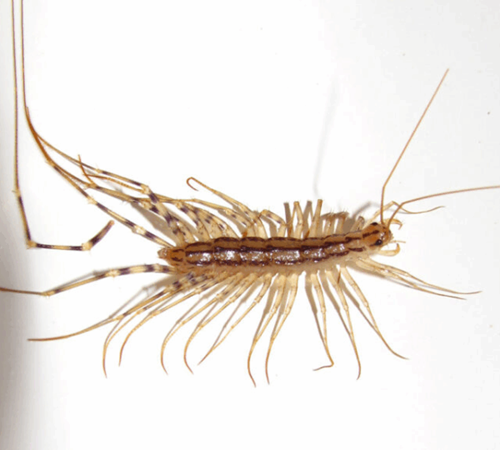
Centipedes are among the most recognizable and intriguing arthropods in the animal kingdom. Their elongated, worm-like bodies, numerous legs.
Long sensitive antennae, and small venomous mouths make them a fascinating yet often misunderstood group of creatures.
Most centipedes range in color from yellow to dark brown and possess anywhere from 15 to 77 pairs of legs, depending on the species and their stage of development. These many legs allow them to scuttle rapidly across the ground, navigate vertical surfaces, and even climb walls with surprising agility.
Although centipedes are capable of biting and injecting venom, they generally pose little threat to humans or pets.
A centipede bite can cause mild redness, swelling, or soreness at the site of contact, but there are no confirmed cases of serious or life-threatening health issues from centipede bites in otherwise healthy individuals.
That said, encountering these creatures unexpectedly can be alarming, particularly in homes where their swift movements and numerous legs create a sense of unease.
Understanding centipedes, their behavior, predators, and their role in the ecosystem can help homeowners make informed decisions about pest management.
Here is a comprehensive guide to centipedes, including five lesser-known facts, natural predators, and safe strategies for dealing with them in residential settings.
What Makes Centipedes Unique?
Centipedes belong to the class Chilopoda, a group of predatory arthropods distinct from millipedes, which are generally herbivorous and slower.
Unlike millipedes, centipedes are carnivorous and rely on speed and venom to subdue their prey. Their segmented bodies, each with a pair of legs, allow them to move in a fluid, serpentine motion, making them highly efficient hunters.
Their antennae, constantly in motion, serve as sensory organs, helping them detect vibrations, chemical cues, and temperature changes in their environment.
While the number of legs varies between species, it is noteworthy that centipedes never have exactly 100 legs, despite their name.
The number of legs is species-specific and often increases as the centipede molts and grows. Larger species may use their legs to quickly maneuver over obstacles, hunt prey, and escape predators.
Do Centipedes Bite Humans?
A common question among homeowners is whether centipedes bite humans. The answer is yes, but centipedes rarely target humans intentionally.
Their bites usually occur only if a centipede is threatened or handled directly. When a bite occurs, the centipede injects venom through its forcipules, specialized appendages near the mouth.
The venom is primarily used to immobilize prey such as insects, spiders, and other small arthropods.
Symptoms of a centipede bite may include:
Redness and swelling at the bite site
Mild to moderate pain, similar to a bee sting
Itching or localized irritation
Most healthy adults experience only minor discomfort, and medical attention is rarely required.
However, people with severe allergies or compromised immune systems should monitor for any unusual reactions and seek professional care if symptoms worsen. Pets can also experience mild reactions, but centipede bites are not typically dangerous to dogs or cats.
Five Fascinating Facts About Centipedes You Probably Didn’t Know
Centipedes are more than just creepy crawlies. Their biology, behavior, and evolutionary history are remarkable. Here are five surprising facts:
- A Centipede’s Age Can Influence Its Leg Count
Centipedes grow through a process called molting, where they shed their exoskeleton to accommodate a larger body.
During molting, lost or damaged legs can regenerate, and in some species, additional legs may develop as the centipede ages. Consequently, a centipede’s number of legs is roughly proportional to its age, with older individuals generally having more pairs of legs than younger ones.
- Centipedes Are Ancient Animals
Centipedes have an evolutionary lineage that extends over 400 million years, making them one of the oldest terrestrial arthropods on Earth. Fossil evidence shows that their ancestors were already thriving during the late Silurian period, long before the age of dinosaurs.
This ancient history has allowed centipedes to evolve highly specialized adaptations, such as venomous forcipules and remarkable agility.
- Speedy Predators
Despite their many legs, centipedes can move incredibly fast when hunting or evading predators. Some species can cover more than a foot per second, thanks to their elongated bodies, many legs, and smooth exoskeletons.
This speed, combined with venomous bites, makes them effective predators of insects, spiders, and other invertebrates.
- Centipedes Have a Varied Diet
While small centipedes feed on worms, insects, roaches, and mollusks, larger species can take down prey significantly bigger than themselves, including small frogs, spiders, and even other centipedes.
They are opportunistic hunters, playing an essential role in controlling populations of other pests in natural and residential ecosystems.
- Some Centipedes Can Live for Several Years
Certain centipedes, such as the common house centipede (Scutigera coleoptrata), can live for up to six years under favorable conditions.
Larger species in tropical regions may live even longer. Longevity is influenced by access to food, environmental conditions, and predation pressures.
Natural Predators of Centipedes
Centipedes occupy an important niche in the food web, but they are also prey for a variety of animals. Understanding their predators can explain why centipedes are rarely a persistent nuisance in outdoor environments:
Birds: Many bird species consume centipedes as part of their diet, particularly insectivorous birds.
Spiders: Larger spiders, such as tarantulas, sometimes prey on smaller centipedes.
Frogs and Toads: Amphibians are opportunistic hunters and may target centipedes, especially juveniles.
Beetles and Ants: Certain beetle species are natural predators of centipedes, attacking vulnerable individuals.
Mice and Small Mammals: Some rodents feed on centipedes when available.
Snakes: Small snakes may occasionally prey on centipedes, particularly in tropical habitats.
Interestingly, larger centipedes themselves can become predators of frogs, spiders, and even other centipedes, demonstrating the complex predator-prey dynamics they are part of in nature.
Why You Shouldn’t Try to Kill a House Centipede
House centipedes often enter homes in search of food and shelter. While their appearance can be alarming, attempting to kill them yourself is not recommended for several reasons:
Beneficial Predators: House centipedes prey on spiders, cockroaches, silverfish, and other household pests. A small number of centipedes may actually help maintain a natural pest balance in your home.
No Nests or Webs: Unlike spiders, centipedes do not build webs or nests. They are solitary hunters, so a few individuals are generally not indicative of a colony.
Potential for Infestation: While a few centipedes are harmless, a full-blown infestation may attract other pests and requires professional intervention.
Longevity: Some house centipedes can live up to ten years, so improperly managing an infestation can lead to recurring issues if the root cause is not addressed.
Safe Centipede Control Strategies
If centipedes become a problem in your home, the best approach is prevention and professional pest control:
Eliminate Moisture: Centipedes thrive in damp environments, so fixing leaks, improving ventilation, and reducing humidity can deter them.
Remove Food Sources: Since centipedes hunt insects, reducing other pest populations can naturally limit centipede numbers.
Seal Entry Points: Closing gaps, cracks, and openings in walls and foundations helps prevent centipedes from entering your home.
Professional Extermination: Pest control experts can identify the species, assess infestation levels, and apply safe treatments without harming non-target species or humans.
South Portland and other coastal regions benefit from professional centipede control services, which not only reduce nuisance pests but also prevent infestations from escalating.
Even if only a few centipedes are present, consulting a professional ensures that any underlying pest problems are addressed, minimizing long-term risks.
Conclusion
Centipedes are remarkable creatures, both ancient and highly adapted to their predatory lifestyle. They are speedy hunters with venomous bites, yet they rarely pose serious risks to humans or pets.
Their ecological role is significant, as they help control populations of spiders, roaches, and other small invertebrates. At the same time, their presence in homes can be alarming due to their appearance, many legs, and rapid movements.
For homeowners, it’s important to recognize that centipedes are not inherently dangerous and that attempting to kill them without understanding their behavior can do more harm than good.
Preventive measures, such as reducing moisture, sealing entry points, and managing other pests, along with professional guidance, are the safest and most effective ways to manage centipede populations.
By understanding their biology, natural predators, and role in the ecosystem, homeowners can approach centipedes with knowledge rather than fear — respecting these ancient and fascinating arthropods while keeping their living spaces safe and pest-free.