John Fetterman Criticizes Democrats Over Calls to Unmask ICE Agents
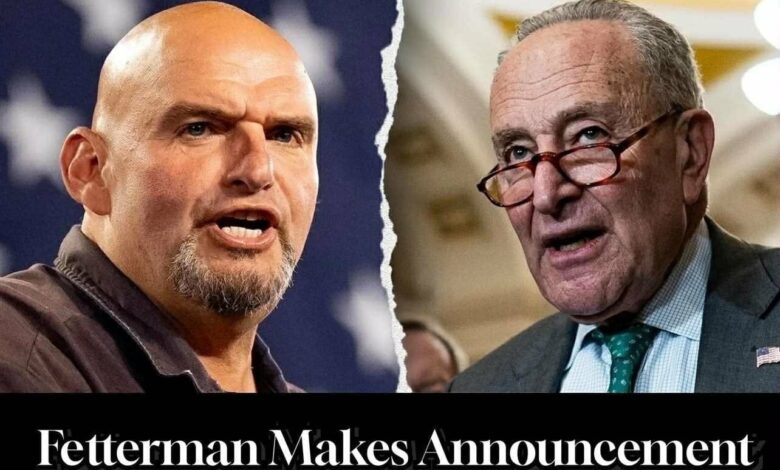
In early 2026, U.S. Senator John Fetterman of Pennsylvania found himself at the center of a highly charged national debate over immigration enforcement policy, law‑enforcement transparency, and the safety of federal agents.
A relatively outspoken figure in the Democratic Party, Fetterman’s comments during a televised interview and in subsequent public exchanges sparked discussion across the political spectrum.
Not just about the specific question of whether immigration agents should remove face coverings, but about how the United States balances public accountability, civil liberties, and officer safety in an era of intense political polarization.
At issue is a specific operational question that quickly became symbolic: should agents from U.S. Immigration and Customs Enforcement (ICE) be required to conduct enforcement actions with their faces uncovered, or are there legitimate safety concerns that justify at least some use of face coverings?
The question has broader implications for government transparency and how citizens interact with federal law enforcement in their communities.
The Context: Immigration Enforcement and Public Scrutiny
To understand why this debate became significant, it’s essential to recognize the broader backdrop of immigration policy in the United States in 2026 — one marked by heightened enforcement activity, increasing public demonstrations, and sharp partisan disagreement over how best to manage immigration.
Over recent months, federal immigration enforcement efforts expanded under the Trump administration’s Department of Homeland Security (DHS), including Operation Metro Surge and more aggressive raids in major metropolitan areas.
This surge in ICE and Border Patrol activities followed several high‑profile incidents — including the fatal shooting of American citizens by federal agents in Minneapolis in January 2026 — events that ignited protests and intensified scrutiny of enforcement tactics.
These protests — described by participants as sometimes involving general strikes and economic walkouts — reflected deep frustration with masking, warrantless actions, and the use of force in certain operations.
In response to these developments, lawmakers in Congress and in several state legislatures proposed reforms aimed at reshaping how immigration enforcement is conducted. Among the most emotionally charged policy ideas were:
Requiring immigration agents to display clear identification and badge numbers.
Mandating that officers wear body cameras during enforcement actions.
Prohibiting or limiting the use of masks or face coverings during operations to enhance accountability.
These proposals found support among progressives and civil liberties advocates who argue that masking diminishes public trust, reduces transparency, and can shield misconduct.
Critics of these reforms counter that enforcing an unmasking requirement could endanger officers and their families, exposing them to harassment or retaliation by hostile groups.
It was into this contentious policy environment that Senator Fetterman stepped during a national television interview.
Fetterman’s Interview: Safety, Doxing, and Divergence Within His Party
In a televised appearance on Fox News’ The Sunday Briefing in early February 2026, Senator John Fetterman addressed the specific question of whether ICE agents should have to remove face coverings during enforcement operations.
While the media spotlight often focused on dramatic policy proposals, Fetterman’s remarks were grounded in his concern for the safety of federal employees and their families in a fractious political climate.
Fetterman defended, in broad terms, the ability of ICE agents to wear face coverings, saying that many officers choose to conceal their faces not out of a desire to evade accountability, but because of real fears that identifying information could be published online — a practice known as doxing.
In his view, doxing — which he described as activists or hostile actors posting personal details of federal employees to the Internet — could expose officers and their families to harassment or harm if their identities were made public.
Fetterman warned against tactics that, he asserted, could escalate beyond peaceful political protest into targeted harassment.
While Fetterman did not support abolishing ICE — a position some progressives have endorsed — he also has criticized certain enforcement practices, particularly after the Minnesota deaths, and has called for significant reforms within the Department of Homeland Security.
As of early 2026, he has called for the dismissal of DHS Secretary Kristi Noem, suggesting that the department’s leadership had mishandled immigration enforcement in ways that contributed to community mistrust.
At the same time, Fetterman has positioned himself somewhat apart from other members of his party by resisting calls from some Democrats to defund or abolish ICE entirely.
He supports immigration reform that he characterizes as “humane and efficient” while acknowledging the need for border management and continued funding for federal security agencies — even as he urges oversight and policy change.
Safety Versus Accountability: Two Competing Norms
The heart of the debate over masked federal agents lies in two competing norms:
- Public Accountability and Trust
Proponents of unmasking argue that when federal agents are identifiable in the course of their duties, they are more accountable to the public, local communities, and the courts.
Clear identification and visible badges help individuals understand when they are interacting with official law enforcement, reduce confusion and fear, and provide an evidentiary record in cases of alleged misconduct.
Advocates for this approach contend that enforcing personnel to operate transparently builds trust — especially in communities where immigration enforcement has been controversial.
Within the Democratic Party’s debate over immigration enforcement, this argument has been articulated as part of broader reform proposals that also include requiring judicial warrants for home entries and equipping agents with body cameras.
- Officer Safety and Retaliation Risks
Opponents of forced unmasking — including Fetterman in his interview — emphasize the safety risks faced by federal agents in the current charged political environment.
Federal employees engaged in immigration enforcement operate in communities across the country, sometimes far from their own homes, and critics of unmasking argue that mandating facial exposure could make individuals easier targets for doxing, harassment, and targeted threats against them or their families.
Fetterman and others who share this view argue that safety concerns should be given serious weight, and that reforms must strike a balance between transparency and protecting civil servants from undue harm.
These two perspectives — accountability and safety — are not mutually exclusive, but they represent distinct priorities that lawmakers, civil liberties advocates, and federal agencies are trying to reconcile.
Reform Proposals in Congress and State Houses
The national debate over ICE operations and face coverings has spurred legislative activity not only in Congress but also at the state level.
At the federal level, many Democrats have proposed policy changes tied to negotiations over funding for the Department of Homeland Security. These reforms have included:
Limitations on agents concealing their faces during operations.
Stronger body‑camera requirements for enforcement actions.
Clearer display of officer identification on uniforms.
Some bills also seek to ensure that enforcement officers use judicial warrants rather than administrative ones — a distinction that has been central to debates about civil liberties and due process.
At the state level, lawmakers in some jurisdictions — including New Jersey and Minnesota — have proposed laws that would prohibit all law enforcement officers, including federal immigration agents, from wearing masks during operations within their states.
Supporters argue that such laws would enhance transparency and protect civil liberties, while critics raise constitutional questions about states regulating federal law enforcement practices.
In Minnesota, for example, activists and some state legislators have pressed for a ban on face coverings after a series of enforcement actions that included masked federal agents, though not all proposals have advanced out of committee.
Broader Divisions Within the Democratic Party
Fetterman’s comments and positions illustrate a broader division within the Democratic Party over immigration enforcement policy.
On one side are progressives and civil rights advocates who argue for deep reforms, including ending or significantly restructuring ICE, banning masks during operations, and enhancing legal protections for migrants; on the other are more centrist Democrats who emphasize the need for ordered enforcement, concern about border security, and practical governance.
Some Democratic lawmakers — such as Representative Marie Gluesenkamp Perez of Washington state — have supported continued funding for DHS and ICE while simultaneously calling for oversight and leadership changes following controversial enforcement incidents.
They argue that immigration enforcement as an institution should not be defunded even as reforms are pursued.
This caucus of differing views reflects the challenge of building party unity on an issue that touches on constitutional rights, national security, civil liberties, and public safety.
Public and Political Reactions
Fetterman’s televised remarks drew varied responses. Supporters of reform criticized his defense of masking by federal agents, arguing that unmasking would improve community trust and reduce the perception that immigration officers are acting covertly.
Critics of the masking — including some state legislators and advocacy groups — contend that visible identification is essential for lawful enforcement and basic accountability.
On the other side, some commentators and public figures echoed Fetterman’s safety arguments, pointing to the real risk that identified federal agents could become targets of abuse or retaliation in a politically polarized environment.
National law enforcement analysts have noted that threats against federal officers — including doxing campaigns and online harassment — have increased in recent years, though law enforcement agencies do not publicly release comprehensive statistics on such incidents.
In one related national discussion, Tom Homan, a senior homeland security advisor, acknowledged that while he personally dislikes masked agents, he believes they may need to protect themselves given increased threats and assaults against federal officers.
Homan claimed — without releasing specific data — that threats and assaults against immigration officers had increased significantly, a statement that underscores the climate of fear and intensity surrounding enforcement work.
Balancing Competing Priorities
The core of the debate Fetterman engaged in is not primarily about face coverings as an isolated matter — it’s about how American society balances government accountability, rule of law, and the safety of individuals carrying out public duties.
Even seemingly detailed operational rules — such as whether officers should be required to remove face coverings — can become symbols of larger debates over civil liberties, law enforcement legitimacy, and the proper role of federal agencies in immigrants’ lives.
For lawmakers who oppose mask mandates for federal agents, the emphasis is on ensuring that power is exercised transparently and that individuals can identify and review the actions of public officials. For those who emphasize protection, the priority is preventing threats and harassment that could deter individuals from public service or put them at risk.
Fetterman’s perspective — that safety concerns must not be overlooked in the pursuit of transparency — aligns with a broader political philosophy that seeks to balance enforcement with human dignity and civil liberties.
His willingness to depart from strict party lines on this issue reflects his self‑described maverick approach to policy, one that emphasizes independent judgment and practical governance over strict ideological adherence.
The Debate Ahead
As negotiations continue in Congress over Homeland Security funding and immigration reform, the question of ICE agents and face coverings is likely to remain contentious.
It highlights the fundamental difficulties of governing in a deeply divided political environment — where operational details become touchstones for broader ideological conflicts, and where lawmakers must balance competing public priorities.
For now, the discussion remains active at multiple levels of government, with legislators, activists, and law enforcement professionals all contributing to the conversation.
What began as a question about masks has grown into a national debate over transparency, civil liberties, safety, and the future of immigration enforcement in the United States.