On His 90th Birthday, My Grandpa Called Me at Midnight, Crying: “I Got a Message From Your Grandma.” But She’d Been Gone for 10 Years
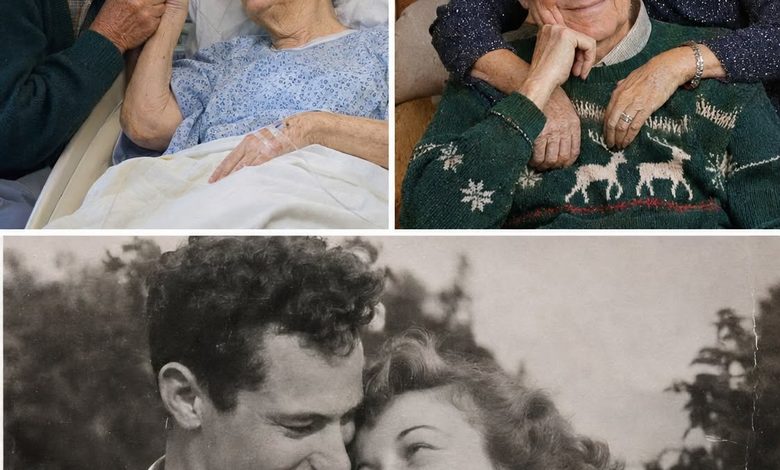
Part 1: The Call at 11:52
Grandpa called me at 11:52 p.m.
We’d left his house less than an hour earlier. I’d spent three weeks planning his 90th birthday party. Thirty-one guests. A $64.99 sheet cake from Kroger with “HAPPY 90TH, WALT” piped in blue frosting. A banner my husband, Mark, had hung crooked across the living room archway twice before I let him stop.
When everyone jumped out and yelled “Surprise!”, Grandpa grabbed the back of his recliner with one hand and his chest with the other. For one awful second, I thought I’d killed him.
Then he started laughing.
He laughed until tears rolled into the deep lines around his eyes. He laughed so hard he had to sit down. It was the first time I’d seen him laugh like that in ten years.
So when my phone lit up with GRANDPA on the screen, I smiled before I answered. I figured he was calling to thank me again.
“Hey, birthday boy,” I said. “You should be asleep.”
He didn’t answer right away.
Then I heard it. A wet, broken breath. The sound an old man makes when he’s trying very hard not to cry and losing.
I sat straight up in bed. Mark rolled over and squinted at me.
“Grandpa? Are you okay? Is it your heart?”
“Sweetheart…” His voice cracked down the middle. “I got a message from your grandma.”
The room went very still.
My grandmother, June Brennan, had been dead for ten years.
“Grandpa,” I said gently, “Grandma’s been gone a long time.”
“I know that, Jenna.” A flash of the old sharpness came through. “I’m old. I’m not stupid. It’s on the computer. On the Facebook. It came from her account eight minutes ago.”
That was worse.
Somebody had gotten into my dead grandmother’s account and sent a message to a ninety-year-old widower on his birthday.
My face went hot.
“Okay. Listen to me,” I said. “Someone probably hacked her account. It happens all the time. Please don’t answer it. Don’t click on anything. Don’t give anybody your bank information. I’ll come over first thing tomorrow.”
“They didn’t ask for money.”
“They will.”
He went quiet again. When he spoke, it was barely above a whisper.
“But sweetheart… how would they know?”
“Know what?”
I heard him swallow.
“What I whispered to her before she died. I never told anyone. Not your mother. Not you. Not a soul.”
I didn’t know it then, but that was the moment the story stopped being about a hacked account.
Part 2: Fifty-Six Years and Twenty Minutes
My grandparents were married for 56 years.
They met in 1958 in Springfield, Ohio, outside the State Theater on Main Street. He was 22 and worked for the railroad. She was 20 and sold tickets in the glass booth out front. He bought a ticket to a movie he didn’t want to see three Saturdays in a row before he finally asked her to see one with him.
He called her his “little girl” for the rest of her life. Even when they were both in their seventies. Even when she was in a hospital bed and weighed less than a hundred pounds.
He never let her carry groceries. Not once. If she reached for a bag, he’d take it out of her hand and say, “What am I, decoration?”
On winter nights, he’d climb into bed ten minutes early to warm up her side of the sheets. Then he’d scoot over to the cold side when she came in.
He kissed her forehead every morning before he put his boots on. I saw it hundreds of times growing up. I never once saw him skip it.
When I was a kid, I spent most of my summers at their little yellow house on Clifton Avenue. Grandma taught me gin rummy. She kept butterscotch candies in a glass dish shaped like a hen, and she let me take two when Grandpa wasn’t looking. Then Grandpa would take one too and say, “Don’t tell your grandmother.”
They both knew. They both pretended not to.
Grandma started forgetting things when she was 74.
When dementia started stealing her memories, Grandpa became her memory.
He told her about their wedding day every morning at breakfast, like it was a story she’d never heard. He brushed her hair a hundred strokes at night, because that’s what her mother had done. When she got frightened and didn’t know where she was, he held her hand and said, “You’re home, June. You’re with Walt. Nothing’s wrong.”
During her last year, she spent most of her time at Springfield Regional, on the fourth floor.
Grandpa stayed with her almost every night. He’d pull a vinyl chair beside her bed, tuck an extra blanket over her feet because they were always cold, and refuse to go home. The nurses gave up asking.
And every evening, twenty minutes before lights-out, he’d stand up and close the door.
“No visitors,” he’d tell us with a wink. “I’ve got a date with my little girl.”
Sometimes, through the door, we’d hear Grandma giggle like a teenager. A real giggle. Bright and surprised.
Other nights, when the nightmares were bad and she didn’t recognize anyone, we’d hear only his voice. Low and steady. Murmuring until she settled.
None of us knew what he said in those twenty minutes.
But it was the only time of day she seemed completely at peace.
I should tell you something here, because it matters later. I’m not proud of it.
I stopped visiting her during those last months.
I was 28. I told everyone I was busy with work. That was true, but it wasn’t the reason. The reason was a Tuesday in March, when I walked into her room with a bag of butterscotch, and she looked at me politely and said, “Are you the new girl from the kitchen?”
I smiled and said yes. I sat there for fifteen minutes being the new girl from the kitchen. Then I went out to my car and sobbed so hard I couldn’t drive.
After that, I found reasons not to go. I went twice more in four months.
The night she died, Grandpa held her hand and whispered in her ear until her very last breath.
I wasn’t there. I was home asleep. My mother called me at 3:10 in the morning.
I’ve never fully forgiven myself for that.
Part 3: Ten Years of Unanswered Letters
After the funeral, Grandpa refused to take down a single photograph.
Then came the Facebook account.
Grandma had joined Facebook when she was 72, mostly to look at pictures of her grandkids and play Words With Friends. Grandpa joined the same week so he could “keep an eye on her.” For about two years, before her memory got bad, they used to message each other from opposite ends of the house.
Walt, are you coming to bed or are you marrying that television?
Be right there, little girl. Two more innings.
After she died, I was the one who handled her paperwork. I changed her email recovery settings to my phone. And I was the one who suggested deleting her Facebook.
“It’s not healthy, Grandpa,” I said. “People will keep wishing her happy birthday. It’ll just hurt.”
He looked at me like I’d suggested we sell her wedding ring.
“Please, Jenna,” he said. “Leave it. Please.”
He didn’t say please very often. I left it.
So for ten years, he wrote to her.
On their anniversary, he reread their old conversations, scrolling up slowly with one finger. On her birthday, every September 14th, he sent her a message. I know because once, at Thanksgiving, I saw the thread open on his desktop computer by accident. It was ten years of messages going up and up. Not one reply.
Happy birthday, June. The tomatoes came in good this year.
Happy birthday, little girl. Jenna got married. You would’ve liked him. He’s tall.
I miss you. The house is too quiet. I still warm up your side.
For ten years, he wrote to an account that never wrote back.
Until that night.
I barely slept. At 7:15 the next morning, I pulled into his driveway on Clifton Avenue with two coffees and a plan. Log into the account. Change the password. Report it. Done.
He was sitting at the kitchen table in his flannel robe, his reading glasses on, the computer screen already glowing in the next room.
He didn’t say good morning. He just pointed.
I set the coffees down and walked over to the screen.
The message was timestamped 11:44 p.m.
Walt,
You asked me every single night. And every single night, I told you to ask me again tomorrow. I wasn’t playing hard to get. I was scared that if I ever said yes, you’d stop asking.
So here it is, ten years late.
Yes. I’ll go to the pictures with you. Save me the aisle seat. I’m running a little behind, but I’m coming.
Happy 90th birthday. You were never a stranger to me.
— Your little girl
I read it twice. Then I turned around.
Grandpa had taken off his glasses. He was rubbing the bridge of his nose.
“Grandpa,” I said carefully. “What did you whisper to her?”
He was quiet for a long moment.
“She didn’t know me, at the end. Most nights she didn’t know who I was. So I stopped trying to make her remember.” His voice wobbled. “I just asked her out again. Like I was meeting her for the first time.”
He looked at the floor.
“Every night, I said the same thing. Hello there, beautiful. My name’s Walt Brennan. I know you don’t know me yet, but would you let me take you to the pictures Saturday? I’ll get there early and save you the aisle seat.“
My throat closed.
“And she’d giggle,” he said. “And she’d say, Ask me again tomorrow. Every night. Like it was a game.”
“And the last night?”
“I asked her. She couldn’t answer anymore.” He pressed his lips together. “So I told her, That’s all right. I’ll ask again tomorrow.“
He looked at the screen.
“Nobody was in that room but me and her, Jenna. Nobody.”
Part 4: A Login Near Kettering
I wanted to believe there was a simple explanation. I manage a dental office. I don’t believe in signs. I believe in paper trails.
First, I checked my phone. Since I’d linked Grandma’s email to my number ten years ago, any security alerts would come to me. I’d been so focused on Grandpa’s call that I’d never looked.
There it was. An email from 11:41 p.m.
New login to your account. iPhone. Near Kettering, Ohio.
Kettering is a suburb of Dayton, about 25 miles from Springfield.
My cousin Tyler lived in Kettering.
My stomach dropped.
Tyler is 27. He’s my aunt’s son, funny, restless, and very good with computers. He builds websites for local businesses and has never met a joke he wouldn’t take too far. Two Christmases ago, he hacked the family’s smart TV to play goat noises every time someone turned up the volume.
And at the party last night, he’d spent forty-five minutes in Grandpa’s computer room. “Fixing the Wi-Fi,” he’d said.
I sat down hard in Grandpa’s desk chair.
On the edge of the monitor was a yellow sticky note, curled with age. Grandma’s password, written in Grandpa’s blocky capitals: AISLESEAT58.
I’d seen that sticky note a dozen times over the years. I’d never once asked what it meant. Anyone who’d sat at this desk for forty-five minutes could have seen it. And a clever person could guess the rest from 58 and a family that told the State Theater story at every holiday.
I called Tyler from the back porch.
He picked up on the fifth ring, sounding like he’d just woken up. “Jen? What’s wrong? Is Grandpa okay?”
“Did you log into Grandma’s Facebook last night?”
A pause. “What?”
“Somebody sent Grandpa a message from her account at 11:44. The login was from Kettering. You were on his computer for almost an hour.”
“I was fixing his router. It was from 2011, Jenna. It was held together with tape.”
“So you didn’t send it.”
“No! Why would I…” His voice changed. “Wait. You think I’d do that? To Grandpa? On his birthday?”
“You did the goat thing.”
“That was a TV! This is Grandma!”
I didn’t say anything.
“Wow.” He let out a short breath. “Okay. Wow. You know what, check my phone. Check whatever you want. I don’t even have a password for her account. I haven’t touched that computer since I unplugged the router.”
“Tyler…”
“No. You called me at seven in the morning to accuse me of torturing a ninety-year-old man. I’m going back to sleep.”
He hung up.
I stood there on the porch with the phone in my hand, my face burning.
Through the screen door, I could see Grandpa at the kitchen table. He’d printed the message. He was holding the page carefully by the edges, the way you’d hold an old photograph.
I realized two things at once.
If Tyler hadn’t done this, someone else had. Someone who knew what only two people in the world should know.
And one of those two people had been dead for ten years.
Part 5: The Report Button
My mother called at 9:30. She lives in Phoenix now. Grandpa had already told her.
“Jenna, you need to shut that account down today,” she said. “Today. Somebody is toying with a ninety-year-old man with a bad heart.”
“I know, Mom.”
“Have you reported it?”
“Not yet.”
“Why not?”
I didn’t have a good answer. I had the report page open on my phone. Facebook lets family members request that a deceased person’s account be memorialized or removed. I’d filled in every field. Grandma’s name. Her date of death. A link to her obituary from the Springfield News-Sun.
One tap. That was all it would take.
Once it was memorialized, nobody could log in again. Not a hacker. Not a cruel cousin. Not anyone.
“Because Grandpa asked me not to,” I said.
That was true. When I’d told him my plan that morning, he’d put the printed page down on the table and looked at me the way he had ten years earlier.
“Whoever it is,” he said, “they knew, Jenna. They knew. I’d like to know how.”
“Grandpa, people can be cruel. If this is somebody’s idea of a joke…”
“Then it’s the kindest joke anyone’s played on me in ten years.”
He didn’t raise his voice. He never did. But his hands were shaking.
Now my mother was raising hers for him.
“He’s not thinking clearly. He’s grieving. That’s exactly what these people count on. Next week it’ll be a message saying June needs $2,000 in gift cards to get into heaven.”
“Mom.”
I hung up and sat on the edge of Grandpa’s bed in the spare room, staring at my phone.
Here’s what I knew. Whoever sent this message had Grandma’s password. They knew the exact words of a private ritual. They had logged in from near Kettering. And they had asked for nothing.
Here’s what I didn’t know. Whether the next message would be cruel.
If I reported the account, Grandpa would be safe. He’d also never find out who’d written to him, and he’d lose the one place he’d been able to talk to her for a decade.
If I didn’t, I’d be gambling with a man whose cardiologist had told us, in March, to “keep things calm.”
I walked back into the kitchen.
“Grandpa,” I said. “If you want to, you can write back. From your account. Whoever has her password will see it.”
He looked up.
“But you don’t give an address,” I said. “You don’t give a phone number. You don’t give money. If they want to talk, they talk to me first. Deal?”
He nodded slowly.
We sat down at the computer together. He dictated. I typed, because his fingers are slow and he hates the autocorrect.
To whoever sent this,
I don’t know who you are. I don’t know how you knew. But you said what I’ve been waiting ten years to hear, and you didn’t want anything for it.
I’m not angry. I’d just like to shake your hand.
There’s half a birthday cake left. My granddaughter Jenna will set it up. Please.
— Walt
I hit send at 10:16 a.m.
Then I called my mother back and told her I hadn’t reported the account and wasn’t going to. Not yet.
She didn’t speak to me for two days.
That night, at 2:14 a.m., a tiny gray word appeared under Grandpa’s message.
Seen.
No reply.
Part 6: The Woman from 4 West
I spent the next day doing what I always do. Looking for a paper trail.
Grandpa kept everything. Every Christmas card. Every utility bill since 1991, rubber-banded by year in a filing cabinet in the basement. If someone had known my grandmother well enough to know about the aisle seat, they’d probably left a trace somewhere in that house.
I started with the box from the funeral.
It was a Nike shoebox on the top shelf of the hall closet, labeled JUNE in black marker. Inside were the guest book, the funeral home receipt for $8,940, and about sixty sympathy cards.
I read every single one.
Card number forty-seven was different.
It was a plain white card with a pencil drawing of a movie theater marquee on the front. Hand-drawn. On the marquee, in tiny letters, it said: TONIGHT ONLY — JUNE & WALT.
Inside, in neat round handwriting:
Mr. Brennan,
It was an honor to take care of Miss June. She talked about her Walt every single day, even on the days she couldn’t remember his last name. She made me promise to look after something for her. I will.
— Renee C., 4 West
I read it standing up in the hallway. Then I read it again, sitting on the floor.
She made me promise to look after something for her.
Suddenly I remembered something I hadn’t thought about in ten years. One of the two times I’d visited during those last months, there was a young nursing assistant in purple scrubs sitting beside Grandma’s bed. She was holding up Grandma’s old iPad so Grandma could look at photos. Grandma was laughing.
The assistant had smiled at me and said, “She’s teaching me to play Words With Friends. She’s ruthless.”
I remembered her name tag. Renee.
I searched Facebook for Renee C. in the Dayton area. It took me eleven minutes to find her. Renee Castillo. Registered nurse at a hospital in Kettering. Her profile picture showed her in a Cincinnati Bengals sweatshirt, holding a little boy on her hip.
My heart was pounding. I sent her a message before I could talk myself out of it.
Hi Renee. My name is Jenna. I’m June Brennan’s granddaughter. I think you might have sent my grandfather a message on his birthday. If you did, please know he isn’t angry. He just wants to understand.
She didn’t answer for six hours.
At 9:40 that night, my phone rang. A Dayton number.
“Is this Jenna?” A woman’s voice, nervous. “This is Renee. I… yes. It was me. I’m so sorry. I didn’t think about it coming from her account. I didn’t think about how it would feel. I just promised her.”
“Promised her what?”
There was a long pause.
“Can I come explain in person? I have something that belongs to your grandfather.”
She came on Sunday afternoon.
I almost didn’t recognize her. She was 36 now, with her hair cut short and reading glasses pushed up on her head. Her son, Mateo, was seven and very polite. He sat on the living room floor with a coloring book while the adults talked.
Then she reached into her purse and pulled out a worn index card, soft at the corners, kept flat inside a plastic sleeve.
“I worked days on 4 West that year,” she said. “I was 26. I was still in nursing school. Your wife was one of my patients for almost five months.”
She looked at Grandpa.
“Most days, she didn’t remember much. But she always remembered that a handsome boy came to see her at night. She’d say, He’s taking me to the pictures. He’s saving me the aisle seat.“
Grandpa’s hand tightened on his coffee mug.
“One afternoon, about three weeks before she passed, she was clearer than I’d ever seen her. She knew exactly who she was. She knew who you were. She grabbed my hand and said, Walt asks me out every night. I keep telling him to ask again tomorrow.“
Renee smiled sadly.
“I asked her why she didn’t just say yes. And she said, Because if I say yes, honey, he’ll stop asking. And I don’t want him to stop.“
Grandpa made a small sound in his throat.
“Then she said she knew she wasn’t going to get many more good days. She asked me to help her write her answer down. For later.”
Renee slid the index card across the table.
The handwriting was shaky. Some letters were too big. Some words had been crossed out and written again. But it was Grandma’s handwriting. I’d have known it anywhere. It was the same handwriting from every birthday card I’d ever gotten as a kid.
Yes. I’ll go to the pictures with you. Save me the aisle seat. I’m running behind, but I’m coming.
Under it, in Renee’s neater print, were the rest of the words Grandma had dictated. And at the very bottom, the password. aisleseat58.
“She wanted it to come from her account,” Renee said. “Because that’s where you two used to talk. She made me promise to send it on your ninetieth birthday. She said, He swore to the doctors he’d live to ninety just to spite them. If he makes it, he’ll think nobody’s asking him to anything anymore. Somebody ought to.“
Grandpa laughed. It came out as a sob.
“That sounds like her.”
“I set a reminder on my phone,” Renee said. “Ten years ago. I changed phones three times, and I moved it over every single time.”
Grandpa looked at the index card for a long time without touching it.
Then he picked it up and held it against his chest with both hands.
Part 7: What She Asked Us to Carry
Nobody said anything for a while.
Grandpa held the card against his robe and stared at the window, where Grandma’s old wind chime turned slowly in the October air.
Finally he cleared his throat.
“Why didn’t you tell us?” he asked. Not angry. Just tired. “All these years.”
Renee folded her hands in her lap.
“Because she asked me not to. She said, Don’t tell him it was you. Let it be mine.” She hesitated. “And honestly, Mr. Brennan, I almost didn’t send it. I sat in my car outside my apartment for twenty minutes that night. I kept thinking, what if it hurts him? What if he’s not okay?”
“Then why did you?”
“Because I made a promise to a patient who couldn’t remember her own address, but remembered you.” Her eyes filled. “I didn’t know how to break that.”
Then she turned to me.
“There’s one more thing. I wasn’t sure I should say it. But you’re Jenny, aren’t you? The butterscotch girl?”
I froze.
Nobody had called me Jenny since I was twelve. Nobody but Grandma.
“She talked about you too,” Renee said gently. “Not every day. But a lot. On one of her clear afternoons, she told me, My Jenny stopped coming. I don’t blame her. I’d stop coming to see me too.“
I put my hand over my mouth.
“She said, If she ever feels bad about it, tell her I said it’s all right. Tell her I know she loves me. Tell her I still keep her butterscotch in the hen.“
I didn’t cry right away. I sat very still.
Then Grandpa reached across the table and put his big, spotted hand over mine. That’s when it happened.
For ten years, I’d carried that Tuesday in March. The new girl from the kitchen. The two visits in four months. The 3:10 a.m. phone call.
She had known. She had forgiven me before I’d even forgiven myself.
Renee stayed for two hours. Grandpa showed her every photograph on the walls, one by one. He told her about the State Theater, about buying three tickets to a movie he didn’t want to see, and about the glass booth where a girl with a blue ribbon in her hair had finally said yes.
When she left, he walked her to her car himself. He hasn’t walked anyone to their car in years.
“Come back for Sunday dinner,” he told her. “Bring the boy. I’m serious. I make a terrible pot roast.”
That night, I made two phone calls.
The first was to Tyler.
He answered on the first ring this time. I didn’t give him a chance to be angry.
“I was wrong,” I said. “It wasn’t you. It was a nurse Grandma asked to keep a promise. I accused you because I needed it to be somebody I could be mad at, and that wasn’t fair. I’m sorry.”
He was quiet. Then he sighed.
“Was it at least a good promise?”
“The best one I’ve ever heard.”
“Okay.” A pause. “I’m still mad about the goat comment.”
“That’s fair.”
“I’m coming to Sunday dinner.”
The second call was to my mother.
I read her the index card. All of it. When I got to I’m running behind, but I’m coming, she made a sound I hadn’t heard her make since the funeral.
“I was so sure it was something terrible,” she said.
“So was I.”
“You didn’t report it.”
“No.”
She was quiet for a long time.
“Your grandmother always said you were the stubborn one,” she finally said. “I guess she was right.”
Before I hung up, she said, “I’m booking a flight for Thanksgiving.”
She hadn’t come home for Thanksgiving in six years.
Part 8: The Aisle Seat
The State Theater on Main Street closed in 1987. For decades it sat empty, with plywood over the ticket booth where my grandmother used to sell tickets for 75 cents.
Three years ago, a nonprofit bought it and restored it. Now they show classic movies on the first Saturday of every month. Seven dollars a ticket. Popcorn in paper bags.
I’d driven past it a hundred times. I’d never thought to take Grandpa.
On the first Saturday in December, I did.
They were showing Vertigo, from 1958. The same year he bought three tickets to impress a girl in a glass booth.
He wore his good gray suit. He insisted on getting there forty-five minutes early. I told him we didn’t need to, that the theater was half empty most nights.
“Old habits,” he said.
He walked slowly down the aisle with his cane, counting rows under his breath. When he got to row F, he stopped.
Then he took off his wool hat and set it carefully on the aisle seat.
He sat down in the seat next to it. I sat down on his other side.
For a while, neither of us said anything. The theater smelled like butter and old velvet.
“Grandpa,” I said. “Can I ask you something?”
“You’ve been asking me things since you were four.”
“Did you really believe it was her? That night?”
He thought about it for a long time.
“No,” he said. “Not really. I’m too old and too stubborn for ghosts.” He smoothed the brim of the hat on the seat beside him. “But I believed she’d found a way. That’s not the same thing.”
The lights started to dim.
“You know what the worst part of those last nights was?” he said quietly. “Not that she didn’t know me. I got used to that. It was that I never got to hear her say yes one more time. I asked her over two hundred nights in a row. I counted.”
He reached over and patted the hat.
“Now I’ve heard it.”
The movie started. Halfway through, I glanced over and saw that his eyes were closed and his hand was resting on the hat on the aisle seat. He wasn’t asleep. He was smiling.
It’s been a few months since then.
Renee and Mateo come to Sunday dinner twice a month. Grandpa was right. His pot roast is terrible. Mateo eats it anyway and asks for seconds, which has made him Grandpa’s favorite person alive.
Tyler replaced the 2011 router. He also set up a tablet with extra-large text so Grandpa can video call my mother in Phoenix. She calls every Wednesday now.
I visit every Tuesday after work. Every single Tuesday. I bring butterscotch for the glass hen on the counter. Grandpa takes one when he thinks I’m not looking.
I pretend not to see.
Grandma’s account is still there. I never reported it. On her birthday in September, Grandpa will send her a message, the same as he has for ten years.
The difference is that now he knows she answered.
The index card sits in a frame on his nightstand, right next to her photograph. Every night before he turns off the lamp, he says something to it. I know because I stayed over once in January, when the roads iced over, and I heard him through the wall.
It wasn’t sad. It was the voice of a man asking a girl out on a Saturday night.
“Hello there, beautiful,” he said. “My name’s Walt Brennan.”
Then a pause. A soft laugh.
“I know, little girl. I know. I’m saving your seat.”
Would you have reported the account that morning, or let your grandfather write back? And do you think Renee was right to keep June’s secret for ten years?
Disclaimer: This story is a work of fiction inspired by real-life themes. Names, characters, places and events are fictionalized, and any resemblance to real persons is purely coincidental. It does not represent any person or organization and does not encourage inappropriate behavior. Images are for illustration purposes only.