Texas Execution of Reinaldo Dennes Sparks Controversy After Witnesses Describe His Final Moments
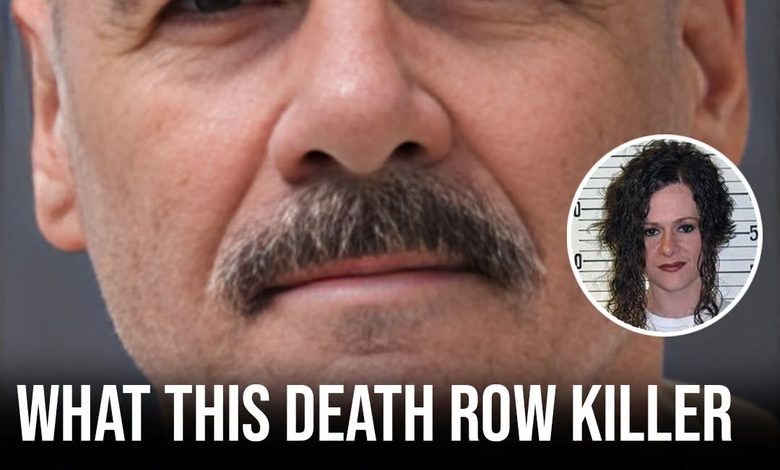
The execution of a 70-year-old Texas death row inmate has drawn renewed attention to the use of lethal injection in the United States after witnesses reported that he appeared to experience significant distress during the procedure.
Reinaldo Dennes was executed on November 19, nearly three decades after being convicted of murdering diamond dealer Janos Szucs in Houston in January 1996.
The case has attracted particular attention because Dennes received pentobarbital, the same drug involved in a failed execution attempt in Tennessee earlier this year. Accounts of what happened inside the Texas execution chamber have since prompted disagreement between prison officials and people who witnessed his final moments.
What Happened During Dennes’ Execution?
According to information released by Texas prison officials, medical access proved difficult before the execution began. Staff initially had trouble establishing an intravenous line in Dennes’ hands and arms.
He was secured to the execution gurney at approximately 6:04 p.m. An IV line was eventually established on the left side of his neck at 6:20 p.m., followed by another in his left foot at 6:38 p.m.
Witnesses were brought into the chamber shortly before Dennes delivered his final statement at around 6:52 p.m. The lethal injection reportedly began less than a minute afterward.
Accounts from those present described Dennes calling out in pain and repeatedly asking for the suffering to stop. He also complained about severe discomfort in his right leg and questioned whether the procedure was proceeding as expected.
The drugs were stopped at approximately 7:07 p.m. He was officially pronounced dead one minute later.
Spiritual Adviser Describes His Distress
Among the witnesses was Reverend Jeff Hood, Dennes’ spiritual adviser and a longtime opponent of capital punishment.
Hood said he remained close to Dennes throughout the procedure, keeping a hand on his shoulder. He later described the inmate’s movements and repeated complaints as deeply disturbing.
Speaking to the Associated Press, Hood recalled Dennes saying several times that something was not right and that the execution was not unfolding as he expected.
The reverend characterized the experience as extremely distressing and questioned whether Dennes had experienced unnecessary suffering.
His account has become an important part of the debate surrounding the execution, although it has not established a definitive medical explanation for the inmate’s complaints.
Texas Authorities Stand by the Procedure
The Texas Department of Criminal Justice has defended the execution, maintaining that staff followed the required procedures.
Department spokesperson Amanda Hernandez said officials believed the process had been carried out as planned. She also explained that there was no fixed time limit for establishing IV access, emphasizing that staff needed to ensure the lines were properly placed.
Hernandez questioned whether Dennes’ complaints demonstrated that the lethal injection itself was causing pain. She pointed out that he had reported discomfort before the drugs were administered and that his right leg was not connected to an IV line.
She also suggested that public attention surrounding another recent execution incident may have influenced the way Dennes described his experience.
Hood rejected the suggestion that the inmate had exaggerated his distress, arguing that his reaction should not simply be dismissed.
Medical and Legal Voices Raise Questions
The conflicting accounts have prompted questions from people familiar with medical toxicology and death penalty cases.
Dr. Paul Wax, executive director of the American College of Medical Toxicology, said he could not identify an obvious medical reason why pentobarbital administered through the left foot or neck would directly cause pain in the right leg.
His comments highlighted the difficulty of drawing conclusions about what happened without a complete medical explanation.
Dale Baich, an Arizona attorney who has represented death row prisoners and witnessed numerous executions, also criticized the suggestion that Dennes’ complaints were simply an act.
Baich argued that describing a prisoner’s screams as fabricated requires evidence rather than assumptions.
At present, the available accounts do not provide a definitive explanation for the pain Dennes reported. Texas officials have stated that the medication was not expired, but questions remain about the circumstances surrounding the procedure.
Christa Pike Case Brings Further Attention to Pentobarbital
The controversy has also revived discussion of Christa Pike, a Tennessee death row prisoner whose execution attempt on September 30 reportedly did not result in her death.
Pike, 50, had been convicted in connection with the 1995 killing of Colleen Slemmer. She had spent decades on death row before the attempted execution.
Reports stated that she received two doses of pentobarbital but remained alive and was subsequently taken to hospital in critical condition. She required intensive medical treatment, including assistance with breathing, before regaining consciousness.
Pike later spoke about the physical and psychological impact of the experience.
The two cases have intensified public discussion about the reliability and administration of lethal injection drugs. Although both involved pentobarbital, the circumstances were different, and the available information does not establish that the same medical factors were involved.
Renewed Debate Over Lethal Injection
Dennes’ execution has raised difficult questions about how states carry out capital punishment and how complaints of pain or distress are evaluated.
Texas authorities maintain that the procedure followed established requirements. Witness accounts, meanwhile, have raised concerns about what Dennes experienced during his final moments.
Without a conclusive medical explanation, important questions remain unanswered.
The incident adds to continuing debate over lethal injection in the United States, particularly concerning the transparency of execution procedures, the role of medical expertise and the treatment of prisoners during capital punishment.