John Fetterman Criticizes Democrats Over Calls to Unmask ICE Agents
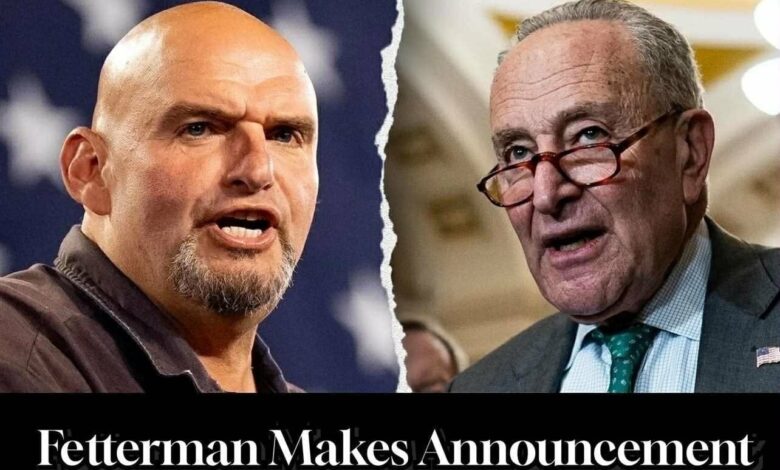
In early 2026, John Fetterman, the U.S. senator representing Pennsylvania, found himself at the center of an increasingly heated national debate surrounding immigration enforcement policy, law-enforcement transparency, and the safety of federal officers.
Known as one of the more outspoken voices within the Democratic Party, Fetterman sparked a wide-ranging conversation after remarks he made during a televised interview and in subsequent public exchanges. His comments ignited discussion across the political spectrum—not only about the immediate issue of whether immigration enforcement agents should remove face coverings during operations, but also about the broader question of how the United States balances public accountability, civil liberties, and the safety of federal personnel in a deeply polarized political climate.
At the heart of the controversy lies a practical yet symbolically powerful question: should agents from U.S. Immigration and Customs Enforcement be required to conduct enforcement operations with their faces uncovered, or are there legitimate safety concerns that justify allowing officers to conceal their identities in certain circumstances?
While seemingly technical, the issue touches on larger questions about government transparency and how communities interact with federal law-enforcement agencies operating within their neighborhoods.
Immigration Enforcement Under Growing Scrutiny
To understand why the debate escalated so quickly, it is important to consider the broader political environment surrounding immigration policy in the United States in 2026.
The year has been marked by heightened enforcement activity, growing public demonstrations, and sharp partisan disagreement over how immigration policy should be implemented and reformed.
In recent months, immigration enforcement expanded significantly under the administration of Donald Trump through the Department of Homeland Security. Programs such as Operation Metro Surge and an increase in enforcement raids in major metropolitan areas placed immigration policy back at the center of national attention.
The expansion of operations conducted by U.S. Immigration and Customs Enforcement and the U.S. Border Patrol followed several high-profile incidents that intensified scrutiny of federal enforcement practices.
Among the most controversial developments was the fatal shooting of American citizens by federal agents in Minneapolis in January 2026. The incident sparked protests across several cities and raised renewed questions about the conduct of federal agents, the use of force, and the level of oversight applied to immigration enforcement.
Protest movements that followed included demonstrations described by participants as general strikes and economic walkouts. Many activists voiced frustration over issues such as masked agents, warrantless enforcement actions, and the perceived use of excessive force during operations.
Reform Proposals Begin to Take Shape
As public scrutiny intensified, lawmakers in Congress and several state legislatures began introducing proposals aimed at reshaping how immigration enforcement is conducted.
Among the most debated policy proposals were measures requiring federal immigration agents to display clear identification and badge numbers during operations. Other proposals called for mandatory body cameras during enforcement actions and restrictions on the use of masks or other face coverings by officers.
Supporters of these reforms—particularly among progressive lawmakers and civil liberties organizations—argue that visible identification is essential for accountability. In their view, when agents conceal their identities, it becomes more difficult for the public to determine who is conducting enforcement actions and whether those actions comply with legal standards.
Critics of masking say that anonymity can undermine public trust and potentially shield misconduct from scrutiny.
Opponents of these reforms, however, warn that requiring agents to expose their identities could create serious safety risks. They argue that public identification could leave officers vulnerable to harassment, intimidation, or retaliation by individuals or groups opposed to immigration enforcement.
It was within this tense policy environment that Senator Fetterman addressed the issue publicly.
Fetterman’s Interview and Safety Concerns
During an appearance on Fox News’ “The Sunday Briefing” in early February 2026, Fetterman was asked directly whether immigration agents should be required to remove face coverings during enforcement operations.
While many political debates around immigration focus on sweeping policy changes, Fetterman’s comments were framed primarily around concerns for the safety of federal employees and their families.
In the interview, he broadly defended the ability of immigration agents to wear face coverings during certain operations. According to Fetterman, many officers choose to conceal their identities not because they wish to avoid accountability, but because they fear becoming targets of a practice known as doxing.
Doxing refers to the publication of an individual’s private personal information—such as home addresses or family details—on the internet, often with the intent of exposing them to harassment or threats.
Fetterman argued that in a politically charged climate, revealing the identities of federal agents could place them and their families at risk. He cautioned that tactics intended to pressure government agencies could cross the line from legitimate protest into targeted intimidation.
At the same time, the Pennsylvania senator has not aligned himself fully with calls to abolish immigration enforcement agencies. While some progressive activists have advocated dismantling ICE entirely, Fetterman has taken a more moderate position.
Criticism of Enforcement Leadership
Despite defending the safety concerns of officers, Fetterman has also been sharply critical of certain immigration enforcement practices.
Following the fatal incidents in Minnesota, he called for significant reforms within the Department of Homeland Security and publicly urged the removal of DHS Secretary Kristi Noem. Fetterman argued that the department’s leadership had mishandled immigration enforcement policies in ways that contributed to community mistrust.
His position places him in a somewhat unusual political space within his party. While he supports reform and oversight of federal enforcement agencies, he has resisted calls to eliminate ICE or cut funding for border security entirely.
Instead, Fetterman has advocated what he describes as an immigration system that is both “humane and efficient,” combining stronger oversight with continued support for federal enforcement operations.
The Central Debate: Accountability vs. Safety
The controversy surrounding masked federal agents ultimately reflects two competing priorities.
On one side are advocates for transparency and public accountability. They argue that when law-enforcement officers are identifiable, the public can more easily verify that those officers are acting within the law. Visible badges, name tags, and clear identification help citizens understand who they are interacting with and provide a record in cases of alleged misconduct.
Proponents of this view say such transparency is particularly important in communities where immigration enforcement has historically been controversial.
On the other side are those who emphasize the safety risks facing federal agents. Supporters of allowing masks argue that immigration officers operate in communities across the country and may become targets if their identities are widely circulated online.
In a climate of heightened political tension, they say, protecting officers from harassment or retaliation should be taken seriously.
These competing concerns—accountability and safety—are not necessarily incompatible, but they represent different priorities that policymakers must attempt to reconcile.
Legislative Efforts Across the Country
The national debate has already begun influencing legislative proposals at both the federal and state levels.
In Congress, some lawmakers have tied immigration enforcement reforms to broader negotiations over funding for the Department of Homeland Security. Proposals under discussion include restrictions on face coverings during enforcement operations, stronger body-camera requirements, and clearer identification standards for federal agents.
Other proposals focus on legal procedures, including whether immigration officers should be required to obtain judicial warrants rather than administrative warrants before entering private homes.
At the state level, lawmakers in places such as New Jersey and Minnesota have proposed legislation that would prohibit law-enforcement officers—including federal immigration agents—from wearing masks during operations within their states.
Supporters argue that such measures would enhance civil liberties and transparency. Critics, however, question whether states have the constitutional authority to regulate the operational practices of federal law-enforcement agencies.
In Minnesota, proposals for such restrictions have emerged following several enforcement actions involving masked federal officers, though many of those measures have not advanced beyond early legislative stages.
Divisions Within the Democratic Party
Fetterman’s remarks also highlight deeper divisions within the Democratic Party on immigration enforcement.
Some progressive lawmakers and advocacy groups support sweeping reforms, including restructuring or dismantling ICE, banning masks during operations, and expanding legal protections for migrants.
More centrist Democrats, however, emphasize the need for continued enforcement alongside reforms.
For example, Marie Gluesenkamp Perez, a Democratic representative from Washington, has supported continued funding for immigration enforcement agencies while also calling for greater oversight and leadership accountability.
These differing perspectives illustrate the challenge of building political consensus on an issue that intersects with national security, civil liberties, and public safety.
Public Reaction and Ongoing Debate
Fetterman’s televised comments drew mixed reactions from across the political landscape.
Advocates for immigration reform criticized his defense of masking, arguing that visible identification would improve community trust and reduce the perception that immigration agents operate covertly.
Others supported his position, pointing to the risks of harassment and retaliation faced by federal officers.
During a related discussion, Tom Homan, a senior homeland security adviser, acknowledged that he personally dislikes the idea of masked officers but believes some agents may feel compelled to protect themselves due to increased threats and assaults against federal personnel.
Homan claimed that such threats have risen significantly in recent years, though comprehensive statistics on these incidents are not publicly released.
A Debate Far Larger Than Face Coverings
Ultimately, the debate surrounding masked immigration agents is about more than operational rules.
It reflects a broader national conversation about how democratic societies balance transparency, civil liberties, and the safety of those tasked with enforcing the law.
For some lawmakers, requiring officers to reveal their identities represents an essential safeguard against abuse of power. For others, protecting government employees from harassment and intimidation is equally important.
Fetterman’s stance—emphasizing the need to consider officer safety while pursuing transparency—reflects his reputation as a political maverick willing to diverge from strict party lines.
As Congress continues negotiating immigration reform and funding for homeland security programs, the issue is likely to remain part of a wider debate about the future of immigration enforcement in the United States.
What began as a question about face coverings has evolved into a national discussion about accountability, public trust, and the role of federal authority in a deeply divided political landscape.