“Spain Pushes Back at White House Over Conflicting Claims on Iran Stance”
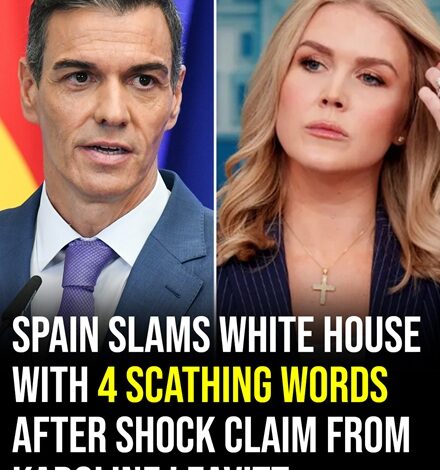
The diplomatic relationship between Spain and the United States has entered a period of notable tension following recent remarks from both governments and a growing disagreement over Spain’s response to the war triggered by U.S. and Israeli military strikes against Iran.
What began as a difference of opinion on foreign policy has quickly escalated into a public dispute involving harsh rhetoric.
Conflicting statements, and threats of economic retaliation — all unfolding against the backdrop of a major international crisis.
At the center of this dispute is the Spanish government’s refusal to allow the United States to use Spanish territory for military attacks related to the conflict in the Middle East, its repeated rejection of the war’s legality, and swift denials of U.S. claims that Madrid has softened its stance.
The confrontation has drawn global attention, not only because of the implications for U.S.–Spain relations but also because it reflects broader tensions within the North Atlantic Treaty Organization (NATO) and the European Union (EU) over military cooperation and international law.
How the Diplomatic Clash Began
The dispute began in late February and early March 2026, shortly after the United States and Israel launched military strikes against Iran, a conflict widely covered by global news agencies.
Although some NATO countries expressed support for defensive measures in response to Iranian aggression, Spain took a notably different position.
On Sunday, March 2, 2026, Spanish Prime Minister Pedro Sánchez and his government formally refused to permit the U.S. military to conduct airstrikes from Spanish bases — including the key facilities at Rota and Morón in southern Spain.
The decision was grounded in Madrid’s view that the war was unilateral, lacked authorization under the United Nations Charter, and carried serious risks for international security and civilian lives.
Spanish Foreign Minister José Manuel Albares explained that while Spain condemns any attacks and supports diplomatic efforts to protect civilians, it would not countenance its sovereign territory being used to facilitate military action that Spain believes violates international law.
Under Spanish law and the bilateral defense agreement with the United States, any foreign military operation originating from Spanish soil must be consistent with the United Nations Charter and approved by the Spanish government — conditions that have not been met in this case.
In practice, this refusal led to a withdrawal of U.S. military tanker aircraft — including Boeing KC‑135 Stratotankers — which are vital for mid‑air refueling, from Spanish bases.
Flight tracking data showed that these aircraft relocated to other allied bases, including in Germany and France, after Spain declined authorization for their participation in operations against Iran.
Spain’s “No to War” Policy
Prime Minister Pedro Sánchez has made Spain’s position clear on multiple occasions, using simple but forceful language to summarize his government’s stance: “No a la guerra” — “No to war.”
In televised addresses and public statements, Sánchez has stated that his government will not be complicit in actions it believes are harmful to global peace or contrary to Spanish values and interests.
Sánchez has cited historical experiences to explain his government’s position. He specifically referenced Spain’s involvement in past Middle Eastern wars, particularly the 2003 invasion of Iraq, which he argues led to increased regional instability, a surge in jihadist terrorism, and a migration crisis that affected Europe and the Mediterranean region.
According to Sánchez, these consequences reflect the dangers of entering military conflicts without broad international support or clear legal justification.
In his most recent statements, Sánchez has emphasized that the Spanish government will not shift its position based on threats of economic punishment or diplomatic pressure, saying that national decisions must be made in accordance with Spain’s principles and legal obligations.
Contradictory Statements From Washington
The diplomatic dispute deepened when White House press secretary Karoline Leavitt made public remarks suggesting that Spain had changed its position and agreed to “cooperate with the U.S. military” regarding the conflict.
Leavitt told reporters that Spain had responded to pressure — including from President Donald Trump — and was now aligned with Washington’s objectives in the Middle East.
Leavitt’s comments appeared to reflect an attempt to show U.S. unity among NATO allies and to counter perceptions of European dissent, but they were quickly disputed by Spanish officials.
Almost immediately after Leavitt’s statement, Foreign Minister José Manuel Albares issued a categorical denial. Speaking on Spanish radio, Albares said his government’s position “has not changed one iota,” and he dismissed the White House claim as inaccurate.
“The Spanish government’s position on the war in the Middle East, the bombings in Iran, and the use of our bases has not changed at all,” Albares said, emphasizing that Spain would not permit any cooperation that falls outside its legal commitments and international law.
Albares did not merely correct the record; he also pointedly distinguished his authority from that of the White House press secretary, saying, “She may be the White House press secretary, but I’m the foreign minister of Spain and I’m telling her that our position hasn’t changed at all.”
This strong rebuttal underscored Madrid’s frustration with the mischaracterization of its stance and signaled a firm diplomatic rebuff to U.S. narrative control.
Trump’s Rhetoric and Economic Pressure
The dispute has also featured unusually direct rhetoric from President Donald Trump. In public remarks, Trump challenged Spain’s objections and even suggested that the United States could use Spanish military bases “if we want,” effectively threatening to bypass Madrid’s consent.
He went further by describing Spain as “terrible,” criticizing Spanish leadership, and threatening to cut off trade with the country in response to its refusal to support U.S. military objectives.
Trump’s suggestion of economic retaliation — including the idea of severing or reducing trade ties — introduced a new dimension to the diplomatic dispute, one that goes beyond military cooperation into the realm of economic and political coercion.
The United States and Spain are significant trading partners, with Spanish exports and imports to the U.S. accounting for a notable portion of Spain’s gross domestic product.
However, as legal and trade experts have noted, the United States cannot easily unilaterally end trade relations with one EU member state without broader implications for the entire European Union, which negotiates trade deals collectively.
Adding to the controversy, U.S. Treasury Secretary Scott Bessent weighed in publicly, asserting that Spain’s refusal to allow use of its military bases potentially endangered American lives by limiting the operational capabilities of U.S. forces.
Bessent’s comments were interpreted by some as an attempt to justify harsher economic measures by framing the issue as not only diplomatic but also a matter of national security.
Spain’s Continued Denials
Despite the White House’s statements and Trump’s threats, Spain has repeatedly reiterated that its position remains unchanged.
Both the Prime Minister’s office and the Ministry of Foreign Affairs have issued clear statements denying any shift in policy or cooperation with U.S. military forces outside the limited scope permitted under existing agreements and international law.
According to Spanish officials, the refusal to allow the U.S. to use its bases does not mean that all forms of cooperation are excluded — but any use of Spanish territory for military purposes must occur within the framework of agreed treaties and with respect to the United Nations Charter.
Since the U.S. and Israeli actions are not being conducted under a UN mandate, Spain maintains that it cannot legally contribute to them in the manner the White House suggested.
The Spanish government’s insistence on its unchanged stance has become a recurring theme in recent press briefings, radio interviews, and official statements broadcast across Spanish media.
Broader European Context
Spain’s stance has placed it somewhat apart even from other European allies who have taken a more measured or conditional approach to the conflict.
For instance, countries such as France, the United Kingdom, and Germany have voiced concern over Iran’s attacks but have hinted at “proportionate defensive action” or broader cooperation with NATO allies, while still emphasizing the necessity of international law and collective multilateral decisions.
In contrast, Spain’s position is rooted in a long‑standing preference for diplomatic solutions and opposition to unilateral military intervention without broad international consensus.
This disposition is shaped not only by legal considerations, but also by domestic politics, historical experiences with foreign intervention, and public opinion within Spain, where significant parts of the electorate have expressed skepticism about new wars and foreign entanglements.
Spain’s stance has also drawn varied international reactions. Some nations and commentators have praised Madrid for emphasizing negotiation and de‑escalation, while others have criticized it as unnecessarily confrontational at a time of heightened global tension.
In some corners, Spain’s refusal to cooperate has even been welcomed by Iranian officials and their allies as a rare example of Western dissent.
What Comes Next?
At this point in the diplomatic dispute, there is no indication that Spain is prepared to reverse its position or that the United States will successfully force a policy change through rhetoric or threats.
While the White House continues to assert that allies should cooperate fully with U.S. objectives in the Middle East, Madrid’s repeated and unambiguous denials have made clear that any cooperation on military operations against Iran will be limited to circumstances consistent with international law and national sovereignty.
The situation remains fluid. Trade relations, NATO cooperation, and broader EU–U.S. ties could all be affected depending on how both countries navigate this dispute.
Meanwhile, Spain’s insistence on a legal approach rooted in the UN Charter and diplomatic resolution reflects a broader debate among global partners about how to balance national interests, alliances, and international norms in the midst of a major conflict.
Conclusion
The dispute between Spain and the United States over the war in Iran has evolved quickly from a policy disagreement into a full‑blown diplomatic conflict, marked by contradictory statements, public rebukes, and threats of economic consequences.
Spain has consistently refused to allow its military bases to be used in the conflict and maintains a firm “No to war” position rooted in legal principles and its interpretation of international responsibilities. U.S. officials, including the White House press secretary and the president himself, have made public claims that Spain has retreated from its stance — claims which Spanish authorities have repeatedly and firmly denied.
This clash illustrates not only the complexities of international alliances such as NATO, but also the powerful role of national sovereignty and legal obligations in shaping foreign policy decisions.
As tensions continue, both nations will face the challenge of managing their relationship while addressing the broader geopolitical crisis playing out in the Middle East.