“Satirical Website Urges Trump to Consider His Youngest Son Amid Iran Strikes”
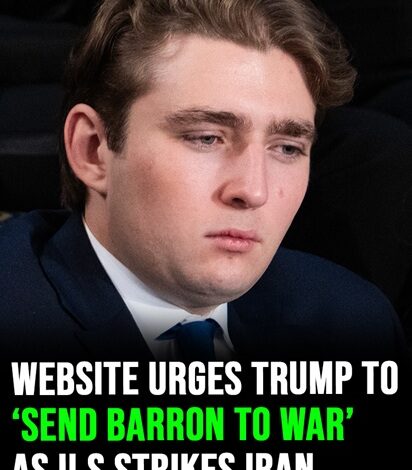
In early March 2026, social media users in the United States and around the world noticed an unusual trend: the name Barron Trump — the youngest son of U.S.
President Donald Trump — began appearing in thousands of posts, memes, and online conversations tied to the escalating conflict between the United States and Iran.
This wasn’t because Barron Trump had made public comments about foreign policy, nor because he was serving in any military capacity — in fact, the online attention stemmed from a piece of political satire that went viral almost immediately after it appeared.
At the center of the trend was a website called DraftBarronTrump.com, a parody page created to mock and provoke discussion about the nature of political leadership, war, and who bears the risks of conflict.
The satirical site and the resulting social media outcry reflect widespread online engagement with two major themes: anger about the war in Iran, and criticism of how political leaders position themselves relative to the young people whose lives may be most affected by military decisions.
A Satirical Website Ignites #SendBarron
On February 28, 2026, the same day that the United States and Israel launched coordinated strikes against targets in Iran — an operation that was widely reported in international news — a satirical website titled DraftBarronTrump.com was launched.
The site appeared rapidly after the military action began and immediately began attracting attention across social platforms such as X (formerly Twitter), Facebook, Instagram, and Reddit.
The website was created by Toby Morton, a comedy writer known for his past work on shows like South Park and MADtv, as well as several other satirical political websites.
Morton’s work often uses humorous exaggeration to make points about public figures and political dynamics. DraftBarronTrump.com uses that same style to deliver intentionally over‑the‑top, ironic content about President Trump and his youngest son.
What the Website Says
The landing page of DraftBarronTrump.com is styled like a patriotic petition, but its tone is exaggerated and comedic rather than serious policy advocacy. It includes lines such as:
- “America is strong because its leaders are strong. President Trump proves that every day.”
- “Naturally, his son Barron is more than ready to defend the country his father so boldly commands.”
- “Service is honor. Strength is inherited. Dog Bless Barron.”
These phrases mimic familiar political rhetoric but are framed in a way that highlights the absurdity of calling for a sitting president’s child to be drafted or deployed into combat.
The site also includes fabricated and humorous quotes attributed to members of the Trump family, such as Barron’s older brothers, which further underline the satirical intent.
These faux testimonials emphasize exaggerated praise or ironic depictions of family members, pushing the parody beyond simple commentary into comedic performance.
How Social Media Reacted: The Hashtag #SendBarron
Within hours of the site going live, a hashtag tied to it — #SendBarron — began trending on social media platforms across the United States.
Users shared links to the site, screenshots, and their own meme versions of the concept. Some posts used the hashtag in a clearly ironic tone, aligning with the satirical intent of the original page.
Others used it more seriously to express frustration with broader issues they associated with the Iran conflict.
On X, Threads, Reddit, and other platforms, users offered a wide array of interpretations and responses. Many were just having fun with the parody — posting images of Barron Trump in uniform with humorous slogans or preparing memes that riffed on the idea of “drafting” a wealthy, 19‑year‑old son of a president.
Others used the hashtag as a vehicle for political criticism, arguing that if a leader is willing to commit troops to distant conflicts, then members of political elites should not be exempt from the consequences.
Some noteworthy themes in online discussions included:
- Criticism of perceived hypocrisy — Some social media users contrasted past avoidance of military service by wealthy or influential figures with calls for ordinary citizens’ children to fight.
- Discussion of military draft questions — Although the United States does not have a current active draft, some posts speculated sarcastically about selective service and whether a president’s family should be included or exempted.
- Height jokes and physical eligibility — Outside of satire, some noted that Barron Trump’s reported height — 6′9″ — would in fact put him above the maximum height limit for enlistment in some military branches due to practical equipment constraints, making the idea of his military service doubly implausible.
It’s important to note that none of these posts represent an official political movement or any real recruitment effort — they largely consist of social media humor, commentary, and satire reacting to current events and public sentiment.
Context: Why This Satire Resonated
The war in question — widely reported in global media as involving U.S. and Israeli strikes against Iranian targets — has become one of the most visible geopolitical events in early 2026.
The operation, referred to in some outlets as “Operation Epic Fury,” has drawn intense public commentary due to its scale, the reported number of casualties, and political debates within the United States about its justification and oversight.
In that context, the viral attention around DraftBarronTrump.com reflects more than just an internet prank. Many users saw the satire as a way to express dissatisfaction with political leadership, frustration over war decisions, and commentary on who bears risk in times of conflict.
Online satire and memes often spread most quickly when they tap into deeper public anxieties, and this instance appears to have done just that — turning humor into a form of protest or reflection.
Clarifying What Is Real — and What Is Satire
It’s essential to be clear about several key facts to avoid misinformation:
✔️ The website DraftBarronTrump.com is satirical — it is not an official petition, policy proposal, or government‑sanctioned draft initiative. The language and quotes on the site are intentionally exaggerated for comedic effect and political commentary.
✔️ Barron Trump is not being drafted or considered for military service — there has been no official military directive involving him, nor any credible claim from government officials about his deployment. The entire idea of drafting a single individual in this way is fictional and symbolic.
✔️ No official statement about military eligibility based on height has been made by the White House — while some social posts jokingly referenced height limits for service, there is no confirmed governmental communication about Barron Trump’s draft eligibility.
✔️ The social media trend is largely meme‑driven — while some users used #SendBarron to express political frustration, most posts were circulated as humor or commentary, not as sincere calls for a specific action by the U.S. government.
Why Satire Like This Matters
Political satire has a long history in American public life. Humorists, cartoonists, and satirists have often used exaggeration and parody to challenge leaders, question policy, and engage the public in serious debates through light‑hearted or absurd means.
In this case, DraftBarronTrump.com and the surrounding memes and hashtags are part of that tradition.
By pushing an obviously unrealistic idea — that a president should send his 19‑year‑old son to the front lines — the satire draws attention to broader questions about leadership accountability, class inequalities in military service, and the real human costs of war decisions that are made far from the battlefield.
Whether one agrees or disagrees with the sentiment, the website and social media trend have rapidly become a touchpoint for public conversation about these issues.
In a media landscape where serious news, opinion, and satire continuously overlap, distinguishing between genuine policy proposals and intended humor has become increasingly important.
In this case, reputable reports from news outlets worldwide have confirmed that the viral trend stems from a satirical, parody website designed to elicit public response, not from a real legislative movement or military advisory.
In Summary
Here’s what’s happened, broken down clearly:
- A satirical website, DraftBarronTrump.com, was created by ex‑South Park writer Toby Morton in response to reports of U.S. military action in Iran.
- The site humorously suggests that President Donald Trump should “draft” his youngest son, Barron Trump, to serve in the conflict — a parody that mimics patriotic language but is clearly exaggerated.
- The hashtag #SendBarron began trending on social media as users shared the site, created memes, and used the idea to comment on war, leadership, and fairness in military service.
- Many posts are satirical or expressive of political frustration, but none represent an official recruitment effort, policy move, or credible governmental action.