Questions were raised
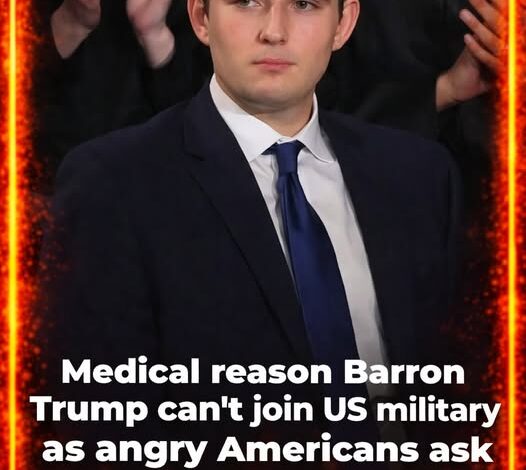
The geopolitical landscape shifted violently overnight, and as the dust settled from missile strikes and the death of an absolute ruler, a different kind of firestorm ignited on the home front. As bombs began to fall across Iran and news broke of the Supreme Leader’s death, the American public—fraught with anxiety and sudden fury—did not just look toward the situation room. Instead, they turned their collective outrage toward a 19-year-old college student who has never held a single day of public office.
Across the digital landscape, the demand was as swift as it was singular: social media erupted with calls for Barron Trump to be the first name called to the front lines. The accusation, echoed by thousands, is that his father is once again orchestrating a global conflict from the climate-controlled safety of private golf courses and gilded penthouses.
A Hashtag Becomes a Lightning Rod
Under the sharpening edge of viral hashtags, a visceral philosophical question has moved to the center of the national debate: if Commanders-in-Chief choose the path of war, should their own children be the ones to bleed for it? The technicalities of the Selective Service—height restrictions, medical deferments, and historical precedents of draft dodging—have done nothing to stem the tide of the public’s avalanche of rage.
The uproar over #SendBarron has rapidly transcended the life of a single teenager. It has become a raw, bleeding conduit for a familiar American wound: the question of who truly pays the price when the elite choose the theater of war. For a significant portion of the populace, the optics are unbearable—the image of Donald Trump directing military strikes while his own family remains insulated from the kinetic reality of the battlefield.
Old Scars and New Fears
This moment has reopened old resentments that never truly healed. Memories of Donald Trump’s Vietnam-era medical exemption for bone spurs have resurfaced with a vengeful energy, now being mirrored by speculative reports that Barron’s extraordinary physical stature could serve as a modern-day disqualifier for service.
Simultaneously, the destabilization of Iran following the death of Ayatollah Ali Khamenei has plunged the world into a state of profound uncertainty. The fear of a spiraling, asymmetrical conflict with no discernible exit strategy has made the demand for “shared sacrifice” louder, harsher, and deeply personal.
The symbolism is now larger than the person. Whether or not Barron Trump ever dons a military uniform is, in many ways, secondary to the cultural shift his name now represents. The anger he symbolizes—a demand that those with the power to declare war share in its ultimate risk—is a sentiment that will not easily be drafted back into silence.