Ted Bundy: The Childhood and Early Life of One of America’s Most Notorious Serial Killers
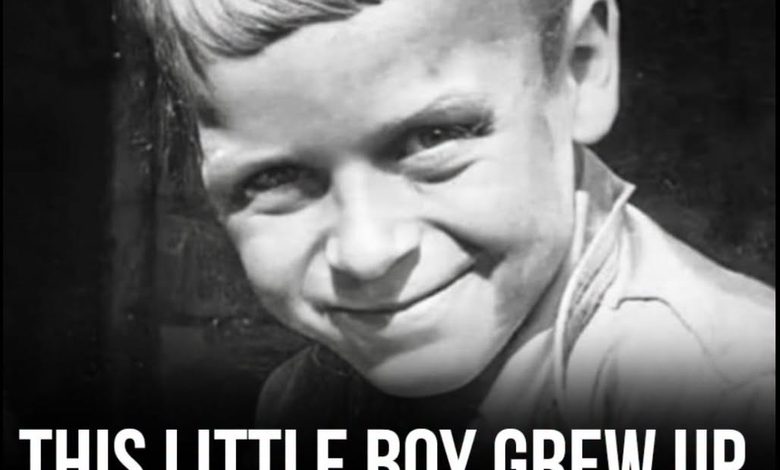
He was described by some who knew him as a quiet, polite boy who enjoyed ordinary childhood activities. He attended school, joined the Scouts and delivered newspapers. Nothing about the image of a seemingly unremarkable child could have prepared the people around him for the crimes he would later commit.
His name was Theodore Robert Bundy, better known as Ted Bundy. Decades after his execution, his life continues to attract attention because of the contrast between his public personality and the violence for which he became infamous.
Bundy was eventually linked to the murders of numerous women and girls across several American states. He confessed to killing at least 30 people, although investigators have long suspected that the actual number may have been higher.
His story began in 1946, in Burlington, Vermont, with a childhood marked by complicated family circumstances and unanswered questions about his parentage.
A childhood shaped by family secrets
Bundy was born at a home for unmarried mothers in Burlington. His biological father was never publicly established, and uncertainty surrounding his parentage became part of the story of his early life.
During his infancy, he spent time with his mother, Louise, before being taken to Philadelphia to live with her parents.
For years, Bundy was raised believing that his grandparents were his parents and that Louise was his older sister. The arrangement was intended to avoid the social stigma associated with unmarried motherhood at the time.
Accounts differ about precisely when he discovered the truth. Some suggest he gradually understood the family situation as a child, while other accounts describe him learning more after encountering his birth certificate.
In later recollections, Bundy suggested that he eventually realized Louise was his mother because the supposed age difference between siblings did not make sense to him.
The uncertainty surrounding his early family life has attracted considerable attention, but it does not explain or excuse the crimes he later committed.
Early memories and troubling behavior
Bundy spent much of his childhood in Philadelphia’s Roxborough neighborhood, living with his maternal grandparents.
People who knew the family described them as friendly and ordinary. Some childhood accounts also portray Bundy as someone who played with other children, participated in activities and appeared to have a relatively conventional upbringing.
However, recollections from relatives also included accounts of behavior that caused concern.
One particularly disturbing story came from an aunt who recalled waking to find young Bundy placing knives near her while she slept. She later said that she had found the incident unsettling, although she felt that others around her did not take it seriously.
Such recollections have frequently been discussed in attempts to understand his early years. However, childhood behavior alone cannot reliably predict whether someone will become violent as an adult.
The boy friends remembered
Some of Bundy’s childhood acquaintances struggled to connect the boy they remembered with the criminal who later became internationally known.
One friend recalled his excitement when the first snow arrived, remembering a child eager to go outside and enjoy winter activities.
The contrast between those memories and the later crimes was difficult for people who had known him before his criminal history became public.
Bundy also experienced difficulties during his school years. Accounts describe him being teased because of a speech impediment and struggling socially at different points.
He reportedly had a difficult relationship with at least one teacher and was disappointed when he did not make his school’s basketball or baseball teams.
By his teenage years, some accounts describe him as increasingly isolated. Although he had interests and ambitions, he reportedly struggled with confidence and relationships.
These experiences form part of his biography, but they should not be treated as a direct explanation for the violence that followed.
A complicated relationship with his stepfather
As Bundy grew older, his mother began a relationship with a man who eventually became his stepfather.
Accounts of their relationship describe tension, particularly around expectations, money and lifestyle.
Bundy reportedly developed an interest in expensive clothing and a more comfortable life, while his stepfather had limited financial means.
He also admired Western movie stars Roy Rogers and Dale Evans, reportedly imagining what life might have been like if he had been adopted by them.
After high school, Bundy moved into adulthood, attending college and pursuing different opportunities.
At one point, he also worked on a suicide prevention hotline, a detail that has often surprised people studying his biography because of the contrast with the crimes he later committed.
Behind the image he presented to others, however, he was eventually revealed to be responsible for a series of violent attacks.
The crimes that shocked America
Bundy’s known murder victims were primarily young women and girls. His criminal activity became especially associated with the years between 1974 and 1978, when attacks were reported across several states.
Investigators later identified a recurring pattern in the way he approached some victims.
He sometimes used charm and deception to gain trust, including pretending to need assistance or presenting himself as someone with authority.
Once a victim was isolated, he used violence to overpower them.
Some women managed to escape his attacks, while others were murdered. Survivors later provided important information about his behavior and methods.
The crimes devastated families and communities, leaving investigators across different jurisdictions trying to establish connections between cases.
One disappearance sometimes discussed in connection with Bundy is that of eight-year-old Ann Marie Burr, who vanished from her Tacoma home in 1961. However, his involvement in her disappearance has never been established, and the case remains unresolved.
How Ted Bundy was finally arrested
Bundy’s criminal activity eventually brought him into contact with law enforcement.
In August 1975, a Utah Highway Patrol officer stopped him for a traffic violation. During a search of his vehicle, officers reportedly discovered suspicious items, including a ski mask and a crowbar.
The discovery led to further investigation and helped draw attention to Bundy.
His arrest marked an important turning point, although it would take years of legal proceedings, additional investigations and trials before the full extent of his crimes became clearer.
Bundy was eventually connected to murders in several states. He later confessed to killing at least 30 people between 1974 and 1978.
That figure is generally treated as the minimum number associated with his confession. The possibility that he may have committed additional murders has remained a subject of investigation and historical debate.
A calculated pattern of deception
Bundy’s ability to appear friendly and trustworthy became one of the most frequently discussed aspects of his criminal history.
He sometimes approached women while pretending to be injured or asking for help. In other cases, he reportedly used the appearance of authority to make people feel more comfortable around him.
This behavior allowed him to exploit ordinary acts of kindness and trust.
His victims came from different communities, although many were young women, including college students.
The investigation into his crimes eventually involved law enforcement agencies across multiple states, highlighting the challenges authorities faced when trying to connect cases occurring in different jurisdictions.
Convictions and death sentences
Bundy’s legal cases attracted enormous national attention.
He was convicted of murders committed in Florida and received death sentences in two separate trials.
His convictions and sentences became the subject of repeated appeals. Over several years, his legal team challenged aspects of the proceedings, but the efforts did not prevent his eventual execution.
The public response was intense. News coverage drew large audiences, and crowds gathered outside the prison as the execution date approached.
For the families of victims, the legal proceedings represented a long and painful effort to obtain justice after years of loss.
His final hours in Florida
Ted Bundy was executed in the electric chair at Florida State Prison on January 24, 1989.
He declined to select a special last meal. The prison provided a traditional meal that included steak, eggs, hash browns, toast, milk, coffee and other items, but he did not eat it.
Before the execution, Bundy was asked whether he had any final statement.
His reported final words were: “I’d like you to give my love to my family and friends.”
Outside the prison, hundreds of people had gathered. Some were there to express support for the victims and their families, while others treated the event as a public spectacle.
The execution ended Bundy’s life, but it did not end the questions surrounding the full number of people he may have killed.
A criminal legacy that continues to be examined
Bundy’s case remains one of the most widely studied in American criminal history.
Former FBI agent William Hagmaier, who interviewed Bundy, later discussed the way he spoke about his crimes and the apparent importance he placed on control.
Those conversations contributed to continuing efforts to understand how Bundy manipulated people and concealed his violent behavior behind a seemingly ordinary public image.
His story is also a reminder of the suffering experienced by the victims and their families, whose lives were permanently changed by his actions.
Although Bundy’s childhood, relationships and personal history continue to attract interest, they should never overshadow the people whose lives were taken.
The boy remembered by some as quiet and polite eventually became a convicted murderer responsible for at least 30 deaths by his own confession.
The contrast between those two images remains unsettling. But the most important part of his legacy is not the mystery surrounding his personality. It is the victims, the families who lost them and the lasting impact of the crimes he committed.