Ghislaine Maxwell Claims 25 Jeffrey Epstein Associates Made ‘Secret Settlements’
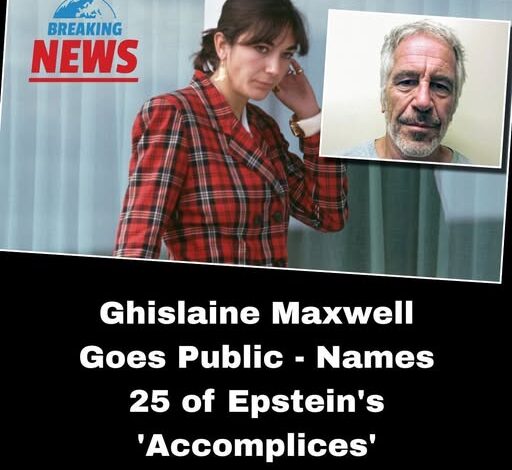
Ghislaine Maxwell is not done speaking. From a prison cell in Texas, the convicted sex trafficker is attempting to reopen a story she insists was never truly closed. In her latest claims, she accuses powerful men, federal prosecutors, and victims’ attorneys of helping to conceal the deepest truth of the Epstein scandal. Maxwell alleges that at least 25 suspected associates of Jeffrey Epstein quietly reached secret deals to avoid legal accountability, while four specifically named staff members, she claims, walked away entirely untouched by justice. If she is right, the true Epstein network was never a story of just two people—but a far broader system, carefully protected.
From behind bars, Maxwell is trying to reconstruct her public image. She no longer presents herself as Epstein’s ruthless accomplice, but as the sole figure sacrificed to shield others. In her handwritten filing, she describes a two-tiered justice system: on one side, she and Epstein—exposed, demonized, and publicly destroyed; on the other, powerful men who, she claims, were allowed to pay quietly and continue their lives without consequence. Maxwell insists their names were deliberately excluded from official records and that federal prosecutors worked in tandem with civil attorneys to hide key witnesses—individuals who, she argues, either shared her guilt or would have dispersed it.
According to Maxwell, this was not mere negligence but a coordinated effort to control the narrative. She suggests that certain figures were protected because they were too powerful, too politically connected, or too dangerous to confront in a public courtroom. By portraying herself as “only one link” in a much larger chain, she seeks to cast serious doubt on how the case against her was constructed—and on what was intentionally left out.
These allegations emerge at a particularly sensitive moment. The U.S. government is now being legally compelled to open Epstein-related archives, forcing a reckoning with past decisions that are increasingly scrutinized by the public. So far, only a small fraction of the required documents has been released, and each new disclosure intensifies pressure on institutions to explain why some names were pursued while others were not. This gap is precisely what Maxwell is exploiting: the unresolved question of who knew, who participated, and who was protected.
Even if her appeal ultimately fails in court, the impact of these claims is already evident. She may not alter her sentence, but she has reopened a wound that never fully healed. The doubt she is planting—that justice was applied selectively—will not fade easily. And as more documents continue to surface, the question she is forcing into the open grows louder: in the Epstein story, who else was involved… and why were they never seated at the defendant’s table?