My daughter woke up with this huge spot on her foot I don’t know what it could be. She’s been in pain and can’t move her foot what is this.. Explain this
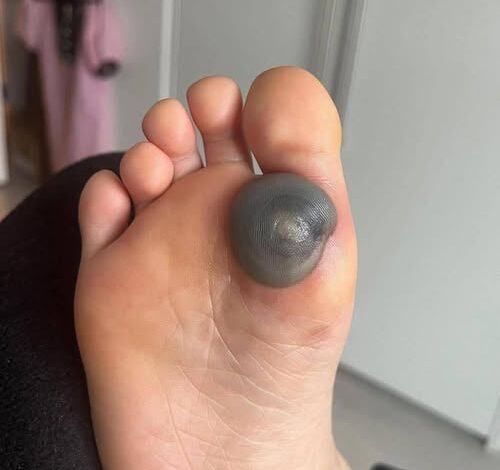
Blood blisters can appear completely out of nowhere. One minute your skin looks perfectly normal, and the next, there’s a dark, raised bubble that seems both alarming and mysterious. It’s easy to panic: Is it dangerous? Could it be something more serious, like cancer? Should you try to pop it, drain it, or rush to the emergency room? Surprisingly, in most cases, the answer is far less dramatic—and far more reassuring—than your initial fear suggests.
What you’re seeing is usually your body’s rapid, natural response to sudden trauma. When tiny blood vessels beneath the skin rupture—often from pressure, friction, or minor injury—blood leaks into the space just under the top layer of skin. Since the skin above remains intact, the blood gets trapped, creating a tender, dark maroon or purplish blister. These blisters are most commonly found on areas that experience friction or impact: fingertips, palms, soles of the feet, toes, or even inside the mouth after biting your cheek or undergoing dental procedures.
The mechanics behind a blood blister are fascinating. Unlike a typical blister filled with clear fluid, the reddish color signals blood rather than serum. This difference might make them look more serious than they are, but it’s simply the body isolating the injury and protecting surrounding tissue. Blood blisters are usually painless to mild, though they can feel tender or throbbing if pressure continues to be applied.
Despite their startling appearance, blood blisters are almost always minor and self-limiting. In healthy individuals, they tend to heal on their own within one to two weeks. The safest approach is generally to leave them intact. Puncturing or squeezing a blood blister can introduce bacteria and increase the risk of infection. Protecting it from further friction—by covering it with a soft bandage or wearing cushioned gloves or shoes—can help prevent irritation and accelerate healing. Applying a cold compress during the first 24 hours can also reduce swelling and discomfort.
If a blister accidentally breaks, the key is gentle care. Wash the area with mild soap and water, apply an antiseptic, and cover it with a clean, non-stick bandage. Avoid peeling off the overlying skin, as it acts as a natural barrier against bacteria. Monitoring for signs of infection is important: increasing redness, warmth, swelling, pus, or worsening pain may require medical attention.
Blood blisters are more concerning for people with underlying conditions such as diabetes, poor circulation, or immune deficiencies. These individuals may experience delayed healing or a higher risk of infection, so consulting a healthcare provider is recommended if a blood blister appears or fails to heal in a reasonable time frame. Additionally, multiple unexplained blisters or blisters that develop without trauma should be evaluated to rule out rare blood disorders or other systemic issues.
In summary, while blood blisters can look dramatic and make you worry, they are usually your body’s efficient, protective response to minor injury. With proper care—leaving them intact, minimizing friction, and keeping them clean—they typically resolve on their own, leaving no lasting harm. Understanding this simple mechanism can provide reassurance and prevent unnecessary panic or interventions.