From Malibu mischief to sobriety: The tumultuous life of a Hollywood icon
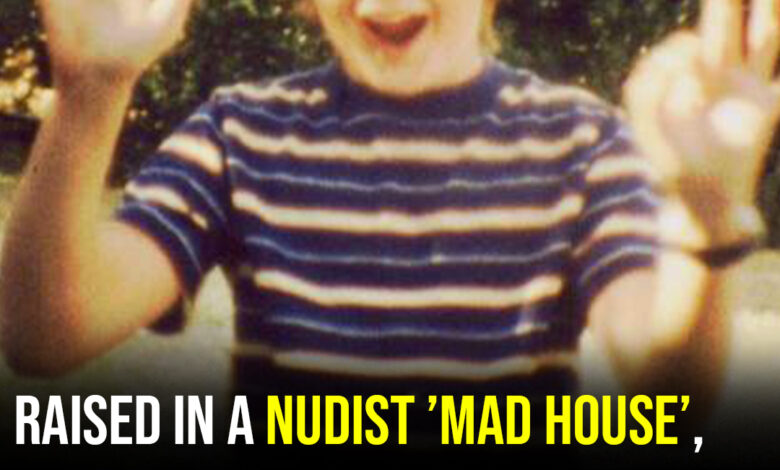
To the casual observer during the early 1970s, the tableau of his youth suggested the ultimate American meritocracy: a sprawling Malibu estate, the salt air of the Pacific, and a front-row seat to the pantheon of Hollywood legends. He was a scion of a cinematic dynasty, a child born into the purple of the film industry. But behind the shimmering veil of celebrity and the soft focus of publicity stills lay a domestic reality that was as volatile as it was unconventional—an upbringing that was unpredictable, chaotic, and, at times, legitimately perilous.
Today, this legendary figure is more likely to be seen nursing a quiet cup of coffee with a few close confidants than embarking on the multi-day, chemically-fueled benders with narcotics and escorts that once defined his public persona. To understand the man at 60, one must look back at the “madhouse” that forged him.
The Malibu Crucible: Nudism and Nomadic Stars
It is nearly impossible to reconcile the innocent snapshots of the young boy with the high-octane wreckage that would follow. As a child, he was initiated into extreme behaviors and social norms that few children ever encounter. His family’s life in Malibu offered a specialized, often raw glimpse into a world of fame and unchecked excess.
For a period during his formative years, his parents embraced a lifestyle of radical nudism. “Maybe for a month, or five, I don’t know,” he later recalled. “I’m five, walking into the kitchen, and there’s my naked parents.”
The household was dominated by the gravitational pull of his father, a burgeoning movie star whose career demanded constant global travel. While his father is now a celebrated advocate for sobriety, in those years he was a young, brilliant, and mercurial talent—often absent, always in motion, and occasionally bringing his children along for the ride into professional chaos. Growing up in this vacuum of traditional structure, the future actor absorbed the rhythm of Hollywood sets before he had even mastered a primary school curriculum.
1977: The Heart Attack and the Loss of Innocence
The domestic environment was often described as a “madhouse,” a situation exacerbated by his father’s escalating alcoholism. The pressure reached a horrifying zenith in 1977 during the infamously troubled production of Apocalypse Now. At just 37 years old, his father suffered a near-fatal heart attack in the Philippine jungle.
The incident shattered the 14-year-old’s sense of security, leaving a psychological scar that would dictate much of his later rebellion. The “messiness” of this period was punctuated by a startling rite of passage: at age 15, on a trip to Las Vegas, he lost his virginity to an escort named Candy—a transaction facilitated by his father’s own credit card.
Paradoxically, he maintained a parallel life as a quintessential California teenager. At Santa Monica High, he was a standout athlete—a star pitcher and shortstop with a burgeoning obsession for baseball memorabilia. He rubbed shoulders with future A-listers like Robert Downey Jr., but the internal rot of his academic life eventually caught up with him. Just weeks before graduation, he was expelled for a combination of failing grades and chronic truancy. It was at this juncture he abandoned his birth name for the stage name that would soon be etched into the global consciousness.
Breakthrough: From ‘Platoon’ to ‘Wall Street’
His professional ascent was meteoric. After a minor debut in 1983’s Grizzly II: The Predator, he landed a pivotal role in the 1984 Cold War drama Red Dawn, holding his own against the likes of Patrick Swayze and Lea Thompson. However, it was the visceral, Academy Award-winning Vietnam epic Platoon that served as his true arrival.
By 1987, he was a household name, starring opposite Michael Douglas and his own father in Oliver Stone’s Wall Street. As Bud Fox, the ambitious, morally compromised stockbroker, he became the face of “greed is good” era cinema. But as his star rose, the ghosts of his upbringing followed. Success provided the ultimate accelerant: unlimited access to cocaine, alcohol, fast cars, and a revolving door of sexual encounters.
He later revealed a poignant struggle that contributed to his substance abuse: a lifelong battle with stuttering. He discovered that alcohol acted as a social lubricant and a speech aid. ”Drinking just … it softened the edges,” he told Good Morning America‘s Michael Strahan. ”It gave me just freedom of speech.”
The spiral eventually led to the infamous “Tiger Blood” era—a public meltdown defined by erratic interviews and a self-admitted addiction to testosterone cream that he claimed turned him into a “raving lunatic.”
The Long Road to 2017: Sobriety and the Fatherhood Pivot
The path to redemption was long and littered with high-profile casualties: multiple failed marriages, rehab stints, the loss of a hit TV series, and a life-altering HIV diagnosis. It wasn’t until 2017 that Charlie Sheen finally achieved a sustainable sobriety.
The catalyst wasn’t a court order, but a moment of clarity regarding his children: Cassandra (41), Sami (21), Lola (20), and twins Max and Bob (16). He realized he wanted to be the reliable father he had lacked during his own chaotic youth.
He hasn’t touched a drop of alcohol since. To maintain his discipline, he employs a grim mental exercise: “I keep a [mental list] of the worst, most shameful things I’ve done, and I can look at that in my head if I feel like having a drink.”
2026: A Quieter Life at 60
Today, at 60, Sheen’s life is a study in subtraction. The roar of the “Winning” era has been replaced by the quietude of single life. After three high-profile marriages—to Donna Peele (1995), Denise Richards (2002), and Brooke Mueller (2008)—he remains unattached.
“My romantic life is as uneventful as it possibly could be,” he told People in September 2025. “It’s been that way for a long time.” While he remains open to the possibility of love, he admits that the institution of marriage is likely a chapter he has closed for good.
As he looks toward the future, Sheen expresses a desire to return to the craft that made him a legend, but he is no longer chasing the ghost of his former fame. He is taking life one day at a time, a survivor of a Hollywood era that chewed up many of his peers, finally finding peace in the silence that follows the storm.