More people are coming out as Almondsexual – here’s what it means
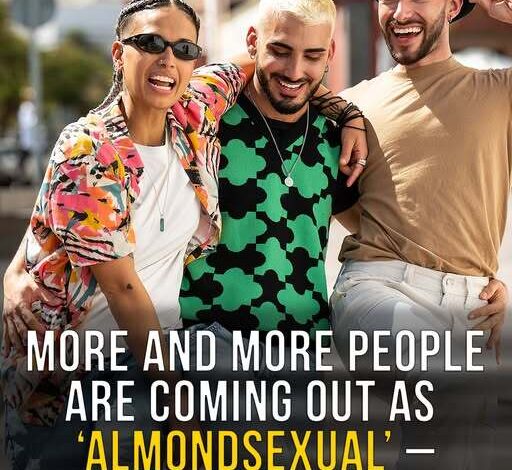
It catches your attention immediately the moment you see the word: almondsexual. At first glance, it almost sounds like a joke or something invented to provoke reactions online. Many people pause for a second, wondering whether it’s satire or the beginning of another cultural debate that could quickly spread across social media. In a world where new identity labels appear more frequently than ever before, reactions tend to split quickly. Some people feel an immediate sense of recognition and relief, as if a word has finally appeared that describes something they have struggled to explain for years. Others react with confusion, frustration, or even anger, feeling as though identity language is becoming so complex that it is difficult to follow.
Behind this unusual and unfamiliar word, however, lies something deeper than internet humor or viral controversy. It reflects an ongoing attempt by people to better understand themselves and communicate their experiences of attraction and identity. As conversations about gender and sexuality continue to evolve, language evolves with them. Words that once didn’t exist begin to appear, created by individuals or communities trying to give shape to feelings that previously had no clear description. For supporters, these labels are tools that help make personal experiences visible. For critics, they sometimes feel like evidence that identity categories are multiplying faster than society can understand them.
Almondsexuality is considered one of the newest microlabels to emerge from online LGBTQIA+ communities. The term was reportedly coined in 2023 by a Tumblr user who was searching for language that felt more precise than the broader categories already available. Microlabels are often created when people feel that larger identity labels, such as bisexual or pansexual, do not fully capture the nuances of their attraction. In this case, almondsexuality refers to individuals who experience attraction primarily toward male-aligned and androgynous genders, while only occasionally or less strongly feeling attraction toward female-aligned genders.
For people who identify with this label, the distinction is important. To them, it is not simply another way of saying “bisexual.” Instead, it attempts to describe the pattern and intensity of attraction more specifically. Someone might feel strong, consistent attraction toward men or masculine-presenting individuals, sometimes feel attraction toward people with androgynous identities or expressions, and only rarely experience attraction toward women or feminine-aligned individuals. Rather than forcing themselves into a broader category that feels slightly inaccurate, they may choose a microlabel that reflects the complexity of their personal experience.
The rise of such terms is closely connected to the internet, where communities can form around shared feelings and identities that might be rare or difficult to discuss in everyday life. Platforms like Tumblr, Reddit, and other social spaces have become places where people experiment with language, discuss their experiences openly, and collaborate on new ways to describe identity. In earlier decades, many people simply lacked the vocabulary to explain what they felt. Today, the internet allows individuals to compare experiences, refine definitions, and create terms that feel more accurate to them.
For some people, discovering a word like almondsexual can feel surprisingly powerful. After years of feeling that none of the existing labels quite fit, finding a term that reflects their experiences can bring a sense of clarity and belonging. A single word can act like a mirror, reflecting a complicated inner reality that previously felt invisible. In this sense, microlabels often function as lifelines. They give individuals language that helps them communicate who they are, both to themselves and to others.
At the same time, the rapid growth of identity terminology can also create tension and misunderstanding. Many people who are unfamiliar with these terms encounter them suddenly online and feel overwhelmed. To them, the expanding list of identities can seem confusing or unnecessary. Some worry that dividing identity into increasingly specific labels might fragment communities or make conversations about sexuality harder rather than easier.
These differing reactions often fuel heated debates on social media. Supporters argue that language should evolve as people discover new ways to describe themselves. They believe that allowing individuals to define their own identities promotes understanding and inclusion. Critics, on the other hand, sometimes view the trend as excessive or believe that existing terms already provide enough flexibility. The disagreement is not always about the label itself, but about broader questions: how identity should be defined, who gets to create new terms, and how society should adapt to constantly changing language.
Yet beneath the jokes, arguments, and viral posts are real people navigating deeply personal questions about who they are and how they connect with others. Many individuals exploring microlabels are not trying to complicate identity for its own sake. Instead, they are searching for language that reflects their experiences more honestly than traditional categories once allowed. For generations, countless people lived without words that described their feelings at all. Today’s evolving vocabulary represents an attempt to fill those gaps.
Whether someone relates to the term almondsexual or finds it puzzling, the conversation surrounding it reveals something important about modern culture. People still deeply want to be seen, understood, and accurately described. Language becomes a tool in that search, even if it sometimes sparks disagreement along the way.
In the end, the emergence of labels like almondsexual is less about the specific word itself and more about the human desire behind it. It shows how individuals continue to reshape language in order to describe the complexity of identity and attraction. Some people will adopt these terms and find meaning in them, while others may prefer broader categories or reject labels altogether.
What remains constant, however, is the underlying need for understanding. The debates surrounding almondsexuality are not simply arguments about vocabulary—they are part of a much larger conversation about belonging, identity, and the ways people try to explain their inner lives in a world that is still learning how to listen.