Abused and ignored: A former child star’s journey
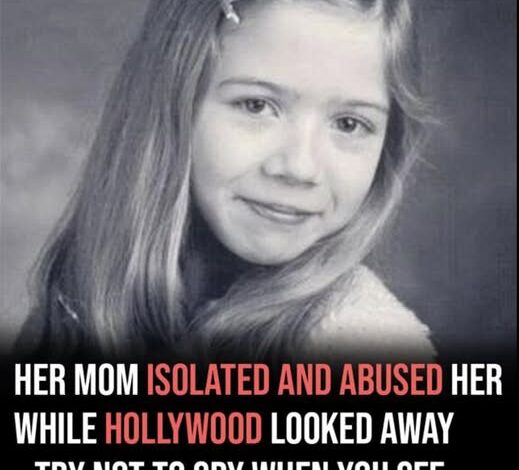
Her bright smile once convinced millions that everything in her life was joyful and carefree.
Behind that familiar smile, however, was a reality that nearly broke her.
Now, after years of silence and pain, she is finally telling the full story — and she is no longer afraid to name the people and the system that helped create it.
For years, audiences saw her as the energetic, lovable kid who lit up television screens. She was the funny best friend, the sarcastic sidekick who always had the perfect comeback. Viewers laughed with her, admired her confidence, and believed they knew exactly who she was. But behind the scenes, far away from the bright lights of the studio, her life looked nothing like the cheerful world fans imagined. While the audience heard laughter and applause, she was quietly living through a childhood filled with pressure, fear, and control.
At home, life was dominated by a mother whose influence touched every part of her daughter’s world. What looked like parental devotion from the outside often felt like something much darker on the inside. Love came with strict expectations, and approval was tied to obedience. Her mother managed every decision — from her career to her appearance — leaving little room for independence or self-expression. The child that millions admired on television often felt powerless once the cameras stopped rolling.
The house she grew up in reflected that tension. It was crowded, chaotic, and never felt like a safe place where she could simply be a kid. Space was limited, and privacy was almost nonexistent. Instead of enjoying the freedom most children take for granted, she was constantly reminded that her role was to fulfill someone else’s ambitions. While viewers saw a confident young performer, she was struggling with anxiety, exhaustion, and the heavy feeling that her life belonged more to others than to herself.
Basic comforts that many people assume are part of childhood were not always guaranteed. Sleep sometimes meant lying on a simple mat on the floor rather than resting in a bedroom of her own. Personal boundaries were rarely respected, and even her body was treated less like something personal and more like a tool meant to support a career. The pressure to maintain a certain image — an image that helped Hollywood make money — became overwhelming.
Meanwhile, the entertainment industry continued to benefit from her talent and charisma. Television networks, producers, and studios built profitable shows around the characters she played. The laughter, ratings, and financial success created an illusion that everything about her life was glamorous. But behind the success was a young performer quietly carrying emotional and physical burdens that few people around her fully acknowledged. The industry celebrated the performance without always noticing the person behind it.
For a long time, she believed she had no choice but to keep going. The expectations placed on her felt impossible to escape, especially when so many people depended on the image she helped create. Fame, which looked like a dream to millions of fans, often felt like a trap to her. She learned to smile on cue, deliver her lines, and hide the pain that continued to grow behind the scenes.
Everything changed after her mother died. The loss was complicated and deeply confusing. Grief was certainly there, but it was mixed with something unexpected: a strange and overwhelming sense of freedom. For the first time in her life, the person who had controlled nearly every aspect of her world was no longer there. Without that constant presence directing her choices, she suddenly faced a life she had never been allowed to shape for herself.
That freedom, however, did not immediately bring peace. Instead, it opened the door to years of emotional turmoil and uncertainty. Without the structure — even a painful one — that had guided her life, she struggled to figure out who she truly was. She turned to alcohol, became involved in unhealthy relationships, and found herself drifting through a period filled with confusion and self-destructive behavior. It was a time marked by searching, mistakes, and the difficult process of confronting painful memories.
Eventually, she began to seek help and slowly rebuild her life. Therapy became one of the most important tools in that process. Through long conversations, reflection, and hard emotional work, she started to unpack the trauma that had shaped her childhood and early career. Writing also became a powerful outlet. Putting her experiences into words allowed her to understand them in a new way and begin reclaiming control over her own story.
At the same time, she made the bold decision to distance herself from Hollywood. Stepping away from the industry that had defined so much of her life gave her the space to heal and rediscover parts of herself that had been buried for years. Without the constant pressure of fame, she could finally focus on her mental health, her creativity, and her future on her own terms.
Her honesty eventually reached millions of people through her memoir, I’m Glad My Mom Died. The book shocked readers with its raw truth but also resonated deeply with those who recognized similar struggles in their own lives. By speaking openly about abuse, control, and the complicated nature of family relationships, she started a larger conversation about the hidden realities that can exist behind fame and success.
She continued sharing her perspective through her podcast, where she explores personal growth, trauma, and recovery with remarkable openness. The podcast allowed her to connect with audiences in a more personal way than television ever had. Instead of playing a character, she was finally speaking as herself — honestly, vulnerably, and without the expectations that once defined her career.
Now, her story is reaching yet another audience through a television adaptation inspired by her experiences. In bringing her past to the screen, she is not simply revisiting painful memories; she is reclaiming ownership of them. What was once a story told about her is now a story she tells herself, in her own words and with her own perspective.
Through years of reflection and courage, she has gradually taken back the things that fame once seemed to steal from her: her voice, her boundaries, and her identity. The young actress who once felt trapped inside a role designed by others has grown into someone who understands the value of choosing her own path.
Today, her smile carries a different meaning. It is no longer a mask meant to hide pain or meet someone else’s expectations. Instead, it reflects the strength of someone who faced a difficult past, spoke the truth about it, and finally built a life that belongs entirely to her.