Inside the love story of Hasnat Khan and Princess Diana
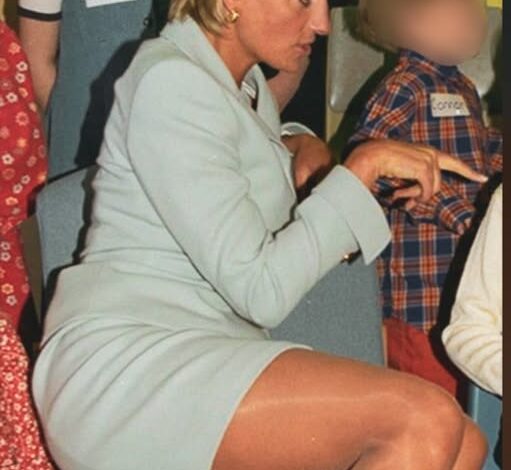
The public image of Diana, Princess of Wales, was meticulously documented by the flashbulbs of the global paparazzi: the compassionate “People’s Princess” kneeling by hospital beds, clasping the hands of the ailing, and illuminating the darkest corners of pediatric wards. But in the late summer of 1995—just two months before her seismic Panorama interview would shatter the facade of the British monarchy—a routine hospital visit evolved into a clandestine love affair so intense it remained shrouded in secrecy for years.
This was not a fleeting royal dalliance. For Diana, the man at the center of this storm was her “soulmate,” a “Mr. Wonderful” whose presence gave her a reason to smile at age 35, long after the embers of her marriage to Prince Charles had turned to ash.
An Electric Connection at the Royal Brompton
The setting was the Royal Brompton Hospital in London. The catalyst was a mutual friend, Joe Toffolo, who had undergone heart surgery. Toffolo’s wife, Oonagh Shanley-Toffolo—an Irish nun and acupuncturist who served as a spiritual confidante to the Princess—introduced Diana to the man who would become the love of her life: Dr. Hasnat Khan.
Khan, then a 37-year-old Pakistani heart surgeon, bore a striking resemblance to a young Omar Sharif, possessing a brooding, dark handsomeness that immediately captivated the Princess. The connection was described as “electric.” Following that initial introduction, Diana’s charitable visits to the Brompton took on a hidden, urgent agenda. She returned almost daily for three weeks, ostensibly to raise awareness for cystic fibrosis or comfort sick children, but in reality, she was pursuing the “dishy doctor” who had captured her imagination.
The Unlikely Match: Jazz, KFC, and “Dr. Armani”
On paper, Dr. Hasnat Khan was an improbable suitor for the most photographed woman on the planet. He was a workaholic heart surgeon who smoked a pack of cigarettes a day, struggled with his weight, and had a deep-seated penchant for late-night jazz clubs and Kentucky Fried Chicken.
Yet, it was precisely this “normalcy” that enchanted Diana. To protect the romance from the prying eyes of the royal household and the press, the pair engaged in a sophisticated game of cat and mouse. Diana began using the alias “Dr. Armani” to leave messages at the hospital. She was known to don a blunt black wig and dark glasses to sneak into Ronnie Scott’s, the legendary Soho jazz club, to watch Khan indulge his love for music.
The secrecy required high-level assistance. Paul Burrell, Diana’s loyal butler, became a key operative in the affair, often hiding Dr. Khan in the boot of a car to smuggle him past security into Kensington Palace.
“Mr. Wonderful” and the Prince of Wales
Despite the high stakes, the relationship was punctuated by moments of lighthearted irony. Khan once recalled whisking a depressed Diana away to a pub near Harefield Hospital for a quiet drink. The name of the establishment? The Prince of Wales. “She thought it was hilarious,” Khan later chuckled, noting her delight at the absurdity of the situation.
The romance quickly deepened into something far more structural. Diana began a self-directed course on Islamic culture, reading books on the faith and eventually traveling to Lahore, Pakistan. There, she visited Khan’s family, embracing their customs and enjoying a traditional afternoon tea in an effort to win the approval of a family that valued tradition over celebrity.
The seriousness of the bond was confirmed when Diana introduced Khan to her sons, William and Harry. According to Burrell and close friends, she didn’t view Khan as a boyfriend, but as the man she wanted to marry. She even went so far as to ask her butler to investigate if a priest could perform a secret wedding ceremony between a Christian princess and a Muslim surgeon.
The Breaking Point: Scrutiny vs. Sanctuary
As love stories under the crown often do, this fairytale eventually collided with the immovable object of the British media. While Diana had lived her entire adult life in the spotlight, the intense scrutiny was a poison to Khan’s professional ambitions. He feared that becoming “Mr. Princess Diana” would jeopardize his career as a surgeon and destroy the sanctuary of his private life.
The couple discussed radical solutions, including relocating to Pakistan, Australia, or South Africa to escape the London press corps. However, as Diana’s desire for public acknowledgment grew, Khan’s reluctance intensified. The impasse led to a heartbreaking conclusion: the couple ended their two-year romance in July 1997.
Tragedy and the Aftermath
Just one month after their split, tragedy struck in the Pont de l’Alma tunnel in Paris. Diana died in a car crash alongside Dodi Fayed, a man Khan believed was merely a distraction. Upon hearing the news of her relationship with Fayed, Khan admitted to being “mad as hell,” a reaction rooted in the raw pain of their recent separation.
Khan attended Diana’s funeral at Westminster Abbey in September 1997, a silent figure in a sea of mourners. In the years following, he has spoken of the emotional turmoil that still lingers. “Sometimes I feel like screaming,” he shared in 2012. “I have moved on, but it keeps coming back.”
Hasnat Khan Today: Finding Peace
Following a brief marriage to Afghan royalty in 2006 that ended in divorce, Dr. Khan eventually returned to the UK. Today, he continues his work as a heart surgeon and humanitarian, finding a quiet life far from the flashbulbs that once defined his world. He spends his days fishing and walking, describing his current life as a “sanctuary.”
Though their time together was short-lived, the romance between the Princess and the Surgeon remains one of the most poignant chapters of her life—a testament to a woman who was willing to trade her crown for a bucket of chicken, a jazz club, and a man who saw the “normal person” beneath the royal title.
The secret romance with Hasnat Khan suggests a Diana very different from the one portrayed in tabloid headlines. Do you think her life would have taken a more stable, peaceful path if she had successfully relocated with “Mr. Wonderful,” or was she too inextricably linked to the British spotlight? Share your thoughts in the comments.