Major US Airline can now remove passengers for “barebeating”
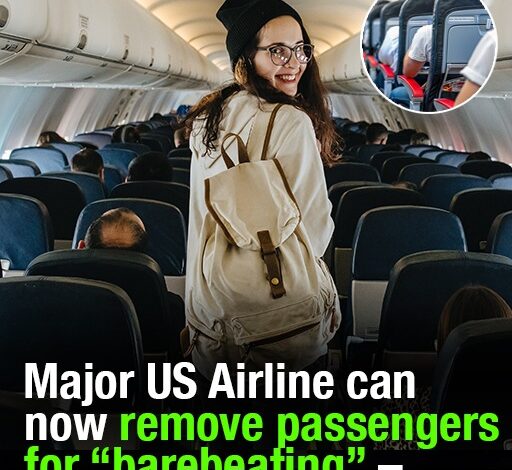
In the increasingly cramped and high-tension environment of modern air travel, the “nightmare passenger” has become a staple of digital discourse. From the aggressive security line cutters known as “gate lice” to travelers who remain indifferent to a child’s sustained screaming, the list of grievances is long. However, a new, pervasive offender has climbed to the top of the most-complained-about list: the passenger who treats the aircraft cabin like a private living room by playing music, videos, or games at full volume without a headset.
The behavior has recently been christened with its own pejorative nickname: “barebeating.” The term describes the act of forcing fellow passengers to endure a device’s raw audio output. While perhaps less visceral than a foot stretched between seat gaps, “barebeating” is a guaranteed way to dismantle a quiet cabin environment. Now, one of America’s largest carriers is signaling that the era of auditory entitlement is over.
The Policy Shift: Audio as a Basis for Removal
United Airlines (UA) has quietly moved to formalize its stance by updating its “Refusal of Transport” section—the critical segment of the contract of carriage that dictates when an airline may permanently or temporarily bar a traveler, or forcibly remove them from a flight already in progress.
The updated mandate now explicitly includes a new category of disruptive behavior: “Passengers who fail to use headphones while listening to audio or video content.” By categorizing the lack of headphones alongside serious infractions—such as interfering with flight crew duties, boarding while intoxicated, or general disorderly conduct—United has granted its flight attendants clear, enforceable authority to intervene when a passenger’s media consumption becomes a public nuisance.
The “Starlink” Catalyst
In a statement reported by NBC News, United noted that while the expectation of headphone use has always been part of the cabin culture, the airline felt it was time to make the rule legally explicit. The decision is tied directly to the carrier’s technological upgrades.
“We’ve always encouraged customers to use headphones when listening to audio content—and our Wi-Fi rules already remind customers to use headphones,” the airline stated. “With the expansion of Starlink, it seemed like a good time to make that even clearer by adding it to the contract of carriage.”
The implementation of Starlink services promises high-speed, seamless connectivity in the clouds. While this allows for a superior streaming experience, it also creates the potential for a “wall of sound” if dozens of passengers begin streaming content simultaneously through their device speakers.
“Policing Common Courtesy”
The public response to United’s crackdown has been overwhelmingly positive, though many social media users expressed disappointment that such a rule is even necessary in 2026. On Reddit, one user lamented the state of modern travel, writing: “Imagine needing an airline to tell you to use headphones and have basic courtesy and respect for other people in public.”
The policy change is particularly significant for frequent flyers who have felt forced to act as their own enforcers. One former Delta loyalist remarked that they were considering the switch to United simply because “flight attendants shouldn’t leave it to me to address. I’m happy to, but I don’t want to risk being removed from my flight. I’ll try United next trip if they take the responsibility off of me.”
Airline employees have also voiced their relief. One flight attendant noted the exhausting nature of modern cabin management: “We have to tell people literally every flight. It makes our jobs harder when we’re stuck policing common courtesy instead of just focusing on service and safety.”
The “Baby” Exception
A significant portion of the “barebeating” debate centers on parental responsibility. Crew members and passengers alike have reported frequent confrontations with parents who believe the rules do not apply to toddlers or young children.
One traveler recounted a recent Delta flight where a woman began “positively screeching” at a crew member, asking, “He’s just a baby, you expect him to wear headphones?!” as the child played the same video on a loop for two hours.
Another airline employee echoed the frustration: “People think that their children are the exception to the rule… we almost have to say that this rule applies to all devices and guests of all ages. It’s a shame how parents think their children can do whatever they want.”
With United’s new policy in place, the “baby exception” may no longer hold weight, as the airline seeks to reclaim the quiet of the skies.
As “barebeating” becomes a formal reason for removal, do you believe other airlines should follow United’s lead in codifying common courtesy? Or is the threat of being kicked off a flight an extreme response to a noise complaint? Share this story and let us know your thoughts.