Experts issue terrifying warning to America! Prepare for pandemic NOW as new virus spreads to all 50 States
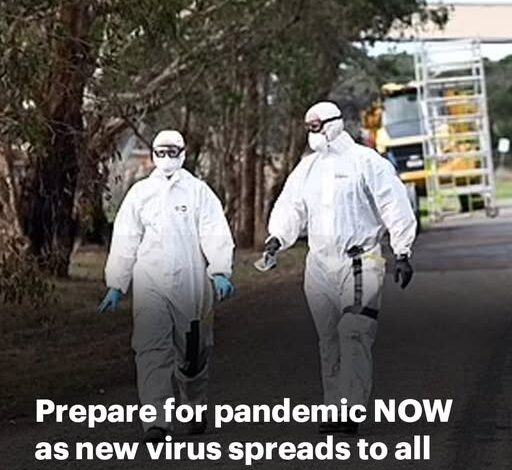
The United States finds itself at a critical crossroads in public health as leading medical experts issue an urgent call to action regarding the H5N1 avian influenza virus. What began as a localized concern within the poultry industry has rapidly evolved into a nationwide crisis, with the virus now detected in all 50 states. The statistics are increasingly grim: nearly 1,000 dairy cow herds have been affected, and over 70 human cases have been laboratory-confirmed, including the first reported fatality on American soil. Members of the Global Virus Network (GVN) and other prominent virologists are warning that the nation is essentially watching a pandemic unfold in slow motion, urging immediate preparation to prevent a repeat of the structural and social collapses witnessed during the early days of COVID-19.
The scale of the agricultural impact is unprecedented. Since the outbreak gained momentum in 2022, more than 168 million poultry birds have been lost to the disease or culled to prevent further spread. This massive loss has not only strained the American poultry industry but has also hit the wallets of everyday citizens, causing the price of eggs and other staples to skyrocket. However, the most alarming development in 2024 was the jump from birds to mammals, specifically dairy cattle. This shift has fundamentally changed the risk profile of the virus. When a virus circulates heavily among mammals, the biological opportunities for mutation increase exponentially. Experts like Dr. Marc Johnson from the University of Missouri have noted that while the virus has not yet achieved efficient human-to-human transmission, it is certainly “trying hard,” utilizing every host it encounters as a laboratory for genetic reassortment.
The first domestic fatality associated with this strain occurred in January 2026, involving an individual in Louisiana who was hospitalized with severe respiratory distress. While the patient was over 65 and had underlying health conditions, genetic analysis of the infection provided a sobering revelation: the virus had mutated within the patient’s body, likely contributing to the severity of the illness. This case, along with sporadic infections in children and adults with no clear link to animal contact, suggests that the “animal-human interface” is becoming increasingly blurred. The GVN is now calling on the government to strengthen surveillance efforts and implement rigorous biosecurity protocols at every level of the food supply chain.
Despite these warnings, the national response has faced significant criticism for being fragmented and largely voluntary. Until recently, testing for cattle and workers was left to the discretion of farm owners, a policy that many public health officials believe has allowed the virus to spread undetected for months. Mandatory testing is currently limited only to livestock crossing state lines, leaving vast gaps in the data needed to map the virus’s movement. This lack of transparency is compounded by political shifts in Washington. Reports indicate that the White House Office of Pandemic Preparedness and Response (OPPR), a crucial body created to coordinate rapid reactions to such threats, has faced severe understaffing and funding cuts under the current administration. Furthermore, the decision to move pandemic planning into the National Security Council has raised alarms regarding public oversight and the speed of information sharing with the scientific community.
The biological stakes are particularly high regarding the infection of pigs. Because swine are susceptible to both human and avian strains of influenza, they act as “mixing vessels” where genetic material can be swapped. If a pig were to be simultaneously infected with a highly contagious human flu and the deadly H5N1 strain, the resulting hybrid could potentially gain the ability to spread effortlessly between people while retaining a high mortality rate. This possibility is why experts like Dr. Ab Osterhaus emphasize that monitoring current mammalian outbreaks in cattle and wild animals—such as foxes, skunks, and seals—is not just an agricultural concern, but a matter of national security.
In response to the escalating threat, the pharmaceutical industry and the federal government have taken preliminary steps toward a defense strategy. A $590 million contract was previously awarded to Moderna for the development of an mRNA-based H5N1 vaccine. While there are concerns about the continuity of this funding, the U.S. does maintain a national stockpile of approximately 20 million doses of an existing vaccine that appears well-matched to current strains. Additionally, the capacity exists to produce upwards of 100 million more doses within a rapid timeframe. Antiviral medications like oseltamivir, commonly known as Tamiflu, are also being stockpiled and used to treat current patients. However, the logistical challenge of distributing these resources in the event of a full-scale outbreak remains a daunting prospect for health officials.
Environmental monitoring has provided a clearer, if more disturbing, picture of the virus’s prevalence. Wastewater surveillance across the country has detected traces of H5N1 in roughly a quarter of monitored sites. In states like California and Iowa, the positivity rate in wastewater has surpassed 80 percent, indicating that the virus is much more widespread in the environment than clinical testing of individuals might suggest. This environmental “load” increases the likelihood of accidental exposure for people who do not work directly with animals, further raising the risk of a breakout case that could trigger a wider chain of transmission.
The United States Department of Agriculture (USDA) has recently moved to require companies handling raw or unpasteurized milk to share samples for testing. This follows the discovery of the virus in retail milk products, though the FDA maintains that the pasteurization process effectively neutralizes the virus, making commercial milk safe for consumption. Nevertheless, the presence of viral fragments in the food supply is a stark reminder of how deeply H5N1 has penetrated the modern agricultural ecosystem. Biosecurity in high-density farming regions is no longer just a best practice; it is a vital necessity to prevent the economic and physical devastation of another global health crisis.
Dr. Peter Palese, a world leader in influenza research, stresses that public education is just as critical as laboratory research. Understanding the risks associated with raw poultry products and avoiding contact with sick or dead wildlife are simple but effective measures that the general public can take. As the virus continues to evolve, the window for proactive preparation is closing. The message from the scientific community is clear: the threat of H5N1 is no longer a “what if” scenario but a “when.” The infrastructure for testing, vaccination, and public communication must be fortified now to ensure that when the next mutation occurs, the nation is not caught off guard.
The lessons of the past decade have shown that viruses do not respect borders, political affiliations, or economic status. The unfolding bird flu crisis is a test of the nation’s ability to learn from history and act with a unified, science-driven purpose. Strengthening surveillance at the intersections of human and animal life, ensuring the transparency of pandemic planning, and maintaining the funding for life-saving research are the only ways to navigate the uncertain path ahead. The American public must remain vigilant and informed as health experts work to contain a virus that is clearly trying its hardest to become the world’s next major health challenge.