My Son Fell Into a Coma After a Walk With His Dad — In His Hand Was a Note: “Open My Closet for the Answers, but Don’t Tell Dad.”
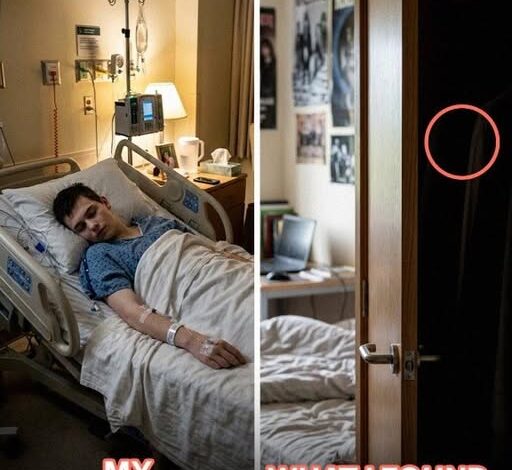
The phone call arrived in the middle of what had been a completely ordinary afternoon.
One minute I was sitting at my desk answering emails, casually thinking about what I might cook for dinner later. The next minute, my entire world collapsed into panic, confusion, and the distant sound of sirens in my mind.
“Your son has been taken to the hospital,” the voice on the phone said.
My heart dropped instantly.
Andrew was only thirteen.
Just a few hours earlier he had been in our kitchen joking with me because I had reminded him—again—to take his inhaler before leaving.
“Mom, I’m not five,” he had laughed.
But I couldn’t help worrying. Andrew had asthma, and even though he tried to act brave about it, I always knew his health needed extra care.
That afternoon he had gone for a walk with his father, my ex-husband Brendon.
It was supposed to be nothing special.
Just a quick walk around the neighborhood.
Nothing unusual.
Nothing dangerous.
Yet somewhere during that simple walk, something went terribly wrong.
When I reached the hospital, the hallway outside the emergency department felt impossibly long.
Doctors and nurses hurried past while I searched desperately for Andrew’s room.
When I finally saw him, my knees nearly buckled.
My son lay completely still in the hospital bed, machines quietly tracking his breathing and heartbeat.
His eyes were closed.
A doctor calmly explained what had happened.
Andrew had suddenly collapsed and lost consciousness.
They were doing everything possible to stabilize him, but for the moment he remained in a coma.
I sat beside him for hours, trying to understand how a normal afternoon could end like this.
Brendon kept repeating the same thing.
“He was fine,” he said again and again.
“He didn’t say anything was wrong.”
But deep inside, something told me the situation wasn’t that simple.
Andrew was a thoughtful kid.
If something bothered him, he usually told me.
As I held his hand, I noticed something unusual.
His fingers were tightly wrapped around a small piece of paper.
At first I assumed it was just something he had left in his pocket.
But when I carefully unfolded it, my breath caught in my throat.
The handwriting was clearly his.
It read:
“Mom, open my closet for the answers. But don’t tell Dad.”
My heart started racing.
Why would Andrew write something like that?
And why keep it secret from his father?
Later that night, after the doctors assured me Andrew was stable for the time being, I drove home with the note still clenched in my hand.
The house felt strangely empty without him.
I walked down the hallway to Andrew’s bedroom.
His closet door looked exactly the way he had left it that morning.
For a moment I hesitated.
Then I opened it.
At first everything seemed normal.
His clothes hung neatly in place.
His sneakers were lined up along the floor.
But when I moved a few boxes from the top shelf, I discovered something unexpected.
A folder.
Inside were medical documents.
As I flipped through them, a tight feeling formed in my stomach.
One paper immediately caught my attention.
It was for a cardiology appointment.
Andrew had been scheduled to see a heart specialist.
But the appointment had been canceled.
And I hadn’t canceled it.
The cancellation had been made under Brendon’s name.
My hands began to tremble.
Why would he cancel something like that without telling me?
Suddenly Andrew’s note felt far more serious than I had first thought.
I kept searching.
Behind the folder, taped to the inside wall of the closet, I found Andrew’s phone.
When I turned it on, a video file opened automatically.
Andrew had recorded it himself.
Seeing his face on the screen nearly broke my heart.
He looked nervous.
“Hi, Mom,” he said quietly.
“If you’re watching this, something probably happened.”
My heart pounded.
In the video, Andrew explained that for several weeks he had been experiencing strange symptoms.
Chest pain.
Dizziness.
Sometimes his heart would start racing for no clear reason.
He had told his dad about it.
But according to Andrew, Brendon insisted it wasn’t anything serious.
“He said I was probably just anxious,” Andrew explained.
“He told me not to make it a big deal.”
Andrew looked straight into the camera.
“I didn’t want to worry you, Mom,” he continued softly. “But it started getting worse.”
By the time the video ended, tears were streaming down my face.
The next morning I brought everything to the hospital.
The note.
The medical papers.
And the video.
Andrew’s doctors reviewed the information carefully.
A hospital social worker joined the conversation.
Little by little, the situation started to make sense.
That cardiology appointment had been important.
Canceling it meant the doctors never had the chance to check Andrew’s symptoms earlier.
With this new information, the medical team quickly adjusted Andrew’s treatment plan.
They ordered additional tests and began closely monitoring his heart.
They also updated Andrew’s medical records so that I would be responsible for all major decisions about his care.
That evening I sat beside Andrew’s bed once again.
The machines continued their steady rhythm.
I held his hand and whispered the same promise again and again.
“I’m here, sweetheart.”
“I’m listening.”
“No matter what happens, I will always listen.”
The future was still uncertain.
But one thing was clear.
My son had trusted me with the truth.
And I would do everything in my power to protect him.