Football Player Just 14 Years!
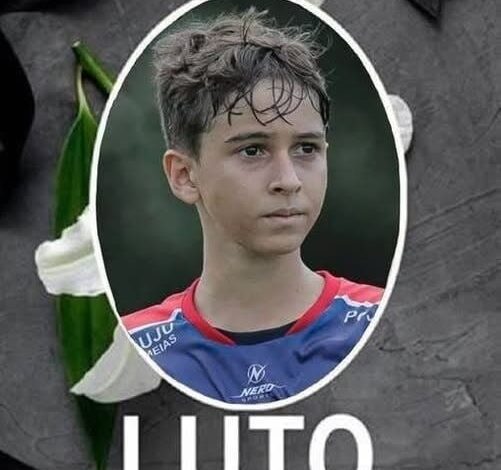
The sun was still low over the practice field, casting long, optimistic shadows across the turf as the team gathered for their afternoon drills. Among them was a fourteen-year-old boy who embodied the very spirit of the season. He had arrived at the stadium with a wide, infectious smile, exchanging lighthearted barbs with his teammates and speaking animatedly about his aspirations for the upcoming year. To his coaches, he was the model of a dedicated athlete; to his peers, he was the glue that held the locker room together with humor and a relentless drive for the game. But within a mere matter of minutes, the vibrant atmosphere of a routine practice dissolved into a harrowing scene that would leave a permanent scar on the community.
The transition from youthful exuberance to life-threatening crisis was terrifyingly swift. It began with a casual comment—a mention of a strange, rapidly intensifying pain that didn’t feel like the typical strain of a high-intensity workout. As he clutched his side, the color drained from his face, and his coaches, sensing an immediate departure from normal physical fatigue, pulled him from the field. What started as a precautionary measure quickly spiraled as the boy’s breathing became labored and his eyes clouded with a dawning sense of panic. The sideline, usually a place of strategic instruction and hydration, became a makeshift triage center.
Paramedics arrived with a speed that spoke to the gravity of the call, their sirens cutting through the suburban quiet. They fought with practiced desperation to stabilize the young player, their movements a blur of equipment and urgent communication. Onlookers, including teammates who had been joking with him just moments before, stood in a stunned, prayerful circle, the silence of the field punctuated only by the rhythmic beep of medical monitors. He was rushed to the nearest trauma center, where a multidisciplinary team of specialists raced against an invisible clock to find answers that seemed to retreat further with every passing second. Despite the highest level of intervention, the news that eventually reached the waiting room was the kind of tragedy that defies articulation.
The sudden loss of a fourteen-year-old at the height of his physical potential has sent a profound shockwave through the region. It is a death that challenges the natural order of life, leaving his family, teammates, and the wider community in a state of collective disorientation. In the wake of such a jarring event, the immediate focus has shifted toward providing a sanctuary for those closest to him. The grief is not a monolith; it is being expressed in a thousand different ways—through quiet vigils, shared digital tributes, and the heavy silence that now hangs over the school hallways. Counselors and community leaders have emphasized the importance of allowing this mourning to happen at a personal pace, acknowledging that for a teenager, the loss of a peer is often their first confrontation with the fragility of existence.
As authorities and medical examiners begin the meticulous process of reviewing medical findings, the search for a clearer explanation continues. Specialists are delving into the boy’s history, looking for the “why” behind such a catastrophic failure of a young body. Was it a rare, undetected cardiac event? A sudden vascular complication? While the scientific community seeks these answers to prevent future tragedies, the local community has made a conscious choice to turn away from speculative rumors. Instead, they are leaning into a spirit of unity. They understand that while a medical cause might be found, it will do little to fill the void left at the dinner table or the empty spot on the defensive line.
A planned memorial at the local stadium is expected to draw thousands, transforming the field of play into a hallowed space for shared reflection. This is where he was most alive, and it is where his legacy will be most vividly felt. Coaches plan to speak not just of his statistics or his physical prowess, but of his character—the way he lifted his teammates after a loss, his unwavering dedication to the “invisible” work of practice, and the effortless humor that could defuse the tension of a high-stakes game. The stadium lights, which once illuminated his dreams of glory, will now serve as a beacon of remembrance for a life that was as bright as it was brief.
In time, the shock will inevitably dull into a persistent, quiet ache. The stories told by his friends—the inside jokes, the shared dreams of high school championships, and the simple moments of adolescent camaraderie—will become the building blocks of his enduring legacy. These narratives serve a vital purpose: they ensure that he is remembered not through the lens of a traumatic medical emergency, but through the richness of his fourteen years. He was a son who brought joy to his household, a student who brightened his classrooms, and a player who respected the integrity of the sport.
The statistics of such events are rare, yet they resonate with terrifying power. Studies into sudden death among young athletes often point to conditions like hypertrophic cardiomyopathy (HCM), which affects approximately 1 in 500 people in the general population, or other congenital anomalies that can remain hidden until a specific moment of physical stress. For the families involved, these numbers offer little comfort, but for the community, they underscore the importance of supporting cardiac screening initiatives and emergency preparedness on every playing field.
As the days turn into weeks, the focus will remain on his family. The loss of a child is a unique form of bereavement that requires a sustained, long-term commitment from the community. It is the quiet check-ins, the shared meals, and the simple act of saying his name that will help them navigate the long road ahead. The town has already begun to drape the school colors in black ribbons, a visual testament to a grief that is shared by all who knew him and many who didn’t.
Ultimately, the story of this fourteen-year-old football player is a reminder of the impact a single young life can have. His dedication to his craft, his love for his teammates, and his vibrant spirit have left an indelible mark on the town’s identity. While the questions surrounding his final moments may eventually be answered by science, the question of his significance has already been answered by the outpouring of love and respect from every corner of the community. He lived fully, he loved deeply, and he will be remembered every time the whistle blows and the lights of the stadium flicker to life.