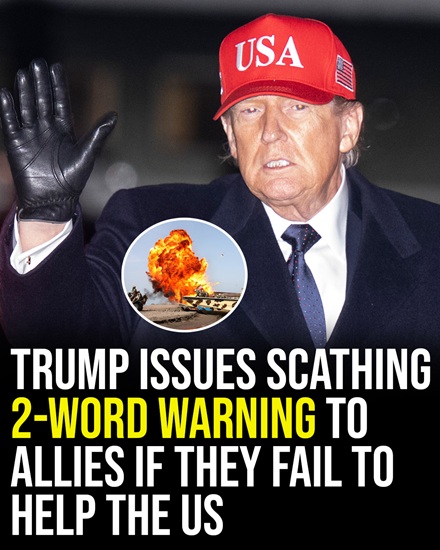
Trump Issues Two-Word Message to Allies Over Strait of Hormuz Situation

The Strait of Hormuz has once again become one of the most closely watched locations in the global energy market. Rising tensions in the Middle East have placed the narrow waterway at the center of international economic and geopolitical concerns.
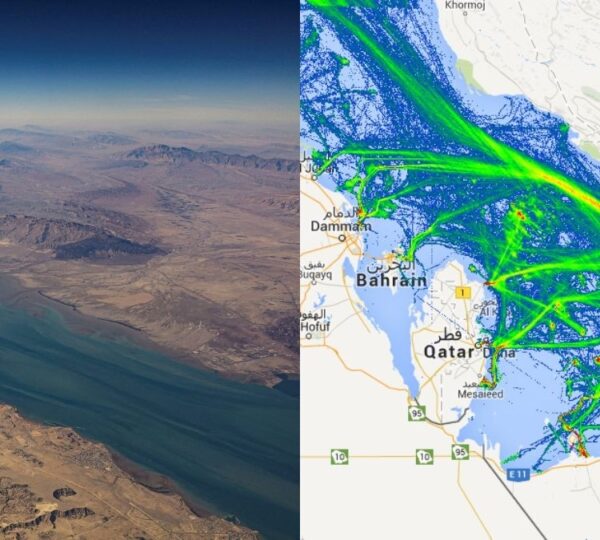
Located between Iran and Oman, the Strait of Hormuz connects the Persian Gulf with the Gulf of Oman and the Arabian Sea. Despite its narrow width, it is considered one of the most important maritime passages in the world.
Every day, millions of barrels of oil normally pass through this strategic route. Energy analysts estimate that roughly one-fifth of the world’s daily oil supply typically travels through the strait on tankers headed to international markets.
Because of its importance to global energy supply, any disruption in the strait can immediately affect fuel prices, shipping schedules, and the broader international economy.
In early 2026, the region entered a period of intense instability after a series of military developments involving the United States, Israel, and Iran. The conflict quickly escalated into a wider crisis affecting shipping lanes and oil markets.
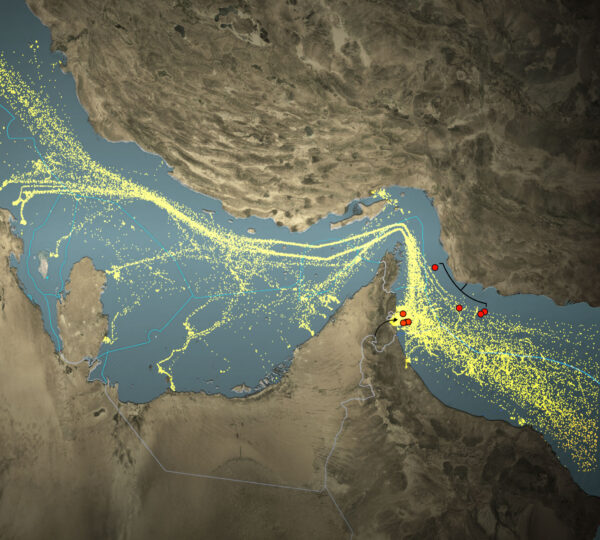
Following military strikes against targets in Iran, the Iranian government and its Revolutionary Guard forces issued warnings that vessels passing through the Strait of Hormuz could face serious danger.
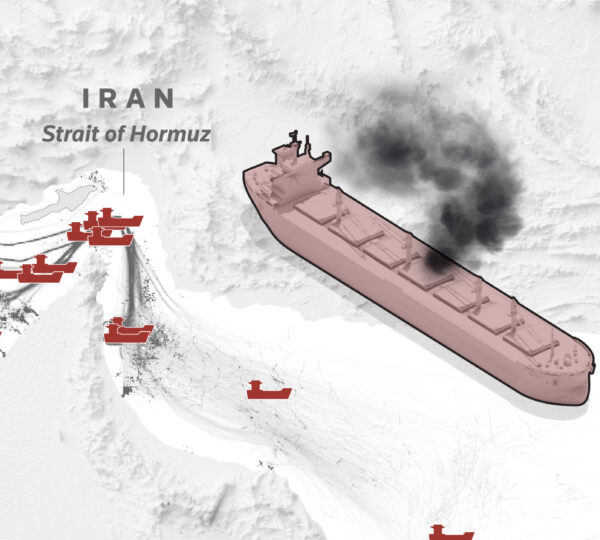
These warnings caused shipping companies, insurance providers, and tanker operators to reconsider whether it was safe to continue using the route. Many vessels chose to remain outside the strait rather than risk entering an active conflict zone.
As a result, maritime traffic through the area dropped dramatically within days. Analysts observed that tanker traffic initially fell by about seventy percent before declining even further as the situation worsened.
With shipping routes disrupted, oil markets responded quickly. Energy traders around the world began pricing in the possibility of supply shortages, pushing crude oil prices significantly higher.
At one point during the crisis, Brent crude oil prices surged above one hundred dollars per barrel for the first time in several years, reflecting growing fears that the disruption could continue.
The impact of these price increases quickly spread beyond oil traders and energy companies. Higher crude prices often lead to rising gasoline prices for consumers, affecting transportation costs and household budgets.
In the United States and many other countries, analysts noted that fuel prices began climbing as markets reacted to the uncertainty surrounding Middle Eastern energy supplies.
The Strait of Hormuz crisis did not only affect oil shipments. Liquefied natural gas shipments from major producers in the Gulf region were also impacted, creating additional concerns about energy supply during the ongoing conflict.
Governments across Europe and Asia began monitoring the situation closely. Many countries rely heavily on oil and gas shipments that pass through the narrow maritime corridor.
As tensions grew, diplomatic discussions intensified among world leaders. Governments explored ways to stabilize shipping routes and ensure that global energy supplies could continue moving safely.
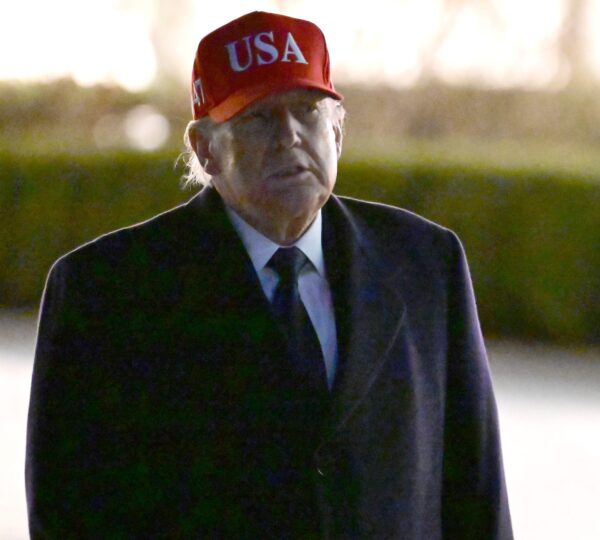
Amid this backdrop, U.S. President Donald Trump publicly called for stronger international cooperation to maintain safe passage through the strait.
In interviews with international media, the president argued that countries benefiting from the route should contribute to efforts aimed at keeping the shipping lane open.
He emphasized that the strait serves not only American interests but also those of many other economies that rely heavily on imported energy.
In particular, he pointed out that several European nations and Asian economies receive large portions of their oil shipments through the waterway.
According to reports, Trump suggested that NATO allies and other partner nations should participate in efforts to secure maritime traffic and prevent further disruptions.
He warned that failing to cooperate in safeguarding the route could strain alliances and weaken international security partnerships.
The president’s remarks sparked debate among political leaders and analysts. Some argued that protecting global shipping lanes requires coordinated action from multiple countries.
Others cautioned that expanding military involvement in the region could increase tensions rather than resolve them.
The discussion also extended beyond Western nations. Trump called on major energy-importing countries such as China to participate in ensuring the stability of global shipping routes.
China is one of the world’s largest importers of crude oil, and a large percentage of its supply travels through the Strait of Hormuz before reaching Asian ports.
Because of this reliance, any prolonged disruption could have major consequences for China’s economy as well as global trade.
Energy experts say that even short-term interruptions in oil shipments can create ripple effects across financial markets, manufacturing sectors, and transportation industries.
Meanwhile, shipping companies began searching for alternative routes whenever possible. Some oil exporters in the Gulf region attempted to reroute shipments through pipelines or ports located outside the Persian Gulf.
Saudi Arabia, for example, has infrastructure that allows some oil exports to travel through pipelines to the Red Sea, bypassing the Strait of Hormuz entirely.
However, these alternative routes have limited capacity and cannot replace the enormous volume of oil that normally passes through the strait.
As the crisis continued, international maritime authorities issued warnings urging ships to exercise extreme caution when operating in the region.
Insurance companies also increased premiums for vessels traveling through the Gulf, reflecting the heightened risks associated with the conflict.
For large oil tankers, the cost of insurance rose dramatically, adding further pressure on shipping companies already facing uncertainty.
Meanwhile, naval forces from several countries began monitoring the area closely. Ensuring the safety of commercial vessels became a priority for governments concerned about global energy security.
In addition to shipping disruptions, the conflict also included direct military strikes targeting strategic infrastructure in the region.
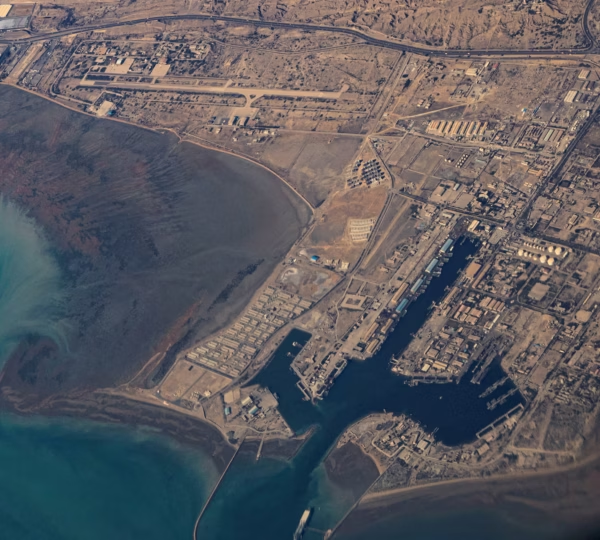
One major operation involved strikes on Iranian military facilities located on Kharg Island, a critical hub connected to Iran’s oil export system.
According to statements from U.S. officials, the strikes targeted military installations linked to operations affecting maritime traffic rather than directly targeting oil production facilities.
However, the operation highlighted how closely military strategy and energy infrastructure can become intertwined during conflicts.
Iran responded by warning that attacks on its economic infrastructure could trigger further retaliation and escalation.
This exchange of threats contributed to growing concerns that the conflict might expand beyond the immediate region.
Financial markets responded quickly to each new development. Traders closely watched every announcement, military movement, and diplomatic statement related to the crisis.
Even small changes in shipping activity or military posture could influence oil prices within hours.
Energy analysts warned that prolonged instability in the Strait of Hormuz could have consequences comparable to previous global energy crises.
Because the strait handles such a large share of global oil trade, its closure or disruption could significantly affect energy availability worldwide.
For everyday consumers, the crisis translated into higher costs at gas stations and increased prices for goods transported by trucks, ships, and airplanes.
Transportation industries, including airlines and shipping companies, often face rising fuel costs during periods of geopolitical instability.
These increased costs can eventually be passed on to consumers through higher ticket prices, shipping fees, and product prices.
At the same time, governments continued working through diplomatic channels in hopes of easing tensions.
International organizations and regional powers explored possible negotiations aimed at restoring stability and reopening maritime traffic.
Diplomats emphasized that maintaining freedom of navigation through critical waterways is essential for global economic stability.
The Strait of Hormuz crisis serves as a reminder of how interconnected modern economies have become.
A conflict in one narrow stretch of water can quickly affect financial markets, energy supplies, and transportation systems around the world.
For policymakers, the situation underscores the importance of international cooperation when addressing threats to global trade routes.
For energy markets, it highlights how geopolitical events can influence supply and demand almost instantly.
And for ordinary consumers, it demonstrates how distant events in global politics can eventually affect everyday costs such as fuel and transportation.
As the situation continues to evolve, governments, businesses, and energy analysts will remain focused on developments in the Strait of Hormuz.
The stability of this vital maritime corridor remains one of the most important factors influencing global energy markets today.
Whether through diplomacy, security cooperation, or economic adjustments, the world’s major powers will likely continue searching for ways to ensure that this critical shipping route remains accessible.
Until a long-term solution emerges, the Strait of Hormuz will remain a focal point of international attention, reflecting the delicate balance between geopolitics, energy supply, and global economic stability.