My Aunt Tried to Remove Me from My Grandpa’s Farm — But One Sentence From the Lawyer Changed Everything
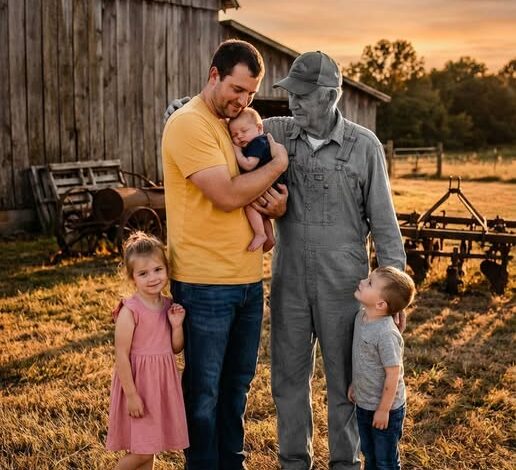
The week we laid my grandfather to rest, I believed I was simply mourning the man who had raised me—the one who had stepped in when my world fell apart and gave me stability when I needed it most. I never imagined that, alongside that grief, I would also be forced into a fight to protect the only place that had ever truly felt like home.
That farm wasn’t just a piece of land or an old family property. It was where I rebuilt my life after losing my parents, where I learned how to stand on my own again, and where my children grew up surrounded by open space, fresh air, and a sense of safety that felt rare in the world. Every fence post, every field, every early morning carried memories of my grandfather—his lessons, his quiet strength, and the life he had built with his own hands. To me, it was never about ownership. It was about belonging.
But just days after his passing, everything shifted.
My aunt arrived unannounced, stepping onto the property not with grief, but with purpose. She spoke in a calm, businesslike tone about developers, rising land value, and how quickly things could move if we acted fast. To her, it was an opportunity—a transaction waiting to happen. Then, without hesitation, she told me I had three days to pack up my things and leave.
At first, I thought I had misunderstood her.
But I hadn’t.
I had spent years working beside my grandfather to keep that farm going. When his health began to decline, I didn’t hesitate—I stepped in fully. I managed the daily operations, handled the finances, dealt with setbacks, and made sure the farm stayed afloat even when things became difficult. It wasn’t easy, but I did it because it mattered—to him, and to me.
Meanwhile, my aunt had built her life somewhere else. She rarely visited, rarely called, and had little involvement in anything we were doing. Yet suddenly, she returned as if none of that mattered—ready to take control, ready to make decisions that would erase everything we had worked for.
Before the will was even read, she handed me an eviction notice.
Just like that.
No conversation. No acknowledgment of what I had done. No respect for the years I had given.
In her mind, the farm already belonged to her.
Standing there, holding that paper, I felt like the ground beneath me was shifting. Everything I had poured my time, energy, and heart into—everything my grandfather had built over a lifetime—felt like it was about to disappear in a matter of days.
The uncertainty was overwhelming.
Two days later, we sat across from each other in a lawyer’s office for the official reading of the will. The room felt tense, heavy with expectation. My aunt looked completely at ease, almost confident, as if she had already won. She sat upright, composed, certain that everything would unfold exactly as she expected.
I, on the other hand, felt drained. Still grieving. Still trying to process how quickly everything had spiraled.
When she presented the eviction notice, the lawyer barely gave it a glance.
Instead, he calmly folded his hands and said something that changed everything in an instant.
The farm, he explained, was no longer part of my grandfather’s personal estate.
It had already been transferred into a protected family trust before his passing.
For a moment, no one spoke.
The entire atmosphere in the room shifted.
My aunt’s expression changed—her confidence fading into confusion, then disbelief. What she had assumed was hers to claim was suddenly out of reach. The power she thought she held disappeared in a single sentence.
As the lawyer continued, the full picture became clear.
My grandfather had planned this carefully, long before his health declined. He had taken deliberate steps to ensure the farm would remain within the family, protected from being sold off or taken over. The trust included clear instructions on how the land should be managed and preserved, ensuring that it would continue to serve future generations the same way it had served us.
It wasn’t just about protecting property.
It was about protecting a legacy.
Everything my aunt had come prepared to claim—everything she thought she could control—was no longer hers to touch.
When we walked out of that office, the weight I had been carrying finally began to lift.
For days, I had felt like I was about to lose everything. Like the place that held all my memories, all my effort, and all my connection to my grandfather was slipping away.
But it wasn’t.
In that moment, I realized something deeper.
My grandfather hadn’t just left behind land or assets. He had made sure the home we built together—the place that shaped who we are—would remain safe, no matter what happened after he was gone.
And for the first time since we buried him, I felt something close to peace.
Because I knew, without any doubt, that we weren’t going anywhere.