Shocking simulation shows what actually happens to sperm inside body if not ejaculated
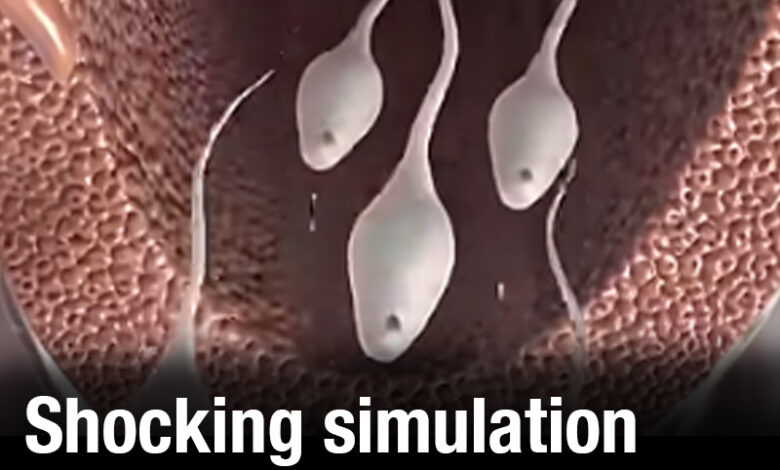
It is one of the most prolific manufacturing lines in nature. Beginning roughly between the ages of 10 and 13, the male body enters a state of perpetual production, churning out sperm cells that will, in most cases, continue to be generated for the rest of a man’s life. However, a common misconception persists: the idea that if these cells aren’t released, they simply “clutter” the system or remain in stasis indefinitely.
In reality, the body operates a sophisticated, closed-loop recycling system. Recent scientific simulations and data from leading medical institutions like the Cleveland Clinic and the Open University have pulled back the curtain on this internal process, revealing a rigorous cycle of maturation, expiration, and reabsorption.
The 75-Day Shelf Life
The journey begins in the testicles, but the critical “waiting room” is the epididymis—a coiled tube wrapped around the back of each testis. This is where sperm cells are stored to mature. On average, a healthy male produces between two and five milliliters of semen per ejaculation, a cocktail of sperm combined with fluids from the seminal vesicles and the prostate.
But if the “exit” never occurs, the clock starts ticking. Sperm cells have a definitive shelf life, typically spanning between 74 and 76 days. Once they hit this expiration date, they don’t simply “spoil” in a traditional sense. Instead, they undergo a biological breakdown known as degeneration.
Reabsorption and the Nutrient Loop
According to medical insights highlighted by UNILAD and various physiological simulations, the epididymis acts as a recycling center. When sperm cells expire, they are broken down and reabsorbed by the body. These cells are packed with high-value structural components—including enzymes, zinc, and fructose—which are salvaged. The proteins are recycled to fuel the production of the next generation of sperm, ensuring no cellular energy is wasted.
If the body’s reabsorption rate doesn’t keep pace with production, it employs a secondary “pressure valve” known as nocturnal emission, or “wet dreams,” as a natural method of clearing the system.
The Complexity of the Count
While the body is adept at recycling, the production line itself is sensitive. The Mayo Clinic notes that a variety of clinical and lifestyle factors can disrupt this flow or lead to a low sperm count. These include:
- Physical Obstructions: Varicoceles (enlarged veins in the scrotum), infections, or undescended testicles.
- Systemic Issues: Tumors, hormone imbalances, or genetic conditions.
- External Factors: Prior surgeries, specific medications, and the impact of chronic stress or substance use.
Debunking the “Abstinence” Myth
In recent years, internet trends like “No Nut November” have popularized the notion that long-term abstinence can “supercharge” testosterone levels or significantly improve sperm quality. However, the medical community remains largely skeptical, often dismissing these claims as myth.
In fact, the data suggests the opposite may be true. Medical News Today reports that extended periods without ejaculation can actually correlate with increased levels of anxiety or depression.
The Prostate Connection: A 31% Difference
The most compelling argument for regular biological “maintenance” comes from a landmark Harvard study. Researchers found a significant statistical link between frequent ejaculation and long-term health. Specifically, men who ejaculated 21 times or more per month showed a 31 percent lower risk of developing prostate cancer compared to those who did so less frequently.
This finding remained robust even when researchers adjusted for other lifestyle variables and the frequency of PSA (Prostate-Specific Antigen) testing. It suggests that the regular “flushing” of the system may play a more critical role in preventative health than previously understood.
Ultimately, the science is clear: whether released or recycled, the body is a master of efficiency. The “unreleased” sperm of today becomes the building blocks for the “healthy” sperm of tomorrow.