Small Yet Significant: The Hidden Story of Unusual Metal Artifacts
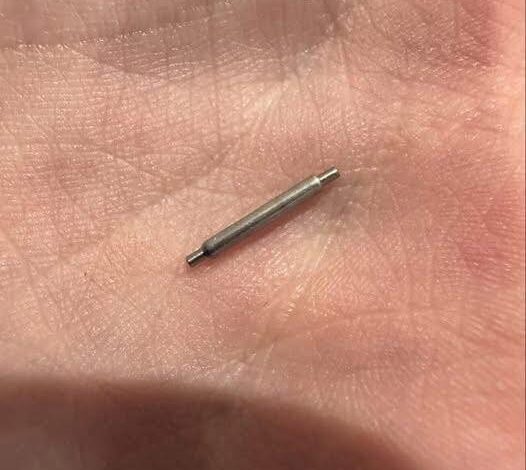
From time to time, people come across a small object that instantly sparks curiosity. Often it is something deceptively simple—a tiny piece of metal without labels, moving parts, or any obvious function. At first glance, it may appear ordinary, even insignificant, easily overlooked among the larger items scattered around a home, workshop, or office.
Yet such objects have a peculiar way of inviting closer inspection. Their modest appearance frequently conceals a surprising level of design, thought, and engineering. What seems like a random piece of metal may in fact be the product of years of refinement by engineers and designers who meticulously shaped it for a specific role.
In many mechanical systems, even the smallest component can perform a critical task. A single pin, clip, or bracket might appear trivial on its own, but within a larger assembly it can play an essential role in maintaining stability, safety, or functionality. The simplicity of these parts is often deceptive. Behind their plain form lies a world of precise manufacturing standards and carefully calculated tolerances.
Some metal components are produced with astonishing accuracy, sometimes measured in micrometers. Such precision ensures that each piece fits seamlessly into a broader system, allowing complex machinery to function smoothly. Equally important is the selection of materials. Depending on its purpose, a small metal object might be made from stainless steel, aluminum, brass, titanium, or specialized alloys designed to resist corrosion, heat, or wear.
Even items that appear identical to the naked eye can contain subtle differences. A seemingly ordinary pin, for instance, may have a particular hardness rating or protective coating that allows it to endure repeated stress without bending or breaking. In many cases, these objects serve as connectors or fasteners, holding larger components together. A misplaced or missing piece, no matter how small, can compromise the integrity of an entire machine.
Other components serve as guides or alignment mechanisms, ensuring that intricate mechanical parts meet and operate exactly as intended. These pieces frequently appear in precision equipment such as cameras, watches, robotics systems, and scientific instruments, where even the slightest misalignment could disrupt performance.
In the world of electronics, tiny metal elements perform additional roles. They may carry electrical current, provide grounding, or dissipate heat from sensitive circuits. Their compact size is not accidental; rather, it reflects the need to integrate essential functions within increasingly miniature devices without sacrificing reliability.
Despite their importance, such components are easy to underestimate. In fields like aerospace, automotive engineering, and medical technology, however, even a single small metal part can determine whether a system operates flawlessly or fails. What might appear insignificant can, in reality, be the difference between safety and catastrophe.
This hidden craftsmanship extends to everyday objects as well. Inside a smartphone, for example, an inconspicuous metal clip may secure the battery, maintain electrical connections, or prevent short circuits. Though rarely noticed, these parts quietly ensure that modern devices function reliably day after day.
Some metal pieces are so specialized that only trained technicians or engineers can immediately recognize their purpose. Without the surrounding context of the machinery they belong to, identifying their function can be nearly impossible. This ambiguity highlights the immense technical knowledge embedded within even the most ordinary-looking tools and components.
For hobbyists and collectors, such mysterious objects are a source of fascination. Discovering them often sparks a deeper exploration into how machines and mechanisms work. A small metal fragment can become a gateway to understanding broader engineering principles and mechanical design.

Tiny brackets, for instance, may stabilize heavy loads by minimizing vibration or distributing weight more effectively. Locking plates can prevent mechanisms from moving unintentionally, safeguarding delicate equipment. Precision pins may act as pivots, enabling components to rotate smoothly or move along a defined path.
Behind each of these parts lies a long process of experimentation and refinement. Engineers must carefully balance numerous factors, including weight, stress distribution, material strength, and environmental conditions. Even the smallest element in a machine represents hours of planning, testing, and improvement.
What makes these objects especially intriguing is their near invisibility in daily life. People rely on them constantly yet rarely notice their presence. Often, their importance only becomes apparent when something fails and the missing or damaged component is finally revealed.
Small metal pieces also represent a delicate balance between form and function. Their shapes are rarely arbitrary. Each curve, notch, or hole is typically designed to maximize efficiency while minimizing cost, weight, and manufacturing complexity.
Some of the most ingenious engineering solutions appear in the tiniest components. A micro-spring within a locking mechanism, for example, may measure only a few millimeters in length yet ensure that a device remains secure and functional for decades.
Modern manufacturing technologies make the mass production of these parts possible. Computer-controlled machining systems, stamping presses, and laser-cutting tools can produce millions of identical components, each manufactured to exact specifications. The process itself is remarkably sophisticated, requiring engineers to account for factors such as material fatigue, thermal expansion, and long-term wear.
Even the slightest imperfection can have serious consequences. A tiny burr, scratch, or uneven edge might prevent a part from fitting properly or disrupt the operation of an entire mechanism. For this reason, quality control is an essential part of the manufacturing process. Components are inspected visually, mechanically, or with automated measurement systems to ensure they meet strict tolerances before assembly.
Some small metal elements are designed with maintenance in mind. Modular components allow technicians to replace individual parts without dismantling an entire machine, demonstrating the practical foresight that often guides engineering design.
These hidden pieces are everywhere—inside household appliances, vehicles, industrial equipment, and consumer electronics. Though they operate quietly and efficiently, their absence can quickly lead to malfunctions, highlighting their true importance.
In robotics, small metal components act as pivots, connectors, and linkages, translating motor power into precise mechanical movement. Their accuracy allows robotic systems to perform complex tasks with remarkable precision.
Aviation and aerospace engineering place even greater demands on these tiny parts. Pins, bolts, and brackets must endure intense vibration, extreme temperatures, and immense stress while maintaining absolute reliability. In such environments, the failure of a single component can have serious consequences.
Medical technology also relies heavily on miniature metal elements. Surgical instruments, diagnostic equipment, and prosthetic devices incorporate precisely engineered components that must meet the highest standards of durability and safety.
Part of the fascination surrounding small metal objects lies in human psychology. People are naturally drawn to solving mysteries, and encountering an unfamiliar component encourages investigation and speculation. What begins as a simple observation often becomes a deeper exploration of design and engineering.
Collectors of antique machinery frequently encounter metal pieces whose purposes have long been forgotten. Researching these parts can reveal fascinating insights into historical manufacturing techniques and the technological innovations of earlier eras.
Some components are created for temporary use, such as assembly supports or shipping brackets designed to protect machinery during transportation. Even these short-lived pieces require careful design to ensure they perform their role effectively.
Ultimately, the elegance of engineering is reflected in the efficiency of these objects. Each small metal component represents a compromise between durability, material usage, and performance, carefully optimized for its intended task.
Selecting the appropriate material alone requires extensive scientific knowledge. Engineers must consider tensile strength, corrosion resistance, thermal conductivity, and machinability when choosing alloys for even the smallest parts.
Functionally, these components serve many purposes. Some transmit force through a mechanical system, while others stabilize structures or maintain precise alignment. In many cases, a single piece combines multiple roles within a deceptively simple design.
Throughout the history of engineering, major innovations have often been hidden in plain sight. Bolts, springs, pins, and clips—though frequently overlooked—represent decades of accumulated knowledge and incremental improvement.
Before reaching production, many parts undergo rigorous testing. Engineers may subject prototypes to stress analysis, fatigue testing, and computer simulations to ensure they will withstand real-world conditions over long periods of time.
The curiosity sparked by these objects is universal. People of all ages enjoy speculating about how they function, turning a small mystery into an opportunity for creative thinking and learning.
In manufacturing environments, parts are often labeled or coded to allow for traceability. Such markings enable technicians to identify production batches, materials, or tolerance specifications even when the component itself appears anonymous.
Engineers, particularly those working in fields like aerospace, understand that no part is too small to matter. A seemingly minor fastener can play a crucial role in the performance of an entire aircraft system.
These objects embody the principle of strength through simplicity. Despite their modest size, they contribute enormously to the reliability, safety, and efficiency of complex technologies.
Their stories are rarely told, yet they represent centuries of human ingenuity and problem-solving. Each small component reflects the collective progress of science, design, and manufacturing.
Part of the enjoyment in encountering such pieces comes from the conversations they inspire. Hobbyists, engineers, and collectors often share ideas and theories, turning a simple mystery into a collaborative learning experience.
A tiny piece of metal might originate from a household appliance, a vintage typewriter, a drone, or specialized laboratory equipment. Without context, it could easily be mistaken for scrap, even though it was designed with a specific purpose in mind.
No matter how small, every clip, spring, or bracket exists for a reason. Its function may be simple or highly specialized, but each represents thoughtful engineering and careful planning.
In some cases, these components even carry historical value. Parts from antique machines can reveal the ingenuity of earlier engineers, the materials available at the time, and manufacturing methods that are no longer widely used.
Studying such objects also sharpens observational skills. By examining their dimensions, weight, shape, and surface finish, it is often possible to infer their intended purpose or the type of machinery they once belonged to.
Educators frequently use mysterious metal components in classrooms to demonstrate principles of physics and engineering. Even the smallest pieces can illustrate concepts such as leverage, force, and motion.
Collectors and makers sometimes catalog obscure parts, maintaining detailed photo archives or reference databases to document their potential uses and origins.
While some components follow standardized designs, many are custom-made for a very specific application. Their unusual shapes may seem arbitrary at first, but each feature typically serves a carefully calculated purpose.
Engineering students often study these parts to understand how loads are distributed, how materials behave under stress, and how individual elements interact within a larger mechanical system.
Even when the function of a particular object remains unknown, it can still inspire a sense of admiration. The realization that such a modest piece contributes to a complex system reminds us how deeply engineering influences everyday life.
Ultimately, small metal objects represent hidden brilliance. They embody precision, efficiency, and thoughtful design, proving that even the tiniest components can be essential to the success of sophisticated technologies.
The next time you encounter a small piece of metal whose purpose is unclear, it may be worth pausing for a moment. Look closely, consider its shape and craftsmanship, and reflect on the engineering behind it. The story of such objects surrounds us everywhere—quietly waiting to be discovered.